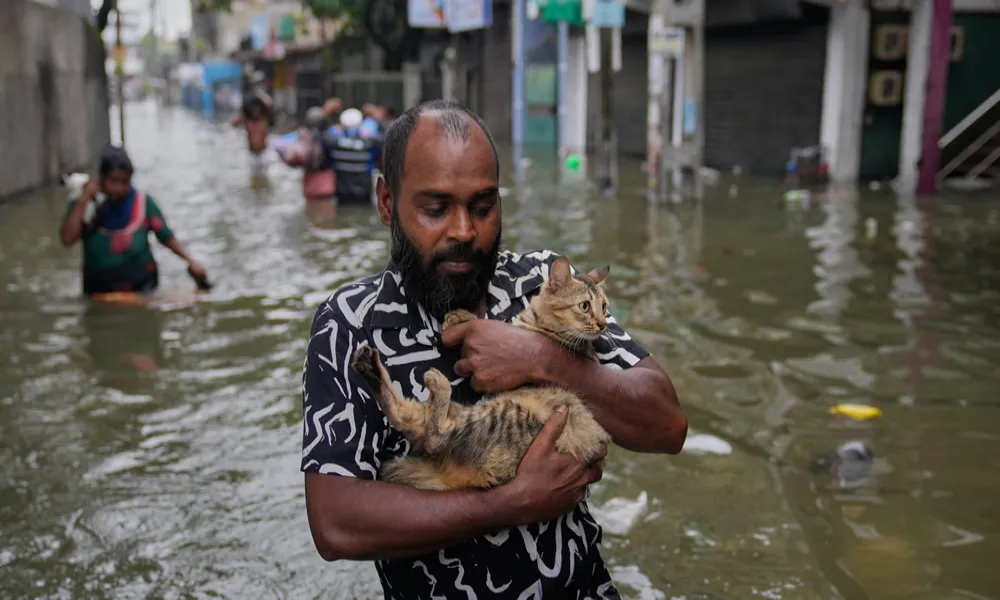
Cyclone Ditwah has unleashed some of the worst flooding Sri Lanka has seen in decades, inundating the capital, cutting off hill country roads, and leaving tourists stranded as flights are cancelled or diverted. International media report that that the storm, officially Cyclonic Storm Ditwah, crossed the island this week after forming over the southwest Bay of Bengal near Sri Lanka’s east coast, dumping more than 300mm of rain in some districts in just 24 hours. Landslides and flash floods have followed in its wake.
As of Tuesday, officials say at least 410 people have died and more than 1.1 million have been affected nationwide, with hundreds still missing, making this one of Sri Lanka’s worst natural disasters since the 2004 tsunami. The Guardian reports that a state of emergency has been declared, schools and government offices have closed, and more than 200,000 people are sheltering in temporary centres.
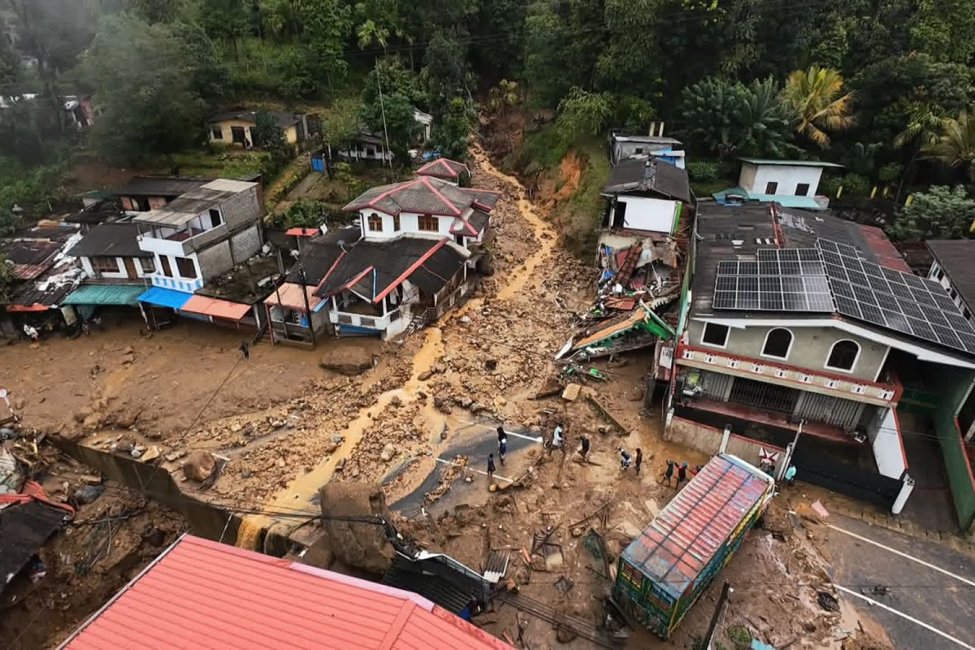
The human toll
-
In Sri Lanka, more than 1.1 million people are affected, with hundreds missing and 200,000 in temporary shelters.
-
Thousands of homes have been destroyed, and infrastructure, including roads, electricity, and water supply, has been severely disrupted.
-
Across the region, survivors recount rapidly rising waters, communities cut off, and urgent evacuations.
The scale of the disaster has prompted emergency aid and international assistance. The World Health Organisation provided $175,000 in emergency funds to support essential health services in Sri Lanka, mobilizing rapid response teams for medical care, water safety assessments, and disease surveillance.
Monsoon, cyclones, geography
Experts warn that such extreme weather events may no longer be rare. Rising ocean temperatures and shifting climate patterns are making cyclones stronger and monsoons heavier, increasing the likelihood of disasters like Cyclone Ditwah.
Sri Lanka and its neighbors face a harsh reality: floods and landslides of this scale could become a regular feature, placing immense strain on disaster preparedness, infrastructure, and vulnerable communities. Long-term strategies in flood management, early warning systems, and climate adaptation will be essential to prevent even greater human and economic losses.
According to reports from Al Jazeera the floods were caused by a perfect storm of weather events:
-
Monsoon Rains: Sri Lanka’s annual monsoon, typically June to September, has been unusually intense this year, leaving the soil saturated and rivers swollen.
-
Cyclone Ditwah: Formed over the Bay of Bengal, it made landfall on 28 November, triggering torrential rains, flash floods, and deadly landslides.
-
Topography: The central highlands of Sri Lanka, prone to landslides, amplified the impact. Mudslides buried entire villages and blocked roads, making rescue efforts difficult.
The storm’s impact was not limited to Sri Lanka. Across the region, floods and landslides in Indonesia, Thailand, and Malaysia have killed at least 1,150 people, with many more missing or displaced, according to Al Jazeera.