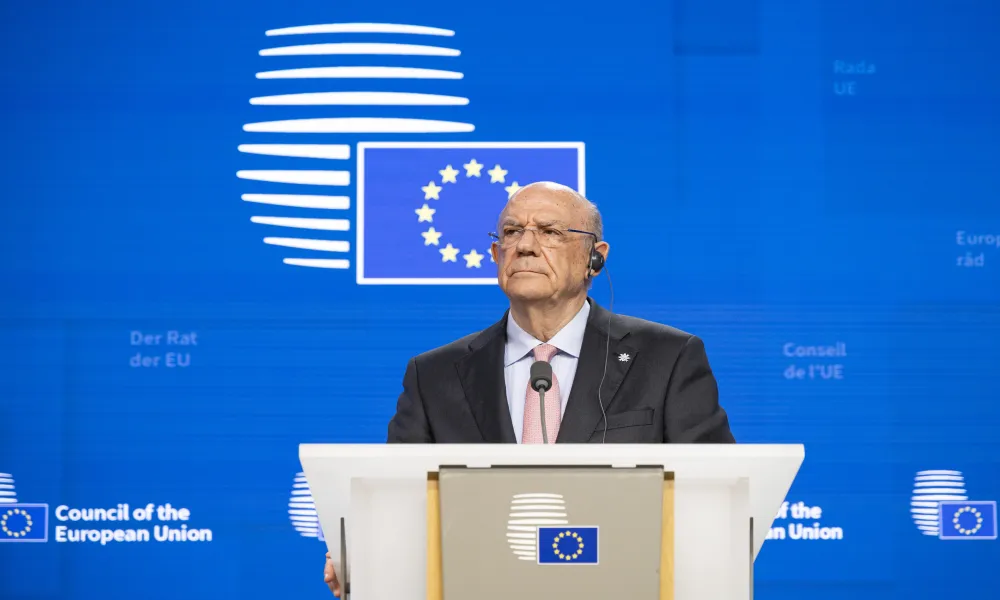
Cyprus did not carry out an impact assessment on the effects of the EU–Mercosur trade agreement, Minister of Energy, Commerce and Industry Michalis Damianou told the House Agriculture Committee on Tuesday.
The Minister said it is not customary for individual EU member states to conduct impact assessments for such agreements. “Studies have been carried out by the EU,” he said, noting that the agreement has been under negotiation for 25 years and no national impact assessment had ever been undertaken. As far as Cyprus is concerned, he added, the available data is limited and the expected impact does not appear to be significant.
Serious concerns for Cyprus
Green Party MP Charalambos Theopemptou countered that countries such as Ireland, Belgium, the Netherlands, France and Austria have carried out similar impact studies, while others are currently preparing them.
The implications of the agreement for Cyprus’ primary sector were discussed for a second consecutive week at the Agriculture Committee. Committee chair and AKEL MP Yiannakis Gavriel said that during the previous discussion there was “a shared conclusion by all, except the executive branch, that for Cyprus this agreement is, if not catastrophic, certainly detrimental to the primary sector”.
Gavriel questioned why Cyprus supported the agreement, given that it does not export heavy industrial goods, while sensitive products such as halloumi were not included in the list of exemptions. He also asked when halloumi would be included in the agreement as a Protected Designation of Origin (PDO).
Opportunities and lower tariffs
Damianou described the agreement as “strategic” for the EU, saying it expands opportunities for European and Cypriot businesses in a large market and is the result of 26 years of negotiations. He said Cypriot consumers would benefit from lower tariffs on imports, while exports would benefit sectors such as shipping, pharmaceuticals and certain agricultural products.
He noted that imports from Mercosur countries mainly concern soya oil, concentrated juice, coffee and animal feed, adding that lower tariffs are expected to benefit consumers. As regards agriculture, he said recorded import and export figures between Cyprus and the Mercosur countries are very limited.
“If the market is disrupted for any reason, there are safeguard clauses to protect the economy and trade that can be activated quickly,” he said.
Acting against consumers
On the exclusion of halloumi from the list of sensitive products, Damianou said that when the relevant annex was finalised in 2019, halloumi had not yet been registered as a PDO. However, once the agreement is implemented, an application can be submitted to amend the annex to include it.
Responding to concerns about unfair competition from Latin America, the Minister said the agreement would have gone ahead regardless of Cyprus’ position, while estimating that broader benefits would accrue to Cypriot consumers and taxpayers.
After the meeting, Gavriel criticised the government for backing the agreement without an impact assessment, accusing it of acting against consumers and the primary sector. He said the agreement would flood the market with products of “questionable quality” from Latin America.
Health risks voiced
Similar concerns were raised by MPs from across the political spectrum, who warned of unfair competition, health risks linked to pesticides banned in the EU, and insufficient safeguards for Cypriot farmers and producers.
Representatives of agricultural organisations also voiced strong opposition. Pancyprian Farmers’ Union Secretary General Christos Papapetrou said the agreement would ultimately spell the end of agriculture in Cyprus, while others called for stronger protective mechanisms and equal production standards to ensure fair competition.