
Iran is enduring one of the most intense periods of domestic unrest since the 1979 Islamic Revolution, as nationwide protests that began in late December 2025 against economic hardship have expanded into calls for regime change. The government’s response has been marked by a brutal crackdown, near-total communications blackouts, and intensifying international pressure.
Protests and government response
The protests began on December 28, 2025, triggered by a sharp collapse in the value of the Iranian rial and deteriorating economic conditions. Demonstrations quickly spread across all 31 provinces, encompassing diverse sectors of society and evolving into direct opposition to the theocratic system and Supreme Leader Ayatollah Ali Khamenei.
As the movement grew, authorities imposed a near-total shutdown of internet and telephone services nationwide on January 8, 2026, in a bid to suppress reporting and isolate protesters.
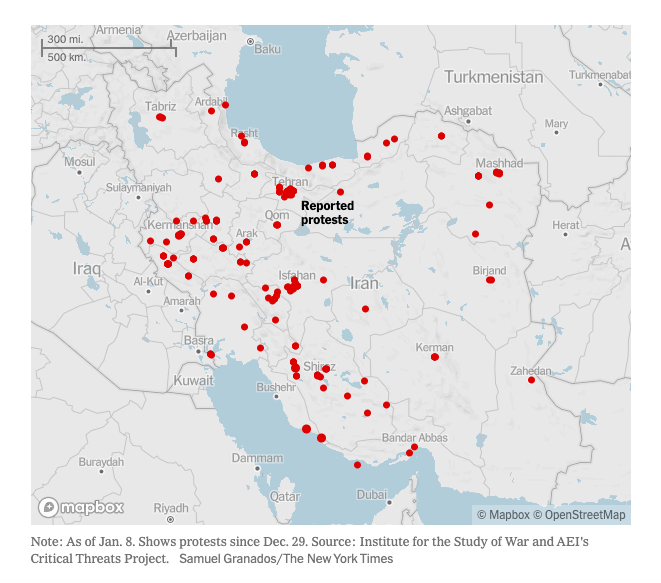
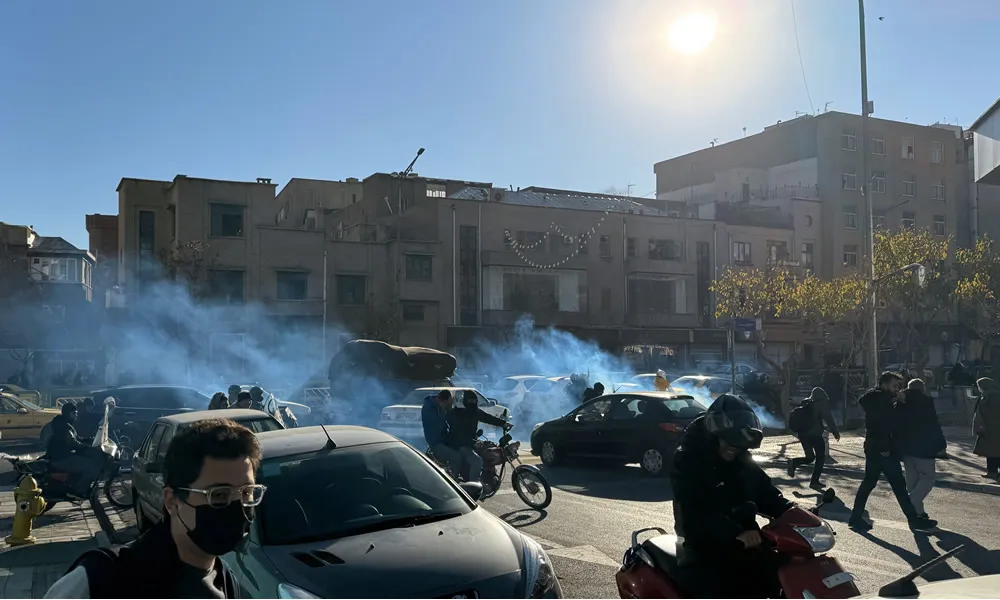
Eyewitness accounts and verified videos have shown extensive street clashes, large crowds chanting slogans against the regime, fires in major cities, and confrontations with security forces that have used live ammunition, tear gas, and other forceful tactics.
Many were telling me that after the killings and massacres not many people will dare to protest.
— Zineb Riboua (@zriboua) January 11, 2026
But what everyone seems to forget is that the political and economic situation is so bad in Iran that there is literally nothing to lose anymore.pic.twitter.com/qFM67aXFfJ
Casualties and arrests
Accurately determining casualty figures has been complicated by the communications blackout and restricted reporting. Multiple independent and activist sources now place the death toll at unprecedented levels:
Reuters confirmed an Iranian official’s assertion that about 2,000 people have died during the unrest, though the government attributed many deaths to individuals it labels as “terrorists” without offering a breakdown.
Government rhetoric and crackdown intensification
Iranian authorities have responded to the unrest with aggressive rhetoric and threats of severe penalties. Supreme Leader Khamenei publicly vowed to “not back down” and condemned demonstrators as destructive, implying foreign influence, particularly blaming the United States, while internal security bodies pledged to show “no leniency.” Some officials have indicated that individuals engaged in clashes with security forces could face the death penalty.
#Breaking: In Punek, in northwestern #Tehran, the capital city of #Iran, massive anti-regime protests are taking place tonight. #IranProtests pic.twitter.com/vD0gDyessT
— Babak Taghvaee - The Crisis Watch (@BabakTaghvaee1) January 10, 2026
State media and official statements have also accused foreign adversaries, including Israel and the United States, of orchestrating the unrest, a claim rejected by Western and regional observers.
Despite the crackdown, there has been no verified indication of splits within Iran’s security establishment, which remains committed to suppressing the protests, according to international reporting.
U.S. response and tariff policy
Against this backdrop, U.S. President Donald Trump announced on January 12, 2026, that any country “doing business with the Islamic Republic of Iran” will face an immediate 25 percent tariff on trade with the United States. The White House has not provided detailed guidance on how the tariffs will be enforced or which specific countries would be targeted, creating uncertainty over implementation.
Trump’s announcement was made as U.S. national security officials weighing a range of responses, including military options, to the Iranian government’s violent repression of protesters.
China, Iran’s largest trading partner, has firmly opposed the tariff threat, with the Chinese embassy decrying the move as “coercion” and vowing to safeguard its interests. Other potential trading partners, including Turkey, the UAE, Iraq, and India, have not yet publicly detailed their responses. Analysts warn that the tariff policy risks reigniting trade tensions with Beijing and could have wider consequences for global markets if applied broadly.
Global reaction and sanctions
International reactions have included calls for sanctions and condemnations of the Iranian government’s crackdown. The United Kingdom has announced additional sanctions targeting Iran’s finance, energy, and transport sectors in response to the violence. France summoned the Iranian ambassador to denounce state repression. The European Union is reportedly preparing proposals for further sanctions tied to human rights abuses and nuclear and military activity.
Most iconic image coming out from Iran protest 🔥 pic.twitter.com/WFuBRGZrBG
— Pradhan (@memer_manis) January 9, 2026
United Nations officials and rights groups have expressed alarm at reports of widespread lethal force, while humanitarian and legal organisations have documented unlawful killings and abuses.
The protests show no sign of abating, and the Iranian government appears poised to sustain its repressive response. The intersection of internal unrest, economic distress, and mounting international pressure, including punitive tariffs and possible military contingencies, places Iran’s political future at a critical juncture. The full extent of casualties, societal impact, and geopolitical consequences will likely only become clearer as communications improve and independent verification becomes possible.
Sources: The New York Times, AP News, Reuters, The Guardian, Amnesty International, France 24