
The framework that governed global affairs for decades is no longer holding. What was once described as a rules-based international order is not collapsing overnight, but it is steadily losing its substance. Multilateral institutions continue to exist, diplomatic language still invokes international law, and alliances remain formally intact. Yet their capacity to shape behavior, regulate conflict, and enforce norms has weakened significantly. The result is not institutional disappearance, but institutional hollowing.
This shift is no longer theoretical. As United Nations Secretary-General António Guterres warned at the outset of 2026, the “rule of law” is increasingly giving way to the “law of the jungle.” Developments from Washington to Tehran, from Caracas to Brussels, have reinforced that assessment. The system is not simply under strain. It is being rewritten in real time.
Rules have not vanished. They have become selective. Norms are invoked when useful, ignored when inconvenient, and reinterpreted when necessary. What once functioned as a framework for predictable behavior now operates as a flexible instrument of statecraft. The center of gravity has shifted from legitimacy to leverage, from compliance to calculation.
War as accelerator, not exception
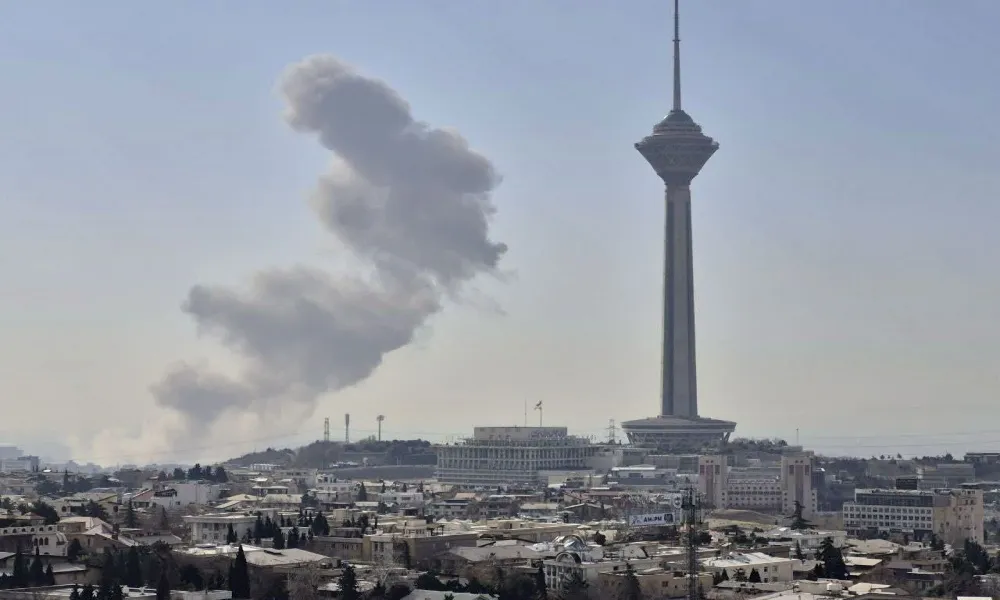
The ongoing US-Israel-Iran war has accelerated this transformation, stripping away the ambiguity that once allowed states to claim adherence to rules while bending them in practice. What began on February 28 as a coordinated military operation has evolved into a systemic stress test for the international order.
Military action has preceded diplomacy at every stage. Strikes targeting Iranian infrastructure, followed by threats of escalation, have been accompanied by diplomatic messaging that seeks to manage consequences rather than prevent them. Washington has framed its approach as coercive leverage, while Tehran has rejected negotiations under pressure, reinforcing the collapse of shared diplomatic language.
The conflict reveals a deeper structural contradiction. Military power remains decisive in the short term, but without a shared normative framework, it struggles to produce durable political outcomes. Tactical success does not translate into strategic resolution. The system is no longer attempting to reconcile power with rules. Power increasingly defines the rules.
Transactional sovereignty and the Trump factor
This transformation is closely tied to Washington’s evolving foreign policy under Donald Trump. Since returning to office in January 2025, his administration has approached international relations not as a system to be preserved but as a set of negotiable arrangements. Alliances are treated as conditional, commitments as flexible, and even long-standing partnerships as subject to revision.
The Greenland episode provided a striking illustration. Reports of pressure on Denmark, including tariff threats tied to strategic control, demonstrated that even allied sovereignty can become part of geopolitical bargaining. The message was unmistakable. Strategic interests override established norms, even within the Western alliance.
This approach extends beyond specific cases. It reflects a broader redefinition of American power. The United States is no longer acting primarily as the guarantor of a rules-based system, but as the most powerful actor within an increasingly deal-driven environment. Supporters describe this as realism adapted to a changing world. Critics see it as the erosion of a stabilizing architecture that Washington itself helped build.
Venezuela and the normalization of exceptional measures
The January 2026 operation in Venezuela reinforced this trajectory. The targeted intervention, culminating in the capture and transfer of Nicolás Maduro to the United States, was framed as a law enforcement action. Yet its implications extend far beyond the immediate case.
By merging domestic legal authority with cross-border military force, the operation blurred the line between judicial process and coercive intervention. It established a precedent in which regime change can be justified through legal language while bypassing international mechanisms. The concern for many observers lies less in the specific operation than in the precedent it sets. If legal boundaries can be redefined unilaterally, the predictability of the system erodes further and the principle of sovereignty becomes contingent.
Transactional alliances, conditional commitments
This shift is equally visible in the evolving nature of alliances. Under Trump’s leadership, alliances are no longer treated as fixed strategic commitments but as instruments open to renegotiation. Tariffs imposed on NATO allies over disputes linked to Greenland and defense cooperation illustrate how economic tools have been integrated into security policy. Trade, defense, and diplomacy now operate within a unified bargaining framework.
European responses reveal fragmentation rather than cohesion. Spain has adopted a cautious posture, preserving flexibility rather than confronting Washington directly. The United Kingdom has shown increasing hesitation, balancing its strategic relationship with the United States against economic and political considerations within Europe. Germany’s position is more complex, shaped by historical memory and its postwar commitment to Israel’s security.
This historical framework continues to influence Berlin’s reluctance to openly challenge Israeli actions, even as legal and humanitarian concerns grow. Yet this position is under strain. As military operations expand, the assumption that historical responsibility provides enduring political latitude is increasingly questioned.
The divergence within Germany’s own institutional voice illustrates this tension. President Frank-Walter Steinmeier criticized the US-Israeli strikes on Iran as contrary to international law, while Deutsche Welle emphasized that the president’s role is largely symbolic and does not represent government policy. Germany is effectively speaking in multiple registers, balancing normative concern with strategic caution.
Across Europe, the pattern is clear. Alliances are no longer defined by permanence, but by terms.
NATO under strain, Europe in transition
These dynamics are placing NATO under visible strain. Diverging threat perceptions are becoming harder to reconcile. European members remain focused on Russia and multilateralism, while the United States prioritizes China and transactional gains. Disputes over Greenland, missile defense systems, and military deployments reflect a widening gap.
At the same time, Europe itself is undergoing a deeper intellectual transformation. The long-standing belief that law and norms could shape global behavior is giving way to a more security-driven perspective. The shift from a Kantian to a more Hobbesian worldview, from cooperation to competition, is no longer implicit. It is increasingly articulated in policy and rhetoric.
This creates a strategic dilemma. Europe’s global influence has long depended not on hard power but on normative appeal. As that appeal weakens, Europe must redefine its role in a system where power is again central.
Türkiye’s narrow corridor of influence
Within this evolving landscape, Türkiye occupies a position that is at once exposed, constrained, and consistently relevant. Its role in the current crisis reflects a broader pattern of engagement across multiple theatres. From facilitating dialogue in the Ukraine war to shaping outcomes in the Azerbaijan-Armenia conflict, Ankara has repeatedly stepped into spaces where formal mechanisms proved insufficient. Its military footprint, extending from Qatar to the wider Middle East, reinforces its ability to combine diplomacy with strategic presence.
Recent diplomacy highlights this approach. The Islamabad meeting of March 29–30, involving Türkiye, Pakistan, Saudi Arabia, and Egypt, demonstrated the growing importance of flexible coalitions. Rather than forming a formal alliance, this format functioned as a platform for coordinated crisis management. Türkiye’s participation positioned it within a core group seeking to shape de-escalation pathways, including potential indirect engagement between Washington and Tehran. At the same time, Foreign Minister Hakan Fidan’s shuttle diplomacy across Gulf capitals reinforced Türkiye’s role as a connector between competing actors.
Geography amplifies this relevance. Positioned at the intersection of Europe, the Middle East, and the Caucasus, Türkiye is directly exposed to conflict spillovers while maintaining the capacity to influence regional dynamics. Its approach combines deterrence and restraint, including readiness within its guarantor role in Cyprus alongside efforts to avoid escalation.
Yet this role remains constrained. Economic vulnerabilities, energy dependence, and domestic pressures limit Türkiye’s ability to convert relevance into sustained influence. Its power is situational, rising in moments of crisis but requiring constant recalibration.
The United Nations and the limits of global governance
This transition is also exposing the structural limits of the United Nations system. The Security Council, designed for the power distribution of 1945, is increasingly misaligned with contemporary realities. Authority remains concentrated among a few permanent members, while influence has diffused across a broader range of actors.
The erosion of US dominance does not mean its disappearance, but it does mark the end of uncontested primacy. What is emerging is a competitive multipolar environment in which the United States, China, and Russia operate as parallel centers of power. In such a system, consensus becomes more difficult and institutional mechanisms less effective.
The veto system, originally intended to prevent confrontation, now contributes to paralysis. The Iran war demonstrates this clearly, as major actors have bypassed the Security Council. At the same time, regional powers are shaping outcomes without corresponding representation, creating a widening legitimacy gap.
Reform remains unlikely. The more realistic trajectory is adaptation, with the United Nations retaining relevance in humanitarian and normative domains while losing influence in high politics.
A world of negotiated realities
The cumulative effect of these developments is the emergence of a fragmented and less predictable global system. It is neither a return to bipolarity nor a stable multipolar order, but a landscape of overlapping spheres of influence and shifting alignments.
The rules-based order is not disappearing overnight, but its defining characteristics are fading. What replaces it is a system where outcomes are shaped less by shared principles and more by the interplay of power, geography and timing.
In this environment, middle powers are no longer peripheral. They are essential actors in managing instability, even if they cannot fully control it.
What is certain is that the era of predictable rules has given way to one of negotiated realities.