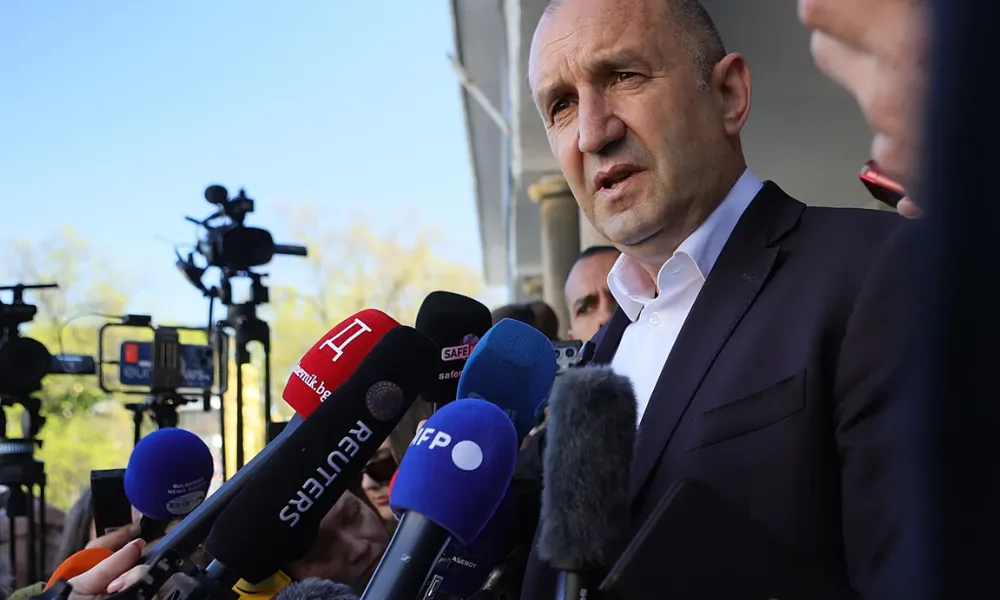

Former Bulgarian president Rumen Radev is expected to emerge as the winner of the parliamentary elections, according to the first exit polls. The alliance led by Radev, often described as pro-Russian, is projected to receive 37% to 39% of the vote, well ahead of the conservative GERB party led by Boyko Borissov, which is forecast to secure around 16%. Voter turnout is relatively high, exceeding 45%.
Early election with European implications
The early elections in Bulgaria are viewed as a political contest with broader implications for Europe. Radev, a former fighter pilot who resigned from the presidency in January, appears to be the clear winner based on the preliminary results.
No parliamentary majority
Despite the strong performance, Radev is unlikely to secure an outright majority in parliament. He is expected to fall short by around 10 to 12 seats, making the formation of a coalition government necessary.
However, his party, Progressive Bulgaria, has already ruled out alliances with both GERB and the Movement for Rights and Freedoms (DPS). The leaders of these parties, Boyko Borissov and Delyan Peevski, have often been criticised by Radev as “oligarchs.”
Limited coalition options
Relations between Radev and the third-largest political force, Continue the Change – Democratic Bulgaria, have also deteriorated despite previous cooperation. This leaves limited room for coalition partners, with the Bulgarian Socialist Party and the nationalist party Revival emerging as possible allies. Revival is known for its strongly anti-European and pro-Russian positions.
Controversial stance on Russia and Ukraine
Radev’s political positions have drawn attention from the international community. During his presidency, he repeatedly opposed sending military aid to Ukraine and criticised the European Union’s policies on the issue. He has often argued that supporting Ukraine could risk dragging Bulgaria into the conflict.
Radev has also called for dialogue with Russian President Vladimir Putin, contributing to his reputation as closely aligned with Moscow.
Campaign marked by controversy
The election campaign was marked by several controversies. At a recent rally, opposition parties criticised Radev after a video shown on stage included footage of a meeting with Vladimir Putin.
Only days earlier, Radev had reaffirmed his previously controversial statement that “Crimea is Russian”, describing it as a “realistic position.” The remark had already sparked strong reactions when he first made it five years ago.
Source: Euronews.gr