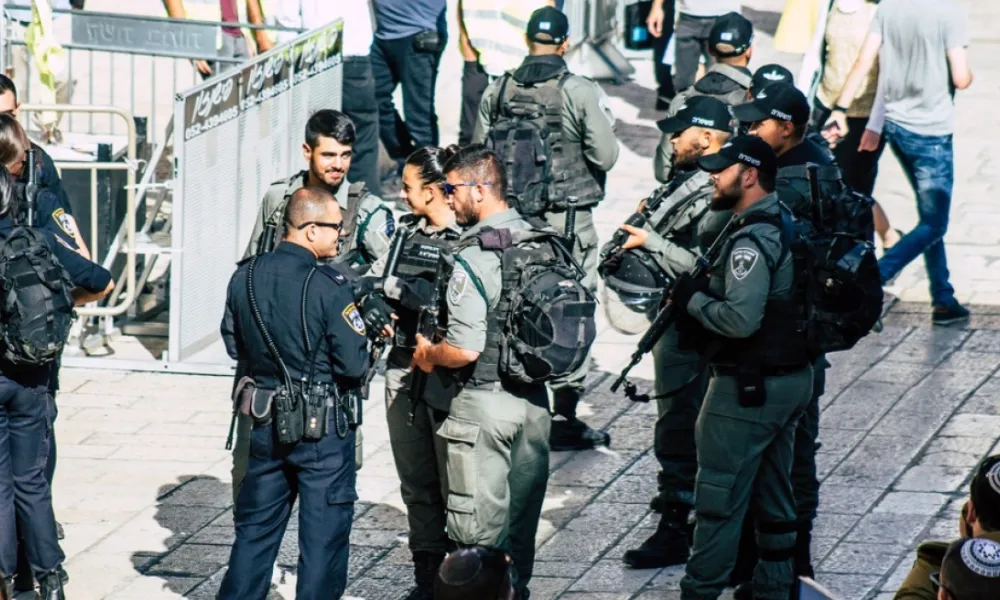
Israeli security services say they have dismantled a covert network linked to Iran that was planning attacks against Israeli officials and infrastructure in several countries, following months of intelligence operations and arrests.
In a joint statement, Israel’s intelligence and security agencies said the network operated under the direction of Iran’s Islamic Revolutionary Guard Corps and had been actively gathering intelligence and preparing attacks on a global scale.
According to the statement, senior figures within the network were killed during a US-Israeli military campaign against Iran that began on 28 February, a development that contributed to exposing its structure and activities.
Azerbaijan operations and planned targets
Authorities in Azerbaijan announced in March that they had thwarted a series of planned attacks attributed to Iranian operatives. The alleged targets included the Israeli embassy in Baku, a synagogue and prominent members of the local Jewish community.
Azerbaijani officials said the plots were part of broader espionage and terrorist operations coordinated by Iran’s Revolutionary Guards.
Among the suspected targets was also the Baku-Tbilisi-Ceyhan oil pipeline, which runs through Georgia and Turkey and supplies a significant share of Israel’s oil imports.
Investigators said members of the network had smuggled explosive-laden drones into Azerbaijan and were conducting surveillance on potential targets under direct instructions from handlers in Iran.
Structure of the network
Israeli authorities identified Rahman Moqadam as the alleged head of the network. He led Unit 4000, a special operations division within the Revolutionary Guards’ intelligence apparatus, and was reportedly responsible for recruiting and training operatives both inside and outside Iran.
Moqadam is said to have overseen intelligence-gathering efforts targeting Israeli political leaders, security officials, military installations, ports and Israeli-linked maritime activity worldwide. He was reportedly killed early in the military campaign.
He was believed to report to senior intelligence official Majid Khadami, who was also killed in an Israeli strike during the conflict.
Another key figure, Mohsen Shouri, allegedly maintained links with operational cells abroad and was killed in a strike on a secure Revolutionary Guards facility.
Role of the ‘Doctor’ and links to Cyprus
A central figure in the network’s regional operations was identified as Mahdi Yeke-Dehghan, known by the alias “the Doctor”. He is believed to have coordinated activities in Azerbaijan and other countries.
His role came to light in January following arrests by Turkish authorities, who detained six individuals, including an Iranian national, on suspicion of political and military espionage after coordinated operations across five provinces.
According to Israeli officials, Yeke-Dehghan oversaw the transfer of explosive drones from Iran through Turkey and onwards to Cyprus, while also directing intelligence collection on US forces at the Incirlik air base.
Ongoing concerns
Israeli authorities say the disruption of the network highlights an ongoing effort by Iran’s Revolutionary Guards to establish operational cells abroad and expand their capacity to carry out attacks.
They warned that despite recent setbacks, such networks remain active and continue to pose a threat to Israeli and Western interests internationally.
Source: CNA