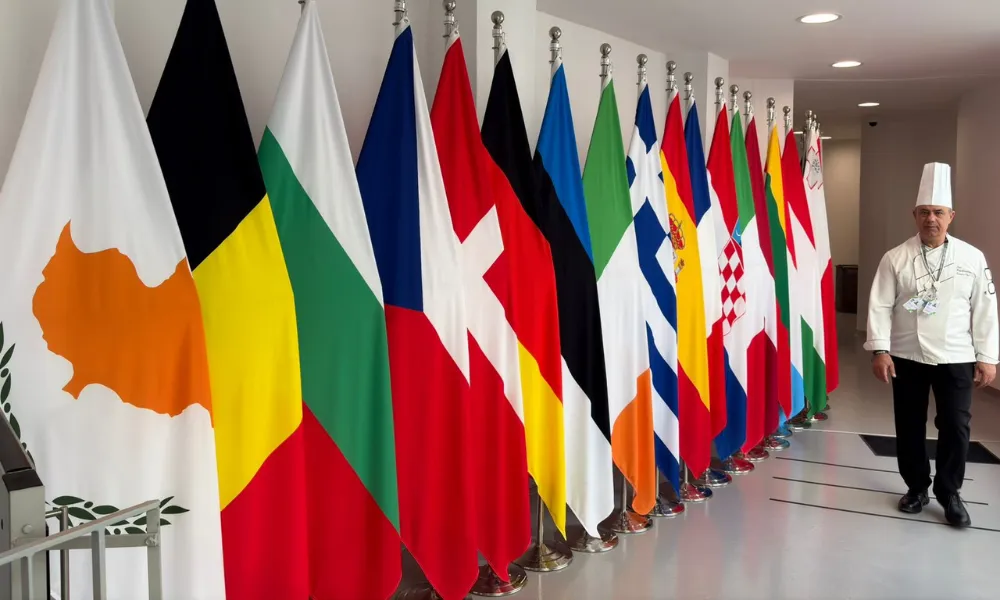
The informal meeting is chaired by European Council President António Costa and hosted by President of Cyprus Nikos Christodoulides, as Cyprus currently holds the Council presidency until 30 June 2026. Friday's proceedings are being held at the Filoxenia Conference Centre in Nicosia, following Thursday evening's opening session at Ayia Napa Marina.
European Parliament President Roberta Metsola is addressing heads of state on Friday morning, ahead of the main working session. Leaders are consulting on the new Multiannual Financial Framework (MFF), with the aim of providing political guidance oriented toward a political agreement by the end of the year. No final budget numbers are expected from an informal gathering, but the discussion marks an early political test of the balance between strategic ambition and the bloc's financing capacity. European Council President Costa has described the MFF as the Union's primary instrument for common strategic action, and the Cyprus meeting as an important milestone toward an agreement.
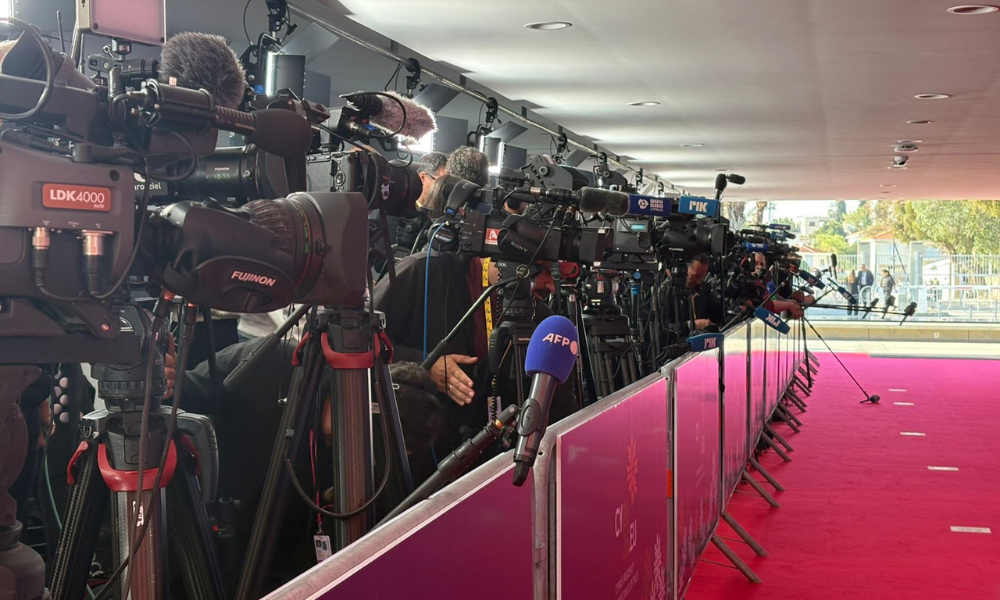
Live footage here
Article 42.7 and Thursday's dinner
According to sources, Thursday evening's dinner among EU heads of state and government produced a significant development: President Christodoulides' proposal on Article 42.7, the EU's mutual defence clause, was accepted by the assembled leaders. Work is now set to begin on drafting a blueprint with specific parameters for its implementation. The same sources said European leaders praised Cyprus's initiative to invite regional partners to Friday's session, describing it as an excellent move toward structured dialogue on the Iran crisis and its broader consequences.
Regional partners join the table
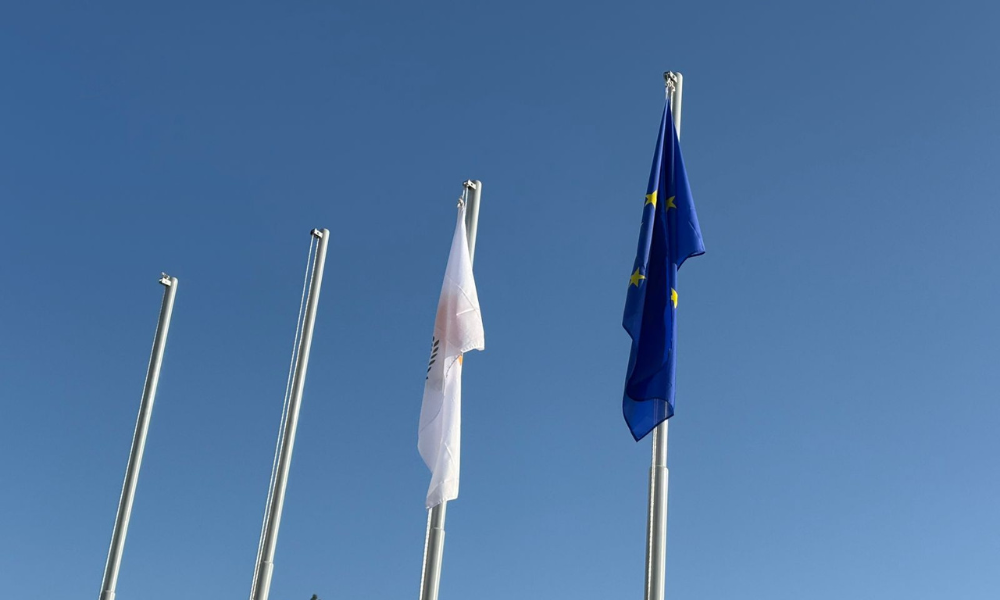
Friday afternoon marks a distinct diplomatic chapter. Leaders from Egypt, Lebanon, Jordan and Syria, as well as the Secretary-General of the Gulf Cooperation Council, have been invited to join an informal working lunch with EU heads of state or government, welcomed by President Christodoulides from 12.50pm. Migration, including potential new flows from Lebanon and Syria, is among the key issues on the EU-Arab agenda, with European capitals emphasising the need to prevent a repeat of the 2015 crisis. Cooperation between Europe and Gulf states is also reported to be deepening on security matters, including restricting Russian technology upgrades to Iranian drones and joint air defence efforts.
‘One Europe, One Market’ roadmap to be signed in Nicosia
Following the welcoming ceremonies, President Christodoulides, European Parliament President Metsola and European Commission President von der Leyen are set to sign the “One Europe, One Market” roadmap. The initiative aims to reduce fragmentation in the single market, strengthen EU competitiveness and strategic autonomy, safeguard the Union’s economic security, and achieve a fully integrated single market by 2027.
The roadmap comprises 42 actions, covering legislative and policy initiatives, most of which are already under negotiation or included in the Commission’s work programme. Each comes with a concrete timeline to accelerate adoption. The actions are organised around five priority pillars: simplification of rules; deepening of the single market; strengthening of trade policy; reducing energy costs and advancing decarbonisation; and accelerating digital transformation and artificial intelligence.
The Iran conflict and energy
Energy costs are expected to dominate much of the broader summit discussion, amid a continued blockade of the Strait of Hormuz, which carries roughly a fifth of the world's oil and gas supplies. Washington's indefinite extension of a ceasefire with Tehran has opened space for diplomatic efforts toward a political settlement, though analysts note that global oil markets take time to normalise even after hostilities ease. EU leaders are also discussing Europe's contribution to de-escalation and the question of freedom of navigation, as well as the implementation of energy decisions taken at the March 2026 European Council.
The summit has also drawn attention for who is not present. For the first time in 16 years, Hungary's Viktor Orbán is absent from the table, following his country's recent elections, after which opposition leader Péter Magyar is set to take over. Hungary is being represented at the level of its permanent representative.
A press conference and public statements by the Cypriot presidency, EU institutions and regional partners are scheduled for the afternoon, following the family photo and bilateral meetings before departures.