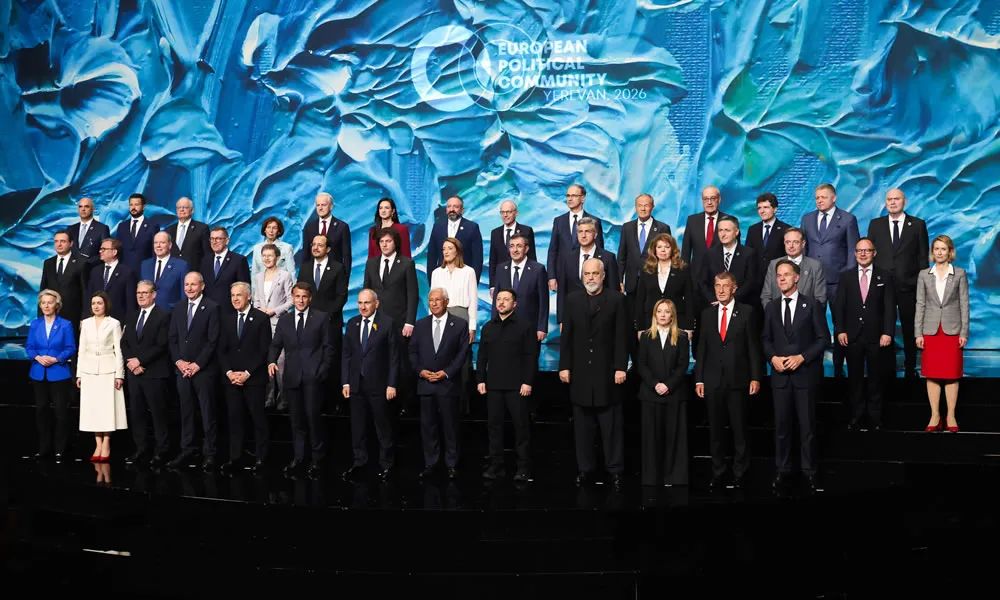

President Nikos Christodoulides highlighted the need to address the “fundamental shift” in Europe’s security landscape on Monday, arguing that the multiple challenges facing the continent go beyond the EU’s borders to demand a “whole-of-Europe” response.
The President made the call at the 8th Summit of the European Political Community (EPC), held in the Armenian capital, Yerevan, with this year’s focus on the future unity and stability of Europe.
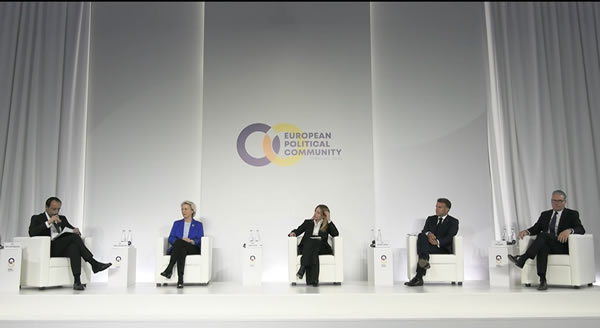
Speaking as moderator of a panel discussion with the leaders of Italy, France, the UK and the European Commission, Christodoulides said: “The escalation in the Middle East reminds us that our neighborhood's stability is a fundamental pillar of our own resilience. From energy supply to maritime routes, what happens there resonates across our continent.
“Within this context a credible European security policy must be anchored in this 360-degree perspective. Addressing the volatility of the Middle East, of Ukraine, of the Western Balkans, is not a matter of regional preference, but a strategic requirement for the entire European family, from London to Nicosia, and from Paris to Yerevan.”
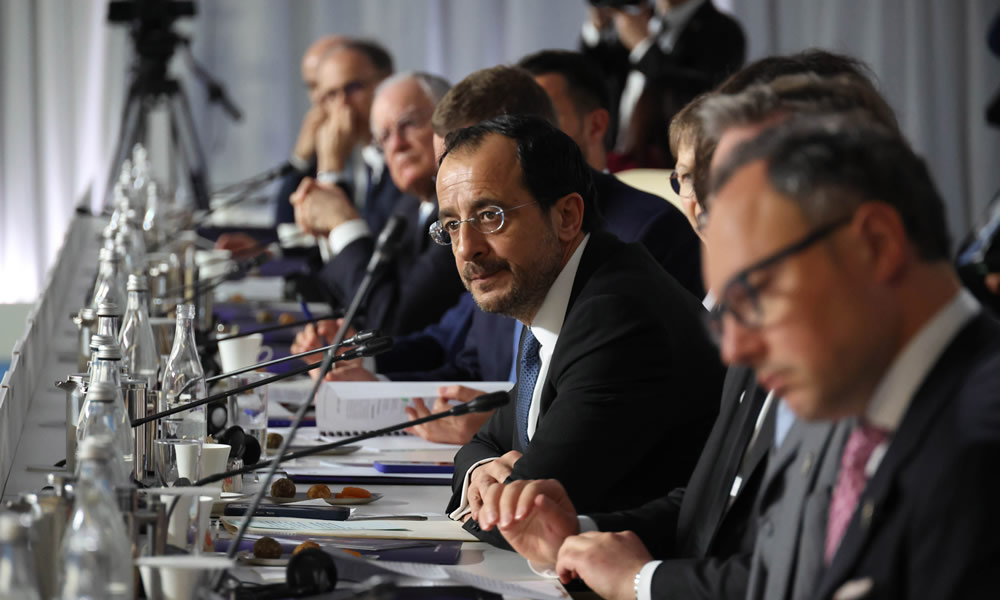
He added: “Our objective is to ensure that Europe has the capacity to act when and where it matters.”
During the panel discussion, Christodoulides posed a series of questions to European leaders on strategic autonomy, Ukraine, Europe’s role in the Strait of Hormuz and migration.
'End overdependencies’
European Commission President Ursula von der Leyen highlighted the need to be rid of overdependencies, starting with imported fossil fuels. Now with the conflict in the Middle East, energy “has really become a choke point for us,” she said, noting that the volatility of global energy prices is “painfully hurting our competitiveness”.
The Commission head called for greater reliance on homegrown, cheaper and more predictable energy sources such as renewable energies from wind, sun, hydropower, geothermal, but also biomass, and nuclear.
The second area of overdependency is security and defence, said von der Leyen, adding that the best way to avoid military aggression is to provide a credible deterrence.
“We need to be able to stand up for ourselves, it is long overdue”, she said, noting that Brussels has mobilised up to €800 billion until 2030 “to fill the gaps” in security and defence.
The third point to European independence is the need to reach out “to like-minded partners” and secure stable, reliable supply chains. Von der Leyen pointed to the EU’s recent efforts to intensify its network of free trade agreements with Latin America, India, Australia, and Mexico.
'From reaction to anticipation'
Italy’s Prime Minister Giorgia Meloni said the EU needed to “step up” its game to be able to tackle the “polycrisis” faced and go from reaction to anticipation, with more focus on a long-term strategy.
Meloni called for a stronger focus on the EU’s Mediterranean neighbourhood, suggesting a broader approach to migration – “to bring together security, development, energy in our cooperation with neighbouring countries.”
'Don’t stop believing'
French President Emmanuel Macron stressed the importance of Europe being a “predictable” partner in addressing the crises faced.
“I really believe that believing in democracy, rules-based order, respect for an open trade and free trade, believing in climate change through innovation and a reasonable approach creates a lot of links amongst us. And our predictability to deliver this agenda is a big advantage vis-à-vis a lot of non-European players”, he said, adding that countries in other regions want to have predictable partners.
On the Hormuz Strait he said Europe was trusted by both warring sides and could provide diplomatic, military, economic and financial services to facilitate a free reopening of the narrow yet critical waterway.
'Europe must lead'
UK Prime Minister Keir Starmer called for a much stronger Europe on defence, security, trade and energy, saying: “It has to be Europe that leads the way.”
Starmer reflected on the conflicts in Iran and Ukraine, noting in a likely reference to the transatlantic relationship that the alliances relied on in the past “are not in the place that we want them to be”.
“It's very important that we therefore face up to this as a group of countries together,” he said.
On providing backup to open the Strait of Hormuz, Starmer acknowledged that Europe is behind on security and defence. “We're not where we need to be.”
The UK PM called for a stronger European element in NATO. The impact of these conflicts and the alliances under tension are real, he warned, adding, “How we as a group of leaders respond now will likely define what goes on for many years, arguably for a generation.”
Zelenskyy calls for single European voice
Also speaking at the Yerevan summit, Ukrainian President Volodymyr Zelenskyy called on Europe to participate in and speak with one voice in peace talks.
“We are in contact with the United States and we understand their views and positions. But it would be good to develop a common European voice,” Zelenskyy said.
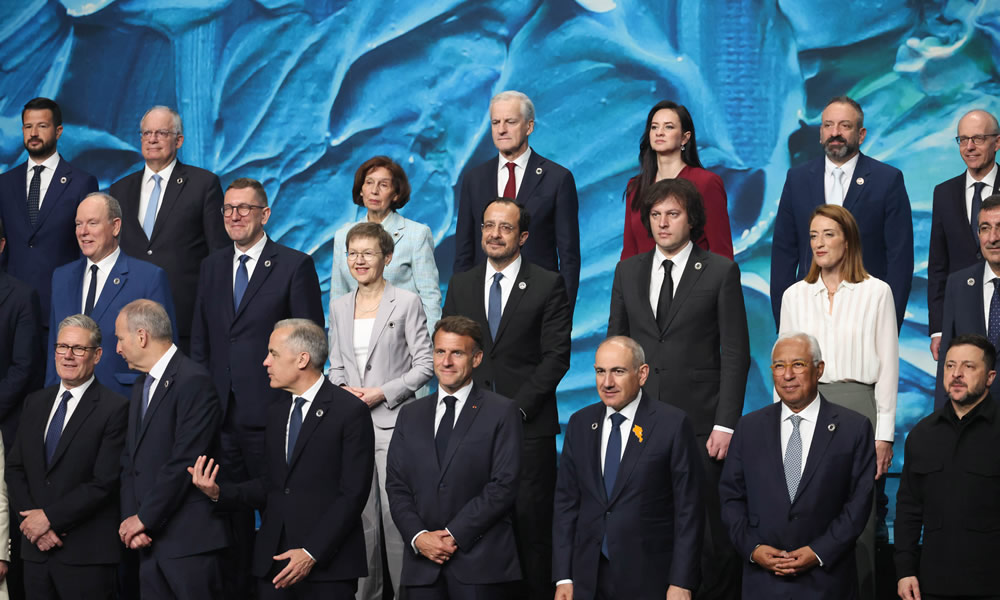
“We need to find a workable diplomatic format, and Europe must be at the table in any talks,” Zelenskyy said, reiterating a call for increased support to secure the means to defend itself against ballistic attacks by Russia.
At the same time, Zelenskyy announced he had agreed with von der Leyen on the sidelines of the summit to move forward with a drone agreement between Ukraine and the EU.
What is the European Political Community?
The EPC is a pan‑European political forum launched in 2022 in response to Russia’s invasion of Ukraine, bringing together 47 EU and non‑EU European states. Proposed by French President Emmanuel Macron, it was designed to provide a flexible, leader‑level space for dialogue on security, energy, resilience and geopolitical coordination. This year’s summit included a non-European – Canadian Prime Minister Mark Carney.
Unlike NATO, the EPC has no defence commitments or military role. Unlike the OSCE, it excludes Russia, has no formal responsibilities, and avoids consensus‑based paralysis. And unlike the Council of Europe, it does not focus on legal norms or human rights enforcement. Informal and non‑binding, the EPC complements existing institutions by acting as a strategic coordination layer rather than a security provider.
A space for rare Cyprus-Turkey contacts
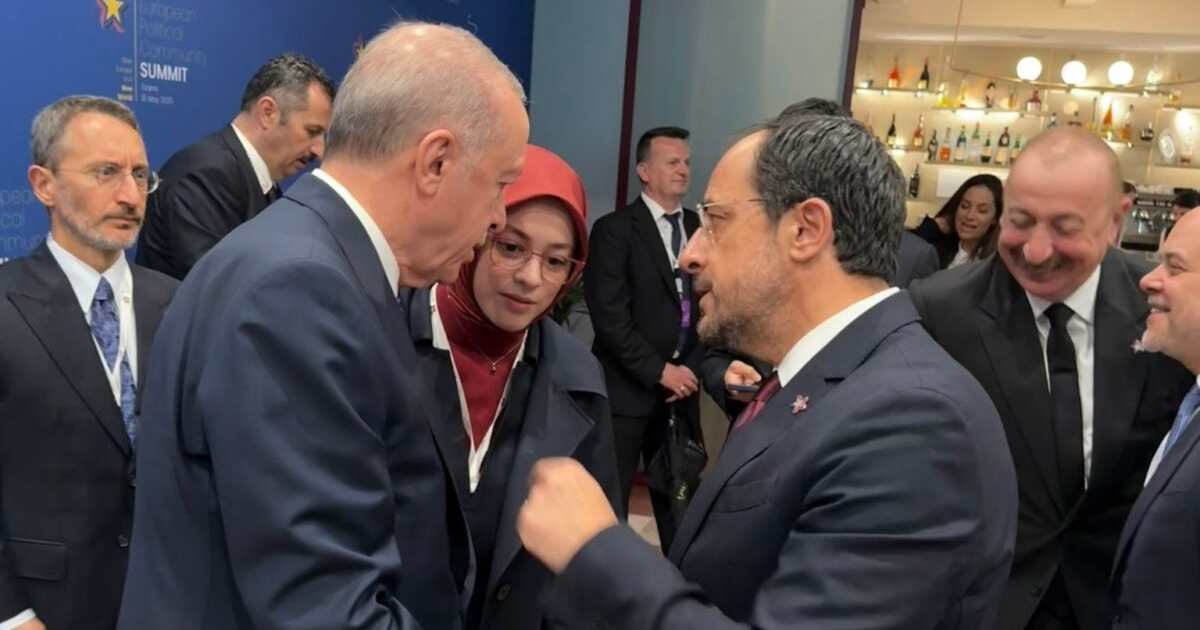
The EPC has also provided rare opportunities for direct contact between President Christodoulides and the Turkish leadership. At the EPC summit in Budapest in November 2024, Christodoulides and Turkish President Recep Tayyip Erdoğan held a brief exchange during a leaders’ dinner, alongside the prime ministers of Greece and Albania, marking a brief dialogue after years of limited contact. A second short conversation followed at the EPC summit in Tirana in May 2025, where Christodoulides reiterated the need for direct dialogue on the Cyprus issue and EU-Turkey relations, while Erdoğan reportedly expressed support for dialogue and closer cooperation with the EU.