
A multinational air defence framework is being established around Cyprus following recent drone incidents and heightened regional tensions. Greece has already deployed naval and air assets, while France and the United Kingdom are sending additional military capabilities. Germany has also responded positively to a request for support, with a decision pending.
The move follows the strike on the British Bases by an Iranian kamikaze drone and the detection and interception of other unmanned aerial vehicles heading towards Cyprus. The developments have prompted coordinated military action by at least three countries.
Greek military deployment
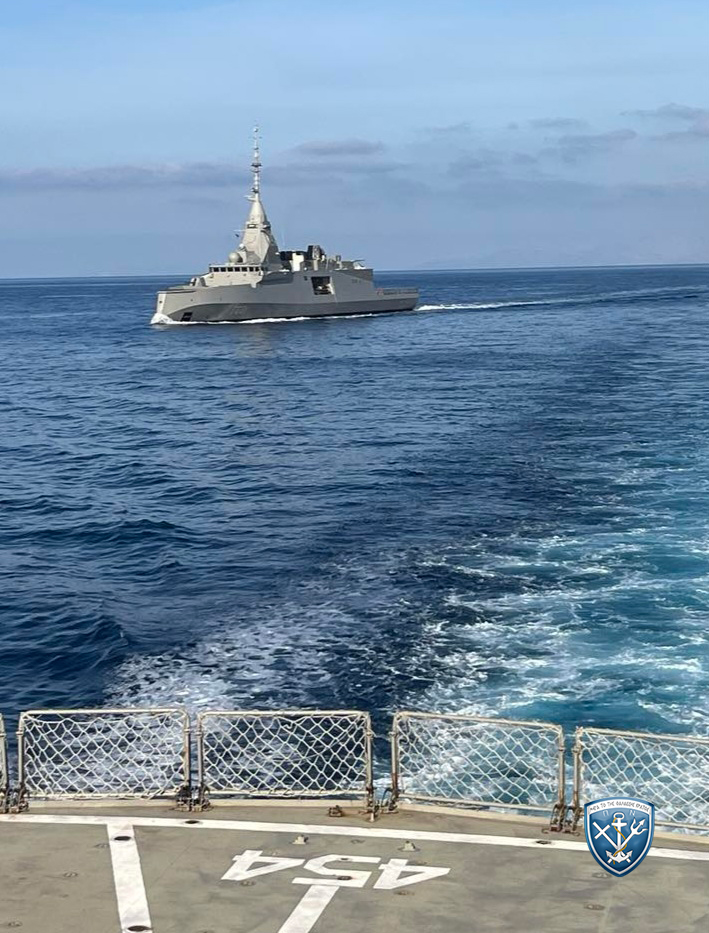
Greece was the first to respond to Cyprus’ request for assistance. Two frigates, “Kimon” and “Psara”, along with four F-16 Viper fighter jets, are already in operational positions.
The four aircraft are on readiness at Andreas Papandreou Air Base in Paphos and can take off immediately if aerial threats are detected by radar systems. Their mission would be to intercept threats before they approach the territory of the Republic.
According to operational planning, one frigate will patrol the area near Paphos airport and the second off the coast of Limassol. Both vessels are equipped with anti-drone systems capable of detecting unmanned aerial vehicles at long range, locking onto them and neutralising them using onboard weaponry.
French support and presidential contacts
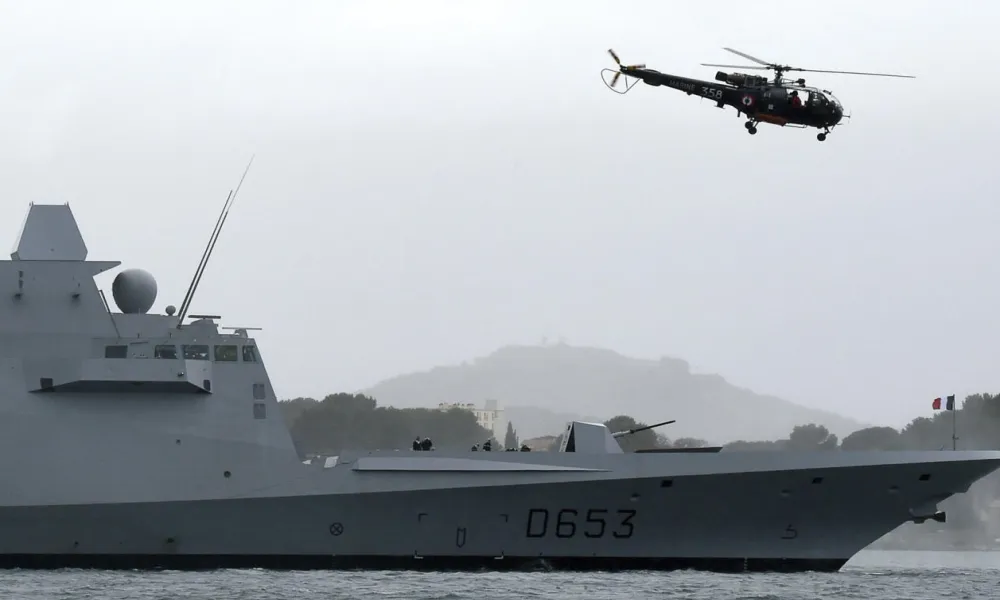
France’s nuclear-powered aircraft carrier is heading towards the eastern Mediterranean. Paris also intends to deploy anti-missile systems, anti-drone systems and a frigate to the region.
The arrangements were made following communication between President of the Republic Nikos Christodoulides and French President Emmanuel Macron, after a request by the Republic of Cyprus. Depending on developments, France may also send a second frigate.
German response
According to the Cyprus News Agency, President Christodoulides also conveyed a request for the dispatch of a frigate to German Chancellor Friedrich Merz during a telephone conversation. Chancellor Merz responded positively, and a formal decision by the German government is expected shortly.
Government coordination and EU dimension
Government Spokesperson Konstantinos Letymbiotis stated that the Republic of Cyprus is in coordination with all its partners, including European Union member states and third countries.
“We are in constant coordination with them. They are assessing the situation and the responses are positive,” he said. He added that EU member states are following Greece’s example and the path opened by Athens. According to Letymbiotis, partners are evaluating the discussions held and will position themselves in line with their own priorities.
United Kingdom deployment
The United Kingdom has decided to deploy the warship HMS Dragon to Cyprus, primarily to protect infrastructure at the British Bases. The decision followed the strike on the Akrotiri Base last Sunday.
In a post on the platform X, UK Prime Minister Keir Starmer stated that the United Kingdom is fully committed to the security of Cyprus and British military personnel stationed there. He said the UK continues its defensive operations and informed President Christodoulides that helicopters with anti-drone capabilities are being sent and that HMS Dragon will be deployed to the area.
The UK is fully committed to the security of Cyprus and British military personnel based there.
— Keir Starmer (@Keir_Starmer) March 3, 2026
We’re continuing our defensive operations and I've just spoken with the President of Cyprus to let him know that we are sending helicopters with counter drone capabilities and HMS… pic.twitter.com/0tsZb4dG2i
“We will always act in the interest of the United Kingdom and our allies,” Starmer stated.
Visit of the Greek defence minister
Greek Minister of National Defence Nikos Dendias visited Cyprus for a direct assessment of the situation following the escalation in the Middle East.
After meeting his Cypriot counterpart Vasilis Palmas, Dendias stated that for Greek society and the nation, Cyprus is not far away and that the Greek government demonstrates that Cyprus is close.
He said Greece is present and will remain present throughout the crisis to contribute in every possible way to the defence of the Republic of Cyprus, in order to protect all lawful residents of the island and deter threats and any unlawful actions.
Dendias reiterated the position of the Republic of Cyprus that it is not participating in military operations against Iran and that countries not involved in hostilities should not be targeted.
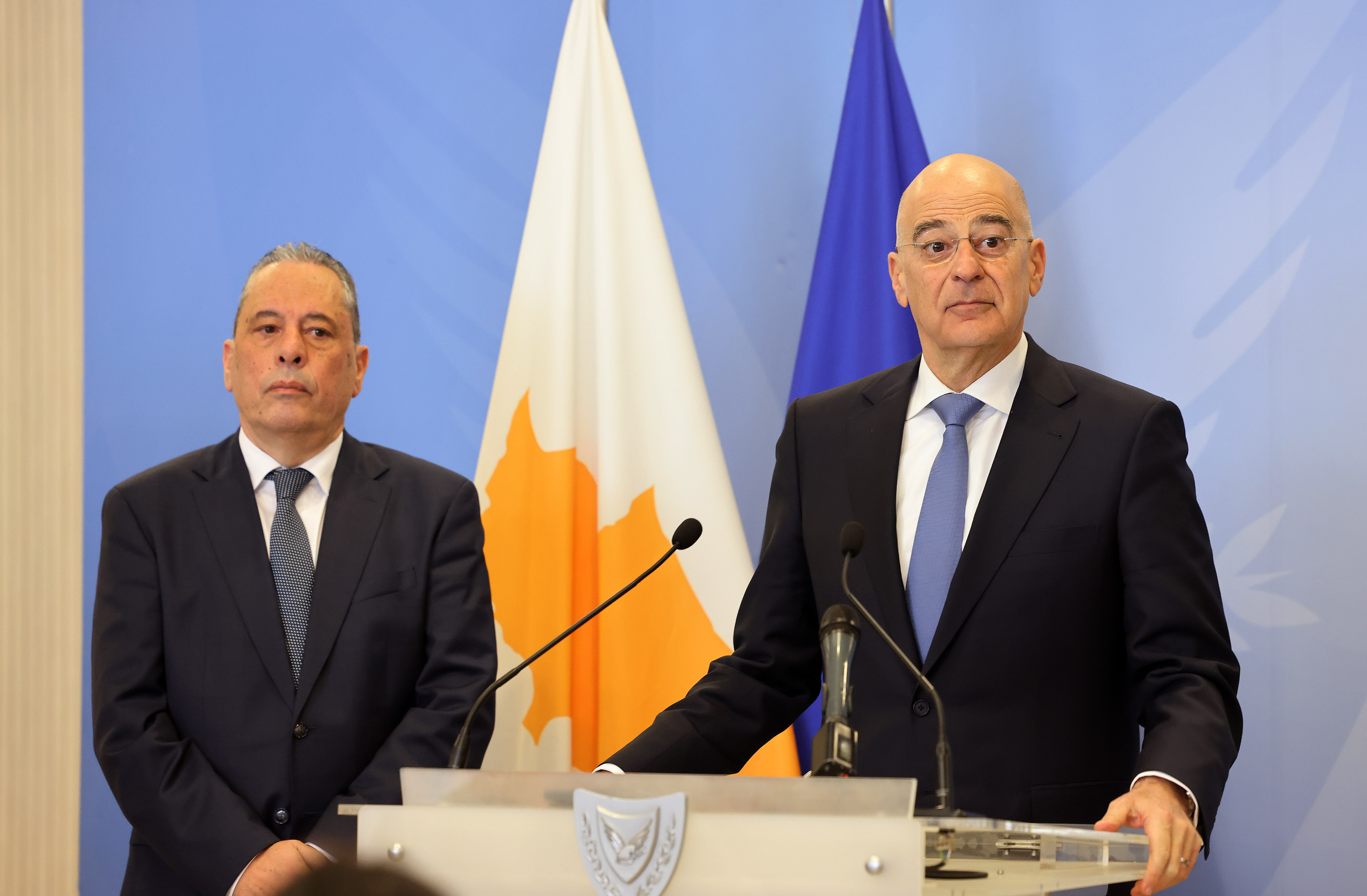
He referred to the decision of the Government Council for Foreign Affairs and Defence to dispatch four F-16 fighter jets and two frigates of the Hellenic Navy. He noted that the frigate “Psara” is equipped with the “Kentavros” anti-UAV system, developed by the Greek innovation ecosystem and successfully tested during the European operation Aspides in the Red Sea. He described the frigate “Kimon” as the most modern frigate in the world.
Minister of Defence Vasilis Palmas stated that on national issues, Greece is unquestionably the most significant partner and strongest supporter of the Republic of Cyprus in all sectors.
Palmas expressed the government’s gratitude to the Greek government for dispatching the two frigates and four F-16 fighter jets to strengthen the country’s defence against current challenges and threats.
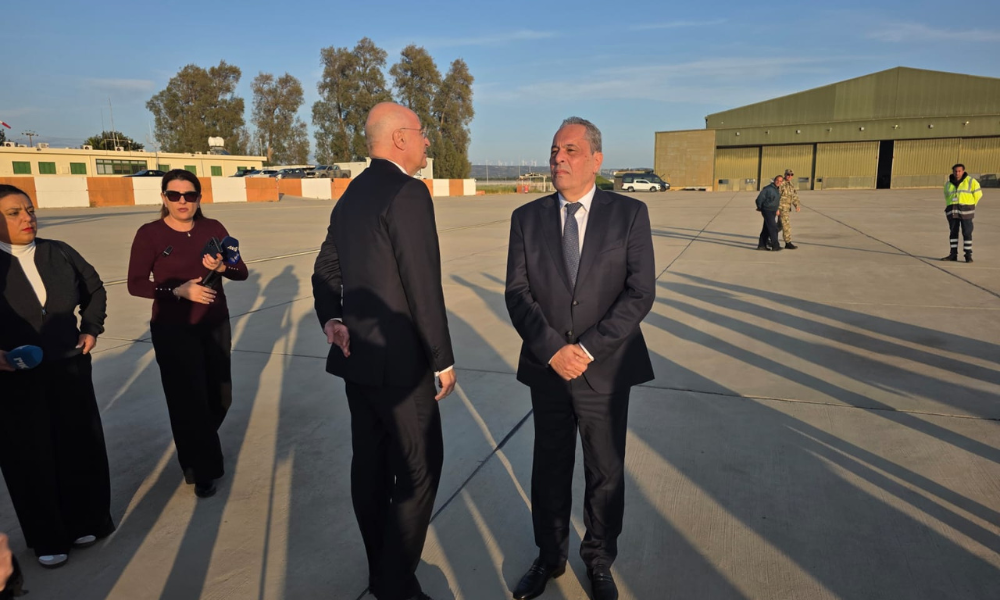
Following their meeting, the two ministers visited Andreas Papandreou Air Base in Paphos, where they spoke with the crews of the four F-16 aircraft and other personnel.