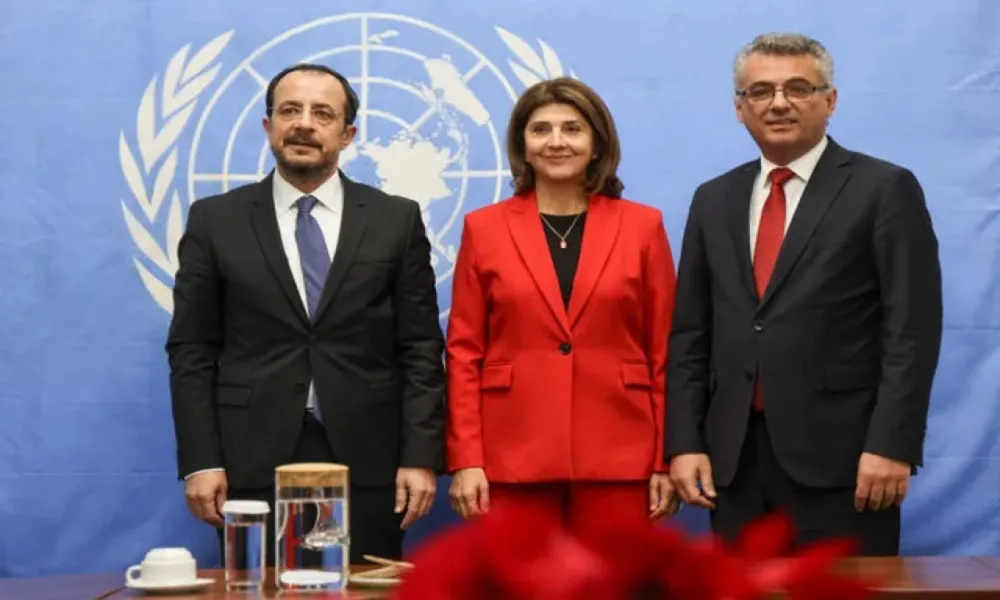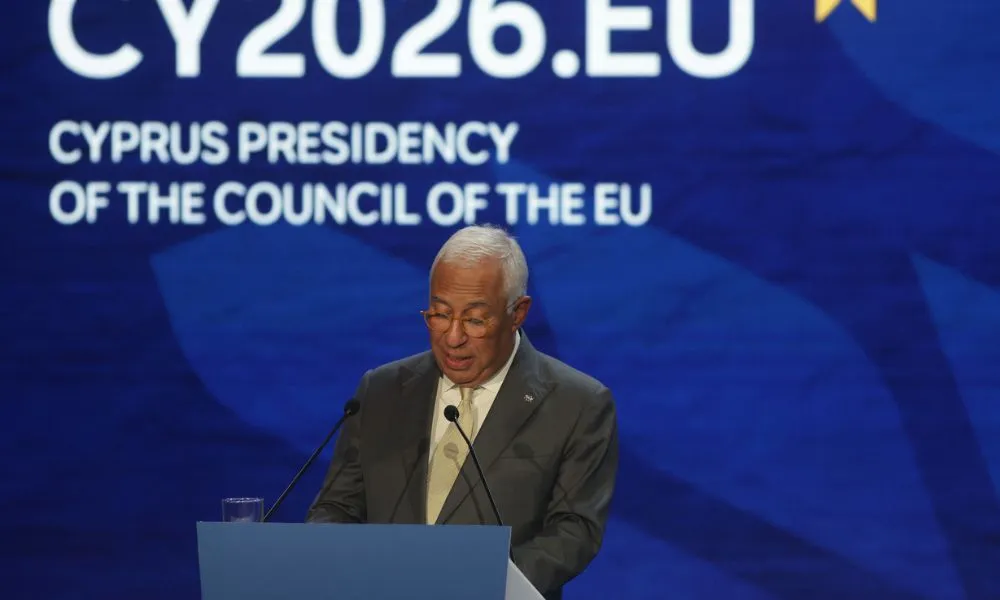

European Council President António Costa has formally invited EU heads of state or government to an informal summit to be held in Cyprus on 23 and 24 April, with President Nikos Christodoulidis hosting leaders across two venues, in Nicosia and Ayia Napa. The meeting arrives at one of the most turbulent moments in the EU's recent history, with the Iran war upending global energy markets, the war in Ukraine entering its fourth year, and member states locked in difficult negotiations over the bloc's next long-term budget.
Ukraine opens the agenda
Discussions will begin over dinner on 23 April with an address by Ukrainian President Volodymyr Zelenskyy on Russia's ongoing war of aggression. Whether Zelenskyy will attend in person remains unclear, and it has so far not been confirmed how he will participate. The dinner session will set the tone for a summit that is, at its core, about the relationship between security and economics, two pressures that the Iran war has made impossible to separate.
The Middle East and the energy shock
The conflict in Iran and the wider Middle East sits at the heart of the agenda. Since late February, the US and Israel's war on Iran has triggered what the International Energy Agency has described as the largest supply disruption in the history of the global oil market, with Iran's blockade of the Strait of Hormuz cutting off a waterway through which around a fifth of the world's oil and LNG trade normally passes. The impact on European households and businesses has been immediate. The conflict coincided with historically low European gas storage levels, estimated at just 30% of capacity following a harsh 2025-2026 winter, causing Dutch TTF gas benchmarks to nearly double to over €60 per MWh by mid-March.
Speaking after an EU orientation debate on energy, European Commission President Ursula von der Leyen put a stark figure on the cost: since the beginning of the conflict, the EU's fossil fuel import bill had increased by over €22 billion in 44 days, without a single additional molecule of energy to show for it. The European Central Bank subsequently postponed its planned interest rate reductions in March, raising its 2026 inflation forecast and cutting growth projections, with economists warning that energy-intensive economies face high risks of technical recession if the maritime blockade persists through the summer refill season.
Costa's invitation letter frames the summit as an opportunity to discuss Europe's contribution to de-escalation and peace in the region, the freedom of navigation, and the economic instruments available to member states, building on decisions taken at the March European Council and on Commission proposals expected to follow. The Union's security readiness will also be on the table, with Costa's letter noting that discussions could include aspects related to Article 42(7) of the Treaty on European Union. That clause obliges all EU member states to provide assistance to any member state that is the victim of armed aggression on its territory, a mechanism that has taken on new salience as Europe grapples with its defence posture in an era of US unpredictability.
Following the formal session of the 27, leaders will be joined by key regional partners for an informal working lunch focused on the Middle East. Costa's letter describes the session as an opportunity to exchange views on shared challenges and emerging opportunities for cooperation, language that points toward Gulf states and other Mediterranean neighbours, though the specific participants have not been confirmed in the invitation.
The budget question that will not wait
The morning of 24 April is reserved for what may prove the summit's most complex and politically sensitive discussion: the EU's next Multiannual Financial Framework, the long-term budget that will govern the bloc's spending from 2028 to 2034. The conversation had originally been scheduled for the March European Council but was postponed in the face of the Middle East crisis. Since then, as Costa notes in his letter, the question has only become more urgent. The central challenge is finding a compromise between the bloc's stated ambitions on security, competitiveness, and social cohesion, and the level of financing member states are willing to commit, including the politically contentious question of new own resources, meaning new revenue streams flowing directly to the EU rather than from national contributions.
The timing is pointed. With energy costs surging, defence spending rising, and the competitiveness gap with the United States and China stubbornly persistent, the next long-term budget will be the primary instrument through which the EU either backs its rhetoric with resources or concedes that it cannot. Costa has indicated leaders will return to the MFF regularly throughout 2026 with the goal of reaching agreement by year's end.
Cyprus as host and as argument
Costa has previously pointed to Cyprus's proximity to and diplomatic engagement with the Mediterranean, the Middle East and the Gulf as a key European asset, and has highlighted the island's leadership in humanitarian assistance to Gaza through the Amalthea corridor initiative. Hosting the informal European Council is the most visible expression yet of Cyprus's role during its current presidency of the Council of the EU, which runs until the end of June 2026. For Christodoulidis, putting European leaders around a table on Cypriot soil, with the Middle East as the defining issue, is both a diplomatic opportunity and a statement about where Cyprus sits in the EU's emerging strategic geography.