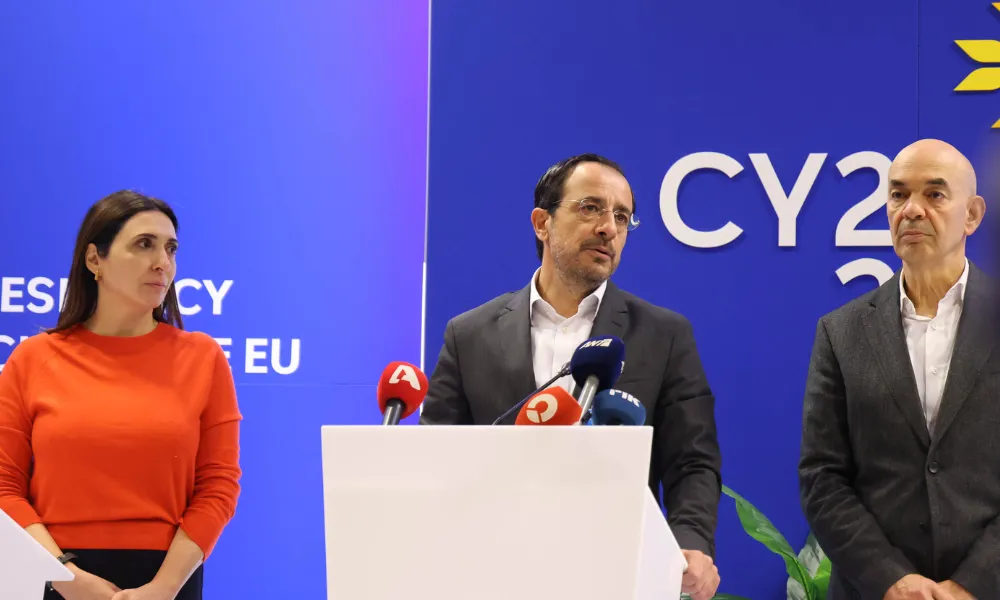



When EU heads of state arrive in Nicosia and Ayia Napa on 23-24 April, it will mark the first time Cyprus has hosted the full gathering of European leadership since joining the bloc in 2004. The two-day informal summit, held under the Cyprus EU Council Presidency, will cover Ukraine, the Middle East conflict, and the EU's long-term budget for 2028-2034. It will not, however, take place against an entirely smooth domestic backdrop: livestock farmers, in the grip of a foot-and-mouth disease crisis and furious over what they describe as inadequate compensation for mass animal cullings, have announced plans to block key routes on the opening day, including roads to Larnaca's airport and port.
The programme reflects both the gravity of the moment and the hand Nicosia has played. On the evening of 23 April, leaders will hear directly from Ukrainian President Volodymyr Zelensky on Russia's ongoing war. The following day, after the meeting of all 27 member states, an expanded working lunch will bring in key regional partners to discuss the Middle East, an addition that Cyprus actively pushed for.
A geographic convenience
Christodoulides has been building toward this summit since before the presidency began. He has said the January visit by European Commission President Ursula von der Leyen and European Council President António Costa to Jordan, Syria and Lebanon came at his suggestion. He was also the driving force behind last October's EU-Egypt summit in Brussels. At the March European Council, he arrived with what he described as "some ideas" for an EU de-escalation initiative in the Middle East, saying he had spoken the previous night with the UN Secretary-General.
The framing is that Cyprus is an active diplomatic bridge. "We will leverage our geographical position, our political credibility, and our longstanding knowledge of the specificities of the region," Christodoulides said in January. The island maintains working relationships with Lebanon, Israel, the Palestinian Authority, Jordan, Egypt, Saudi Arabia and Qatar, a range few EU member states can match.
Cyprus controls
Whether that translates into tangible outcomes this week is a separate question. The summit is informal by design, meaning no binding decisions are expected. The agenda was set by the European Council, not Nicosia. And the two headline items, Ukraine and the EU budget, are not areas where Cyprus carries particular weight. What Cyprus does control is the symbolism of the occasion and the composition of the regional lunch on 24 April. The guest list for that session has not been fully published, but it is understood to include leaders from the Gulf and the broader Middle East. Christodoulides has described the gathering as sending "a clear message" that the Middle East is Europe's neighbourhood and that the security of the two regions is linked.
Protests on the doorstep
The farmers' planned mobilisation on Thursday adds a complicating dimension to what the government had hoped would be a seamless diplomatic showcase. Livestock farmers held a protest on Sunday outside the Ministry of Agriculture, briefly blocking the road at the junction of Limassol and Athalassa avenues in Nicosia, and delivered a memorandum to the Director of Veterinary Services, Christodoulos Pipis, demanding an end to the culling of healthy animals and a concrete compensation framework. They have since warned of escalation, with road blockades announced for the Rizoelia roundabout and at Larnaca airport and port on 23 April itself.
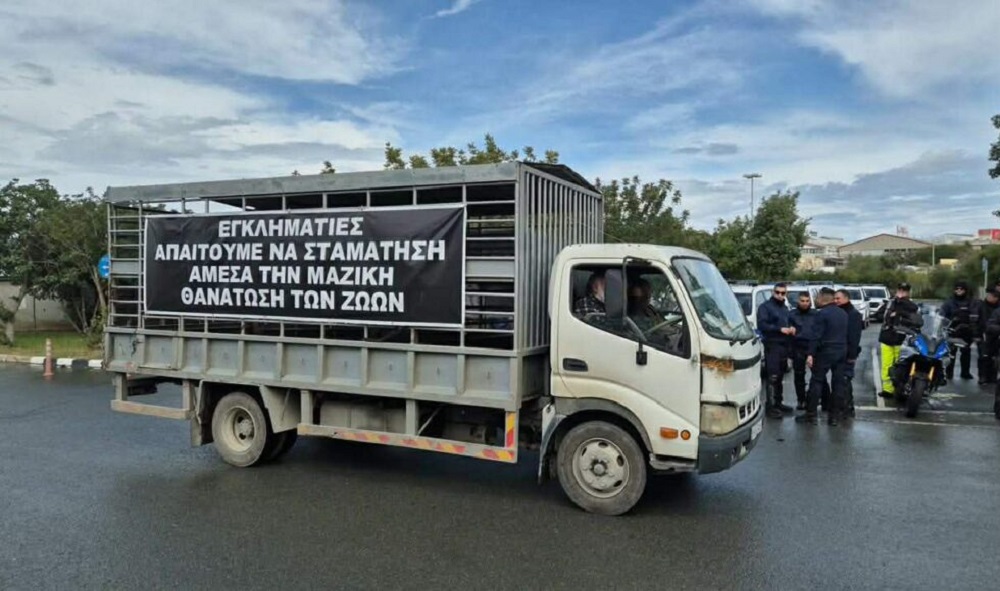
Stella Petrou, a livestock farmer and one of the protest's organisers, described the compensation figures on offer as insulting. "A sheep or goat costs around €600 to raise from birth and they are offering us €113," she told the Cyprus News Agency. A separate spokesperson for the farmers' group, Stella Markou, accused the authorities of operating without a clear strategy and warned that up to 50% of producers would not restart their operations given the financial and psychological toll of the crisis. Exports have already been suspended, with resumption of some product lines potentially taking three to five years.
The government's response has been to appeal for restraint while stopping short of substantive new commitments. Deputy Government Spokesman Yiannis Antoniou, speaking on state radio, said the EU Council Presidency was "a national mission" and expressed hope that farmers would reconsider the timing of their action. "I want to believe that second thoughts will prevail," he said, adding that the government would do "whatever is necessary" to address farmers' concerns. He defended the culling policy as the only available means of containing the virus, and confirmed that compensation had been paid to those who submitted applications for cullings carried out before Easter.
The question of whether further concessions will be offered before Thursday is now an open one. The government is visibly caught between its obligations under EU veterinary law, which leaves it little room to deviate from the culling protocol, and the political pressure of an agricultural sector in distress, with a pre-election period underway and all of Europe watching. Antoniou's language, notably the promise that "whatever needs to be done will be done," suggests the door to additional support measures is not closed, but no specifics have been put on the table.