
US President Donald Trump’s proposed Board of Peace began as a mechanism tied to Gaza’s fragile ceasefire, when he first tabled the peace plan in September 2025. Since last Friday, when invitations to join his Board of Peace bagan circulating, it has evolved into something far more ambitious and far more controversial, raising questions about power, legitimacy and the future shape of international conflict management.
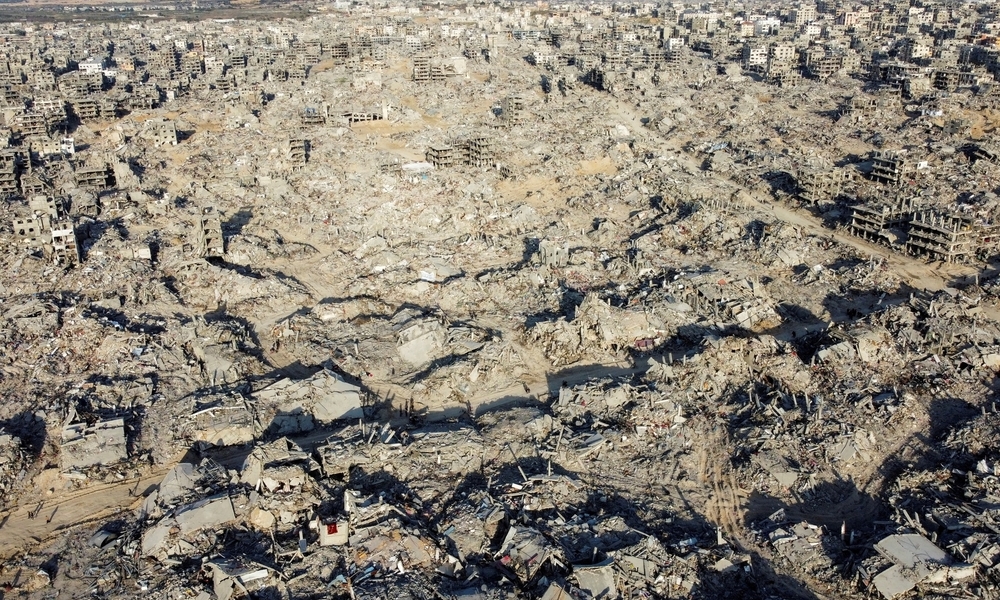
The idea first surfaced as part of Donald Trump’s plan for ending the Israel-Hamas war and managing Gaza’s post-war transition. The ceasefire that came into force in October stabilised the fighting but left unresolved the hardest questions: who governs Gaza, how it is secured, how Hamas is disarmed and who pays for reconstruction in a territory where the United Nations estimates around 80 percent of buildings have been damaged or destroyed.
The Board of Peace and the invitations
The Board of Peace was conceived to sit at the centre of that next phase. Trump's team has circulated invitation letters and a draft charter to dozens of governments, asking them to become “founding members” of a new peace-building body.
Reuters reports that around 60 countries may have been invited in total, including:
- Argentina
- Australia
- Canada
- Egypt
- Turkey
- Jordan
- Greece
- Cyprus
- Pakistan
- India
- Paraguay
- Russia
- Hungary
- Vietnam
- Uzbekistan
- Kazakhstan
Hungary and Vietnam have gone further, formally accepting invitations. Hungary’s acceptance was confirmed by Foreign Minister Péter Szijjártó, while Vietnam’s decision was announced in a foreign ministry statement.
Vladimir Putin invited?
The Kremlin announced on Monday that Russian President Vladimir Putin has “received an invitation” to join the Board of Peace.
“President Vladimir Putin received an invitation through diplomatic channels to participate in the composition of the Board of Peace,” Kremlin spokesperson Dmitry Peskov said during the regular briefing of journalists. He added that Russia “wants to clarify all the nuances” of the proposal.
Washington has not published a definitive list. The US is expected to announce confirmed members in the coming days, possibly around the World Economic Forum in Davos.
The 1 billion dollar question
Countries can join the board for an initial three-year term without paying a fee, however, a contribution of more than one billion dollars within the board’s first year secures a lasting seat, according to the New York Times. US officials cited by AP say the funds would go towards rebuilding Gaza, but the model introduces a clear hierarchy in which influence is tied to financial capacity.
Mission supports or competes with UN system?
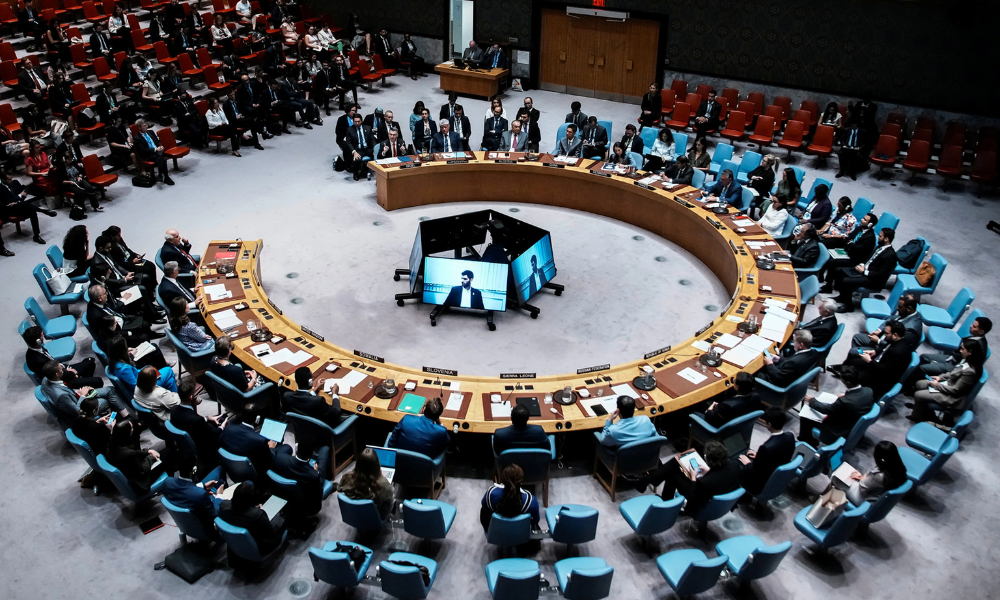
What has drawn particular scrutiny is the scope of the board itself. While it was conceived in relation to Gaza, the draft charter viewed by the New York Times does not mention Gaza at all. Instead it has set out a mission to “promote stability, restore dependable and lawful governance, and secure enduring peace in areas affected or threatened by conflict” and “to undertake peace-building functions in accordance with international law.” That language has fuelled speculation that the board is designed to expand beyond Gaza and could operate as a US-led alternative to existing multilateral mechanisms, including the United Nations Security Council (UNSC).
According to the charter, the board is expected to meet for voting at least annually, and expenses are to be funded through voluntary contributions from member states or other sources. The charter does not elaborate on the peacekeeping efforts, the New York Times wrote.
A UNSC resolution adopted in November 2025 endorsed Donald Trump’s Gaza ceasefire plan and explicitly welcomed the establishment of the Board of Peace as a transitional body to coordinate funding and oversee reconstruction in Gaza, giving it a degree of formal recognition even as it sits outside the traditional UN system and is chaired directly by Donald Trump. Greece’s foreign minister, George Gerapetritis, has publicly noted that Greece is reviewing its invitation. He said that the initiative “is in accord with UN Security Council resolution 2803,” which Greece supported as a non-permanent member of the Council.
“Greece remains firmly committed to the resumption of the political process, with the goal of achieving a two-state solution based on UN resolutions, as the only answer to the long-standing Palestinian demand for an independent state,” he said.
'Powerful forces' undermining global cooperation
In a speech marking the UN’s 80th anniversary, Secretary-General António Guterres cautioned that “powerful forces” are lining up to undermine global cooperation, calling for renewed commitment to multilateralism and international law at a moment of deep geopolitical uncertainty. Delivered against the backdrop of funding cuts and growing reliance on ad-hoc arrangements, his remarks underscored concerns that peace initiatives operating outside established UN frameworks risk further weakening an already strained international system.
The Gaza Executive Board
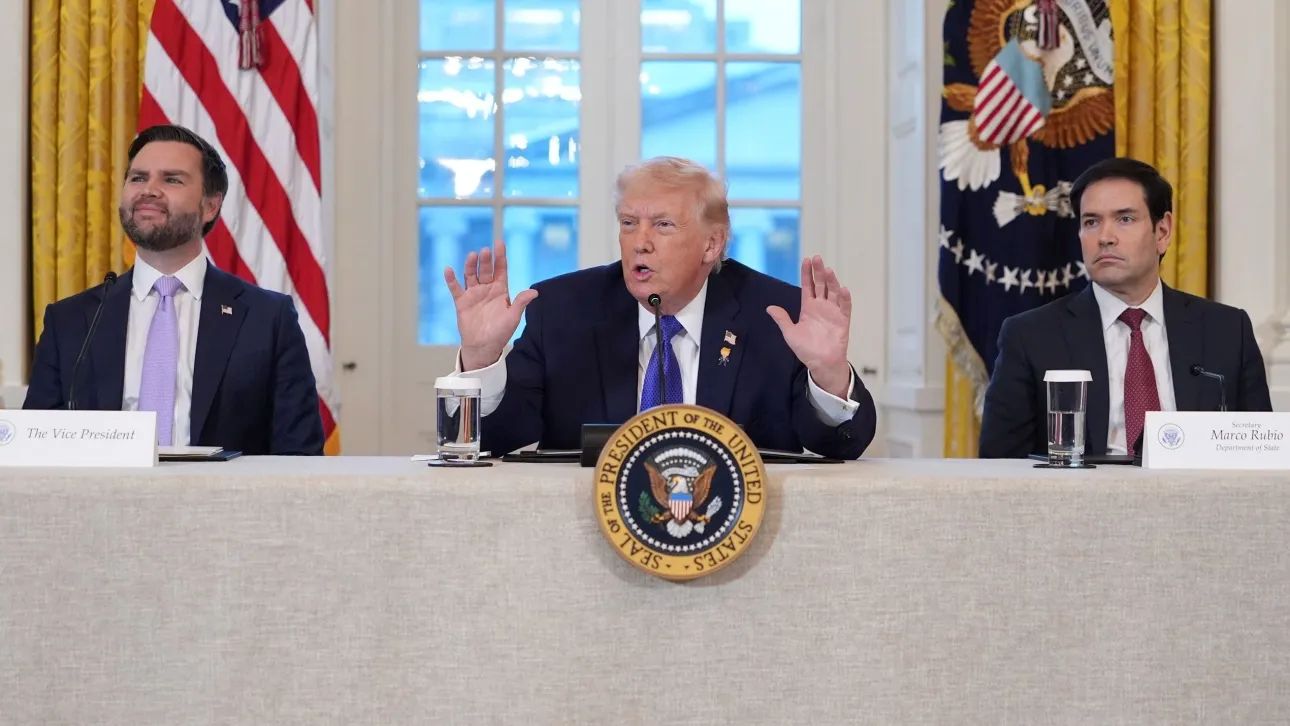
Alongside the “Board of Peace”, the White House has also announced a separate “Gaza Executive Board”, intended to support a committee of Palestinian technocrats responsible for day-to-day administration in Gaza. According to AP and Reuters, that executive group includes senior US figures such as Secretary of State Marco Rubio, Trump envoy Steve Witkoff, Trump’s son-in-law Jared Kushner, former UK prime minister Tony Blair and World Bank president Ajay Banga. The Gaza executive board reportedly also includes Ali al-Thawadi, a senior Qatari official, and Hakan Fidan, the Turkish foreign minister, among others.
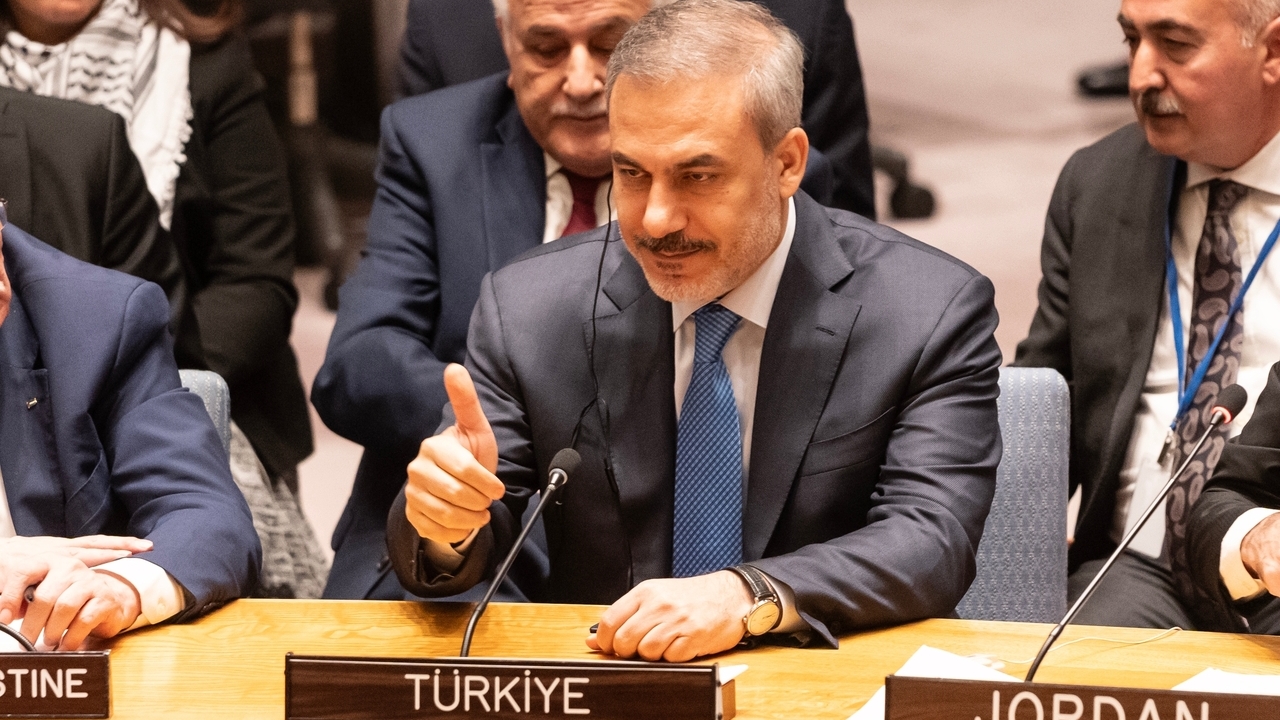
According to reporting, the executive body includes an Israeli businessman, billionaire Yakir Gabay, but no Israeli government official and no Palestinian representative. Palestinian involvement is instead channelled through a separate committee of technocrats tasked with the day-to-day administration of Gaza, operating under the board’s oversight. The absence of official Israeli and Palestinian figures from the executive structure has added to criticism that key stakeholders are being sidelined in favour of a model driven by external actors and political appointees.
The announcement prompted a rare public objection from the office of Israeli prime minister Benjamin Netanyahu, which said the executive board had not been coordinated with Israel and ran contrary to its policy. According to Reuters, Israeli officials have expressed particular unease about Turkey’s involvement, reflecting wider regional anxieties about who shapes Gaza’s future and on what terms.
Cyprus’ role and its invitation
Cyprus has confirmed receipt of an invitation, sent by the White House to President Nikos Christodoulides.
Government spokesperson Konstantinos Letymbiotis has rejected claims that Cyprus’ participation would carry any financial obligations, following reports that contributing countries would have to pay 1 billion euros to maintain a seat on the board. Letymbiotis said the invitation does not require the Republic of Cyprus to make any payment. He said the government is assessing the proposal with institutional seriousness and full awareness of the country’s role and capabilities, adding that reports linking Cyprus to potential costs relate only to separate arrangements for states seeking permanent status. Any attempt to associate Cyprus with such scenarios, he said, is unfounded and misleading.
Yet the invitation has also triggered unease at home. Former foreign minister Erato Kozakou-Marcoullis raised concerns publicly on Sunday night, questioning the legal clarity of the board’s charter, its positioning outside established UN frameworks and the implications of Cyprus associating itself with a body whose mandate, membership rules and long-term scope remain opaque.
As it stands, Trump’s Board of Peace is partly anchored in a UN-backed ceasefire framework, partly shaped by transactional membership rules and increasingly surrounded by signs that it could evolve into a broader platform for US-led conflict management. The invitation to Putin has intensified doubts about the board’s ultimate purpose and limits.
Sources: New York Times, Associated Press, Reuters, The Guardian, Bloomberg.