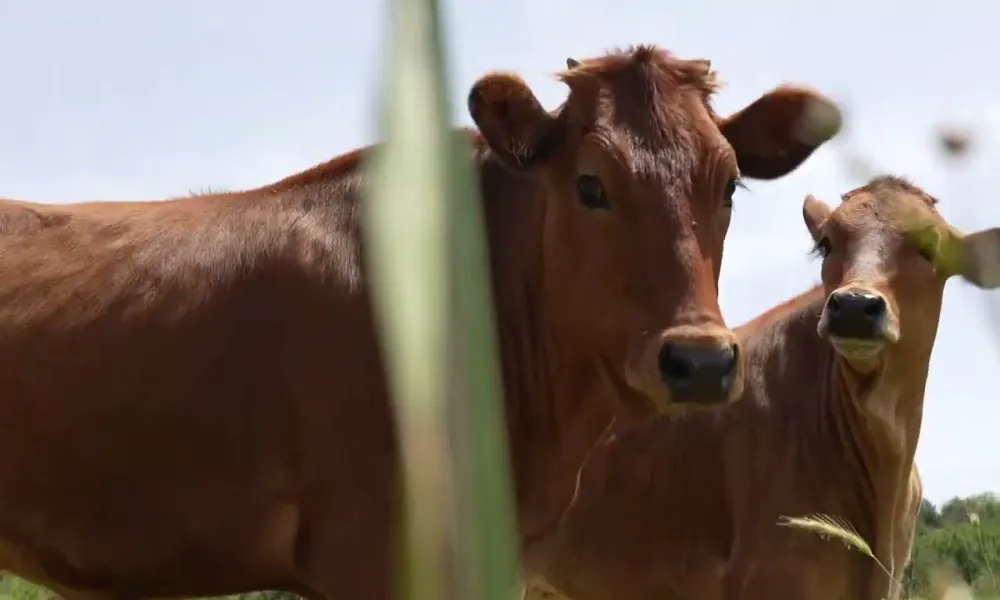
Scientists have called on the Ministry of Agriculture to adopt special measures to protect Cyprus’ native cattle breed amid the restrictions imposed to contain foot-and-mouth disease.
In a letter addressed to the Minister of Agriculture, Associate Professor of Ruminant Animal Breeding and Nutrition at the Cyprus University of Technology, Dr Ouranios Tzamaloukas, and Professor of Molecular Biology and Genetics of Farm Animals, Dr Despoina Miltiadou, warn that the current measures could threaten the survival of the breed.
They stress that the Cyprus Bovine Breed is a unique genetic resource at global level and is subsidised by the European Union as a rare breed. As they note, the population cannot be reconstituted or replaced from abroad, making its protection particularly urgent.
Only 1,304 animals across Cyprus
According to figures cited in the letter, the total population of the breed currently stands at 1,304 animals across Cyprus. Of these, 737 are female and 82 are males over two years old, based on the most recent count conducted by the Ministry of Agriculture in 2024.
The researchers warn that any significant reduction in this number could lead to genetic collapse and severe inbreeding, ultimately threatening the long-term survival of the breed.
Proposals for special protection measures
Within this context, the scientists propose a number of targeted measures specifically for the breed.
Their recommendations include:
- Universal vaccination of all animals of the breed across Cyprus, rather than limiting vaccination to farms located within the 10-kilometre protection zone around confirmed cases.
- Emergency financial support or the provision of animal feed to breeders, enabling them to maintain their livestock during periods when grazing is prohibited.
- Restrictions on human and vehicle access for recreational activities in areas where the breed is raised, such as the Akrotiri salt lake grazing area.
- Exemption of farms raising the breed from mandatory mass culling in the event of an outbreak, replacing it with strict quarantine and biosecurity measures.
Grazing-based farming affected by restrictions
The scientists also emphasise that the native breed is typically raised through extensive farming, relying mainly on grazing in natural pastures.
As a result, the grazing ban imposed on 26 February has had a disproportionate impact on these producers, since many farms lack the infrastructure required to confine animals indoors.
According to information cited by the researchers, several breeders have already proceeded with mass slaughter of young animals, as maintaining them with purchased feed has become economically unsustainable.
Concern over potential mass culling
Particular concern is also expressed about the potential application of total culling measures on farms where cases of the disease are detected.
The scientists note that the uneven distribution of animals across farms means that the loss of a single large breeding unit could have severe consequences. One producer in the Kofinou area, for example, reportedly holds more than 10% of the total population of the breed.
In such a scenario, they warn, the overall population could fall below the threshold required to sustain the breed.
EU regulation allows exemptions
The researchers also point out that the European legal framework allows exemptions from culling in specific cases.
In particular, EU Regulation 2020/687, which concerns Category A diseases such as foot-and-mouth disease, provides that authorities may refrain from applying total culling when animals are officially registered as rare breeds or possess high genetic or cultural value.
In such cases, strict biosecurity, quarantine and clinical monitoring measures may be applied instead.
The two scientists state that they are available to provide further scientific clarification to the competent authorities, stressing that protecting the native cattle breed is essential for safeguarding a valuable genetic resource for Cyprus.