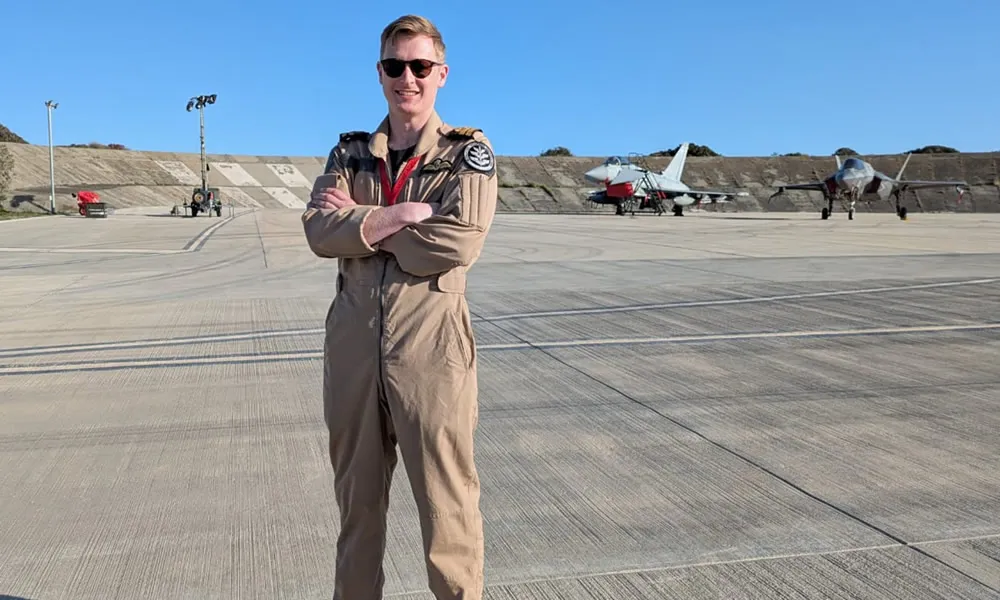

A British fighter pilot based at RAF Akrotiri in Cyprus has become the first Royal Air Force F-35 pilot to destroy an enemy target in combat, after intercepting and shooting down two Iranian drones during a night mission over Jordan earlier this week.
In an article by The Guardian, the pilot was flying a four-hour patrol alongside two Typhoon aircraft when radar systems detected two Shahed-type drones. The aircraft were subsequently destroyed with ASRAAM air-to-air missiles.
The pilot, described as a squadron tactics instructor and not publicly named for security reasons, said the operation required careful identification of the targets before any engagement.
“There’s a lot of assets from America and from Israel moving to and from the area of operations,” he said. “So I’m more concerned about identifying the target first before taking any shots.”
Working together with the Typhoon aircraft, the crews confirmed the targets before launching the missiles that destroyed the drones. The engagement marked the first confirmed combat interception by the RAF’s stealth F-35 fighter.
High-risk interception
Despite the historic milestone, the pilot said there was little time for reflection once the drones had been destroyed.
“You are more concerned about making sure you have shot the right thing and that the aircraft is positioned correctly,” he said. “It is not a euphoric sense of success. You just get out of the way and get back to doing the job again.”
The interception comes amid heightened tensions across the Middle East following retaliatory exchanges between Iran and Israel, with regional airspace heavily monitored by allied forces.
The RAF aircraft had departed from RAF Akrotiri, the United Kingdom’s main military base in Cyprus, which itself has been on high alert in recent days.
A drone struck the base on Sunday night, reportedly targeting a hangar housing US reconnaissance aircraft. Military officials believe the drone may have been launched by Iran-backed Hezbollah militants in Lebanon as part of wider regional retaliation.
Difficult targets to detect
The pilot explained that small drones such as the Shahed models present particular challenges for interception because of their size and flight profile.
“Because they are so small and difficult to detect, you do not know if there are more out there,” he said. “When you turn your aircraft to shoot them down, you are not pointing your radar back to where they came from to try to find the next one.”
However, he noted that the drones destroyed during the mission appeared to be different from the one that had struck RAF Akrotiri the previous day, suggesting they may have originated from a different launch point.
Base on high alert
RAF Akrotiri has faced several missile alerts in recent days as the conflict escalates across the region.
UK Defence Secretary John Healey visited the base this week while British forces remained on heightened operational readiness. Three potential missile alerts were triggered in a 24-hour period, though each was ultimately confirmed to be a false alarm.
The pace of operations has left little time for celebration among the crews involved.
After returning to the base in the early hours following the mission, the pilots briefly marked the moment together.
“We had one KEO beer at sunrise,” the pilot said. “Then I had to go to bed because I was on duty again the next day.”
With RAF operations continuing at a high tempo, he added that any proper celebration would have to wait.
“When this is all over, whenever that is, I am sure we will celebrate appropriately.”