Iran is prepared to consider compromises in order to reach an agreement with the United States on its nuclear programme, provided that Washington is willing to discuss lifting sanctions, said Iran’s Deputy Foreign Minister Majid Takht‑Ravanchi in an interview with the BBC on Sunday.
Tehran has repeatedly stressed that it is ready to negotiate limits on its nuclear activities in exchange for sanctions relief, while firmly rejecting any attempt to link the issue to other matters, such as its missile programme.
Takht‑Ravanchi confirmed that a second round of nuclear talks will take place on Tuesday in Geneva, following the resumption of discussions between Tehran and Washington in Oman earlier this month.
“The initial talks moved more or less in a positive direction, but it is far too early to draw conclusions,” Takht‑Ravanchi told the BBC.
Meanwhile, according to Reuters, a US delegation including envoys Steve Witkoff and Jared Kushner is expected to meet the Iranian side on Tuesday morning, with representatives of Oman acting as mediators.
Iran’s nuclear chief said on Monday that the country could agree to dilute its most highly enriched uranium in exchange for the full lifting of economic sanctions. Takht‑Ravanchi cited this example in the interview to highlight Tehran’s flexibility.
However, the Iranian diplomat reiterated Tehran’s position that it will not accept zero enrichment of uranium – a key stumbling block in last year’s efforts to reach a deal, as the United States views enrichment on Iranian soil as a pathway to developing nuclear weapons. Iran denies seeking to build nuclear arms.
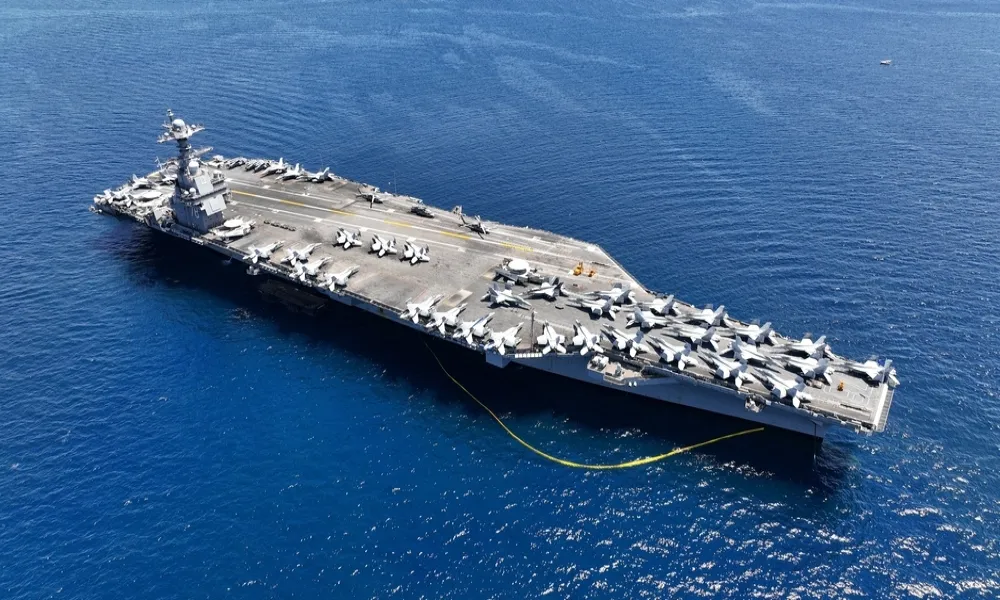
US President Donald Trump, meanwhile, has ordered the world’s largest aicraft carrier, the USS Gerald R. Ford, to head from the Carribean to the Middle East, joining the USS Abraham Lincoln and its strike group which is already positioned in the area.
Speaking to reporters on Friday, Trump said he dispatched the warship “in case we don’t make a deal, we’ll need it.”
Sources: BBC, CNA, Reuters