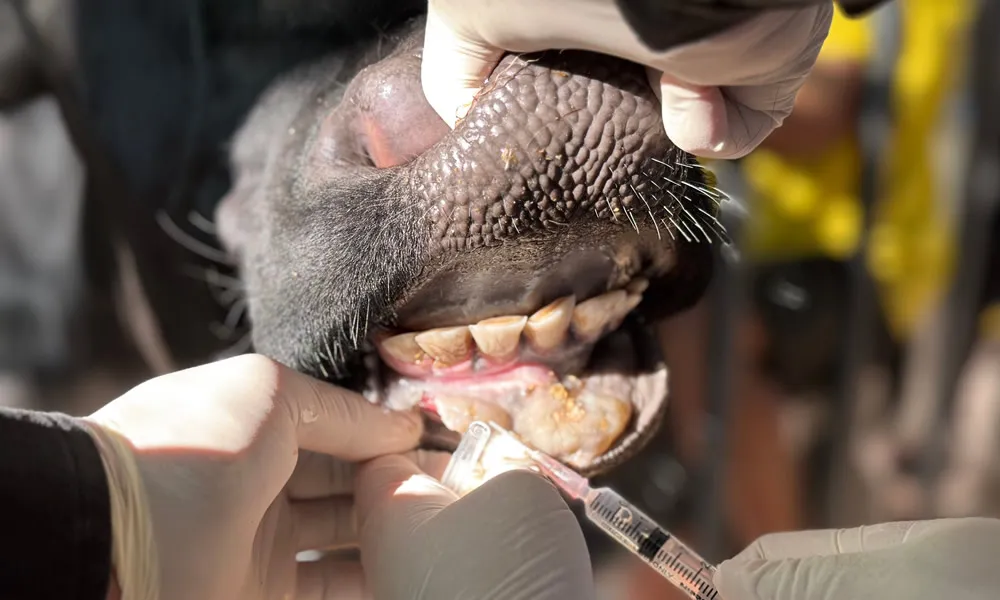
The 500,000 doses of the foot-and-mouth disease (FMD) vaccine delivered on Friday by the European Commission to the Republic of Cyprus were handed over to the Turkish Cypriots on the same day, the Director of Veterinary Services, Christodoulos Pipis, told CNA on Saturday.
The doses were delivered to Turkish Cypriots through the Bicommunal Technical Committee for Health at the Ledra Palace checkpoint, he said.
He assured that the appropriate checks have been carried out for possible incidents of FMD in areas controlled by the government, with the results being negative.
Asked if the Veterinary Services are informed about the state of play of the FMD outbreak in the north, Pipis answered negatively, saying the Turkish Cypriots “are not telling us anything beyond what they made known through the team of experts who came and that they have carried out the second vaccination in the three cattle breeding units in Lapathos village. Beyond that, they have not mentioned anything else, and we do not know anything.”
The Veterinary Services explained that the 500,000 doses of the vaccine against foot-and-mouth disease are intended for the vaccination of small ruminants, namely sheep and goats and other animals.
Referring to the actions of the Republic of Cyprus to address the situation, Pipis pointed out that “we are implementing the measures foreseen by the surveillance carried out in the units along the ceasefire line.”
He also noted “we have carried out the checks recommended by the European Commission in order to identify potential incidents in a timely manner”, adding that “fortunately the results of the investigations and laboratory tests were all negative”.
“However, it remains a mystery how the incident occurred in only three cattle breeding units in Lapathos village,”, he added.
According to the European Commission, the 500,000 doses of the FMD serotype SAT1 vaccine were mobilised from the EU vaccine bank and provided as emergency assistance to strengthen immunity in susceptible livestock populations and to reduce the risk of further transmission.
“This support contributes to protecting farmers’ livelihoods, safeguarding animal health and limiting the risk of spread to other parts of the island and the wider region.”
Next steps
The Commission will continue to monitor the epidemiological situation on the island of Cyprus and assess further needs, in order to ensure an effective and proportionate disease control response.
Background
According to the Commission, foot and mouth disease is a highly contagious viral disease of livestock highly contagious viral disease of livestock. The virus occurs in several serotypes. SAT1 is rapidly spreading in the EU neighbourhood and poses a risk of rapid spread where herd immunity is inexistent or insufficient. Vaccination remains one of the most effective tools to limit outbreaks and curb disease spread when applied in conjunction with the other control measures.
“Through its antigen bank and emergency support mechanisms, the EU contributes to rapid response and preparedness for major transboundary animal diseases, complementing efforts to control the disease and helping to reduce its regional impact,” said the Commission.
Sources: CNA, European Commission