Issues currently dominating public discussion around the veterinary crisis of foot‑and‑mouth disease – such as the importation of sheep and goats to replenish lost livestock, which to date has reached approximately 11%, the risk of extinction of native breeds, and the relationships humans develop with domesticated animals – can all be traced through numerous examples in the long, complex and fascinating history of humans and animals in Cyprus.
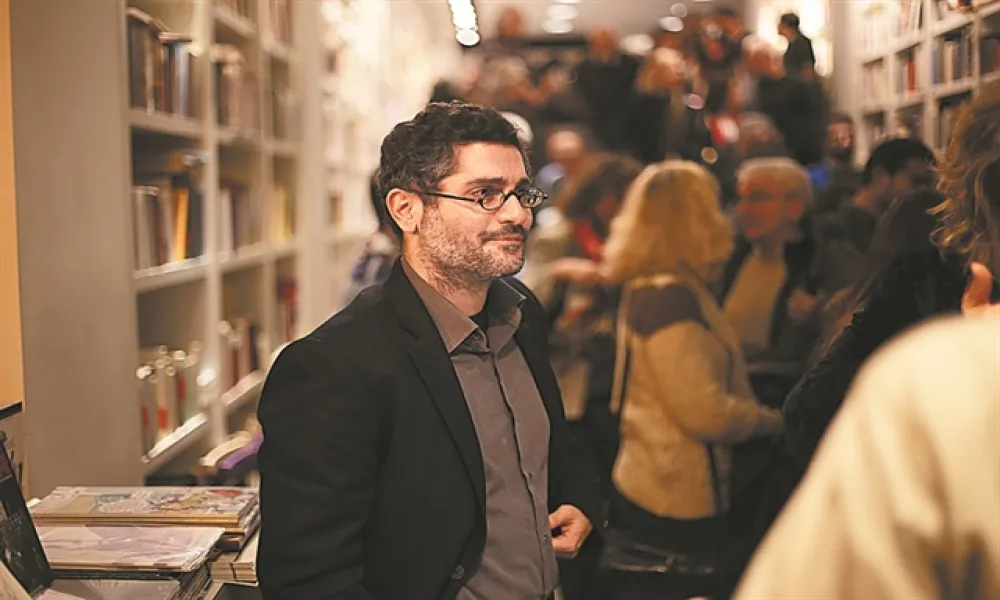
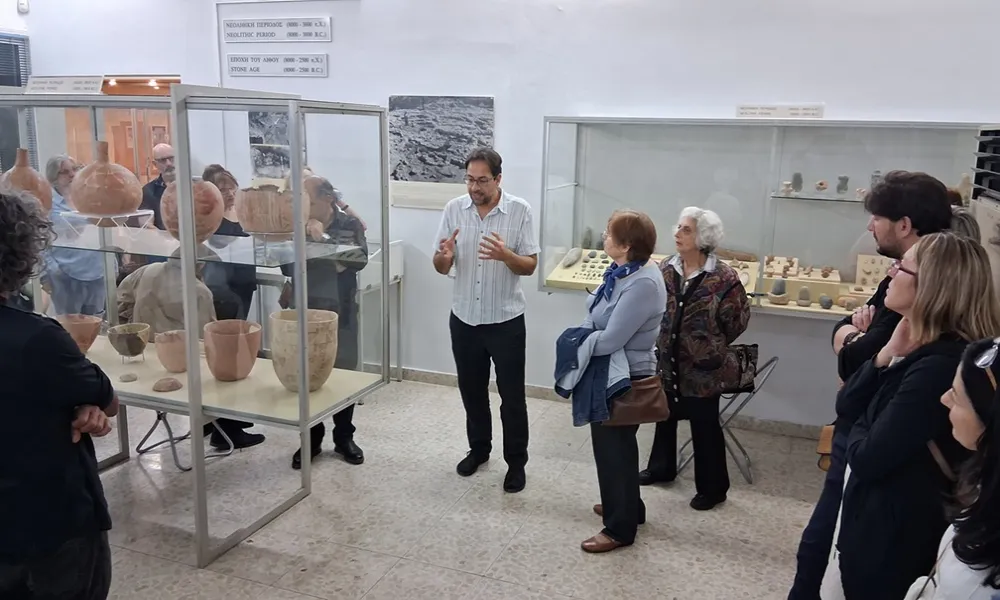
On the occasion of International Museum Day, zooarchaeologist Angelos Hadjikoumisof the Cyprus Institute and archaeological officer Yiannis Violiaris of the Department of Antiquities offered visitors to the Limassol Archaeological Museum a panorama of the introduction and disappearance of domesticated and wild animals in Cyprus, their roles and their depiction in ancient art.
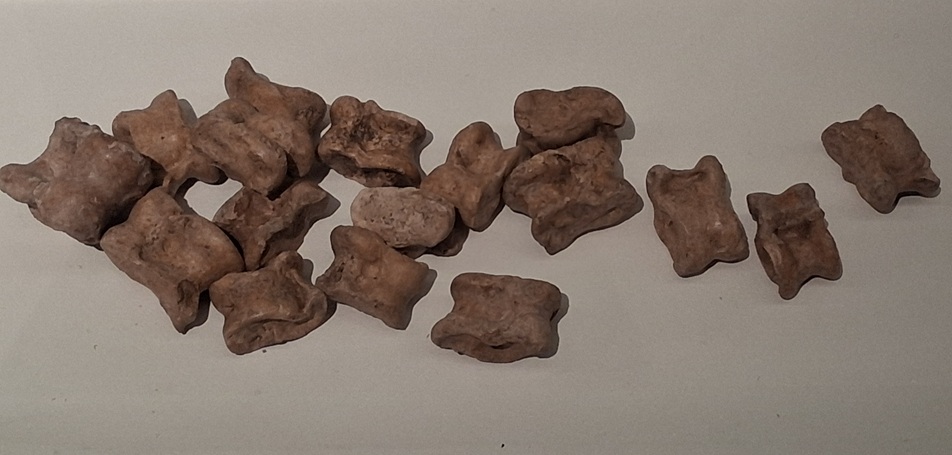
Museum animal exhibits, such as the zoomorphic Red Polished Ware bull‑shaped vessel from Pyrgos, Limassol (Middle Bronze Age, 1800–1600 BC), the clay figurine of the winged god Eros riding a goat from Hellenistic Amathus, and the seventeen sheep and goat knucklebones used for games of chance and divination from a Hellenistic tomb in Amathus, provided stimuli for presenting and discussing issues that continue to concern the livestock sector and wider society today in relation to the human–animal relationship.
As Yiannis Violiaris emphasised in his introductory remarks, “museums are by definition spaces where people can explore their personal beliefs amid timeless and universal truths. Here the memory of human experience is preserved – our very historical self”.
The beginning 10,000 years ago
Globally and in Cyprus, the birth of animal husbandry dates to the Neolithic period, around 10,000 years ago, when plant and animal domestication began.
“These animals were domesticated primarily in Southwest Asia – in what is now southeastern Turkey, northern Iraq and Iran. They were then rapidly transferred to neighbouring regions, one of which was Cyprus,” Dr Hadjikoumis explained.
At that time, the four key livestock animals were domesticated – animals that remain the basis of animal husbandry today: goats, sheep, cattle and pigs. Humans brought them to Cyprus almost immediately, around 8000 BC.
“It was like a ‘new technology’ to domesticate animals, because until then humans only hunted them. It was a massive, world‑changing shift, because the economic base and way of life changed. History’s trajectory was altered forever: populations increased and densified, cities emerged and we reached the present day,” he stressed.
Cyprus: Ideal for sheep and goats
Studying Cyprus’s historical periods from the Neolithic through the Middle Ages and Ottoman era, the zooarchaeologist found that the overwhelming majority of bones from archaeological sites belong to sheep and goats. In other words, throughout history the dominant domestic ruminants on the island were sheep and goats because, as he told P, they had always adapted to Cyprus’s landscape, vegetation and climate.
Linking this to the urgent need to protect traditional Cypriot sheep and goat breeds from foot‑and‑mouth disease, as well as plans to replenish slaughtered livestock with an emphasis on native breeds – as announced by the Ministry of Agriculture and the Special Scientific Committee for Livestock Reconstruction chaired by Cyprus Institute president Dr Stavros Malas – he noted that archaeological findings show that sheep and goat breeds periodically changed on the island.
“For example, I observed that at the beginning of the Bronze Age, around 5,000 years ago, some people – perhaps migrants from neighbouring regions – brought different sheep and goat breeds to Cyprus. This is evident from bone analysis. In the Neolithic and Chalcolithic periods, the bones belonged to larger animals. Then, suddenly and sharply, smaller sheep and goats appear, which can only be explained by the introduction of new breeds,” he said.
Importing more productive animals
Asked why other breeds were imported, he said the most likely explanation was the choice to bring more productive animals to the island – as has occurred until today – to increase milk and meat yields and fertility. He noted that what happened in the Bronze Age mirrors developments in the second half of the 20th century, when traditional Cypriot breeds began to be marginalised.
These are precisely the breeds now being protected from foot‑and‑mouth disease: fat‑tailed sheep, Machairas goats, Akamas goats and the Cypriot red cattle breed. After the 1950s and 1960s, Cypriots replaced them with sheep and goats from other countries, initially Greece, then Israel, followed by the rest of Europe.
Native breeds
At the same time, there is another side to the story, underpinning today’s policy focus on native breeds.
“Given that in every country, not only Cyprus, traditional breeds are the product of centuries of adaptation, there are no better animals for Cyprus’s environment. They are forged within it, with greater heat resistance, better adaptation to the landscape and vegetation, and most importantly, greater disease resistance. Even if they are not as productive as foreign breeds, livestock farming will be more resilient in the long term,” he said.
As an example, he cited German sheep and Austrian goats he encounters on Cypriot farms during ethnographic research. While highly productive in milk, they have far lower tolerance to heat and island conditions, which is why Cypriot farmers keep them constantly in the shade.
The black pig is history
A similar pattern appears in pig farming. The black pig – far more heat‑resistant in free‑grazing conditions due to skin melanin – has been displaced. By contrast, the pink pigs now dominant, originating from north‑western Europe, can only survive in enclosed pigsties.
During ethnographic work in Spain, he encountered a black, hairless pig breed managed under free‑grazing conditions. Spanish farmers told him that when pink pigs were introduced into similar environments, the experiment failed due to skin cancer and mobility problems.
The ancient Cypriot model of free grazing, such as in the Neolithic period, is particularly relevant today in the context of pandemics, according to Dr Hadjikoumis. Unlike the past, today’s confined livestock model facilitates disease transmission. Herd sizes are also much larger, whereas historically herds of 100–150 animals grazed freely in open air.
A complex relationship with cattle
Regarding cattle, Dr Hadjikoumis described a historically complex and unusual relationship with Cypriots, resulting in consistently low cattle numbers.
“As we have said, once livestock were domesticated around 8000 BC, people initially brought cattle to Cyprus. But after the first few centuries of the Neolithic period, cattle disappeared and were not replenished. For 5,000 years Cyprus had no cattle, while all surrounding regions did. This is astonishing and fascinating. People brought them, used them for around 500 years and then abandoned them.
Cyprus was not isolated – people knew cattle existed elsewhere. They simply chose not to keep them. Why? We do not know for certain. One theory is disease, but if that were the case, cattle would have been reintroduced. I believe the answer lies in diet. Neolithic agriculture did not use the plough, as the technology did not yet exist, so cattle were kept only for meat. But Cypriots relied on sheep, goats and deer. Deer – a wild species introduced to enrich hunting – effectively replaced beef consumption.
Thus Neolithic Cypriots felt no need for cattle, which also do not suit Cyprus’s climate particularly well. Even in later periods when cattle existed, the native red cattle breed was never numerous. It functioned mainly as a ‘tractor’ for agricultural labour, not for food. As for milk, the Cypriot red cow barely produces enough to raise its calf, let alone surplus for human consumption,” he said.
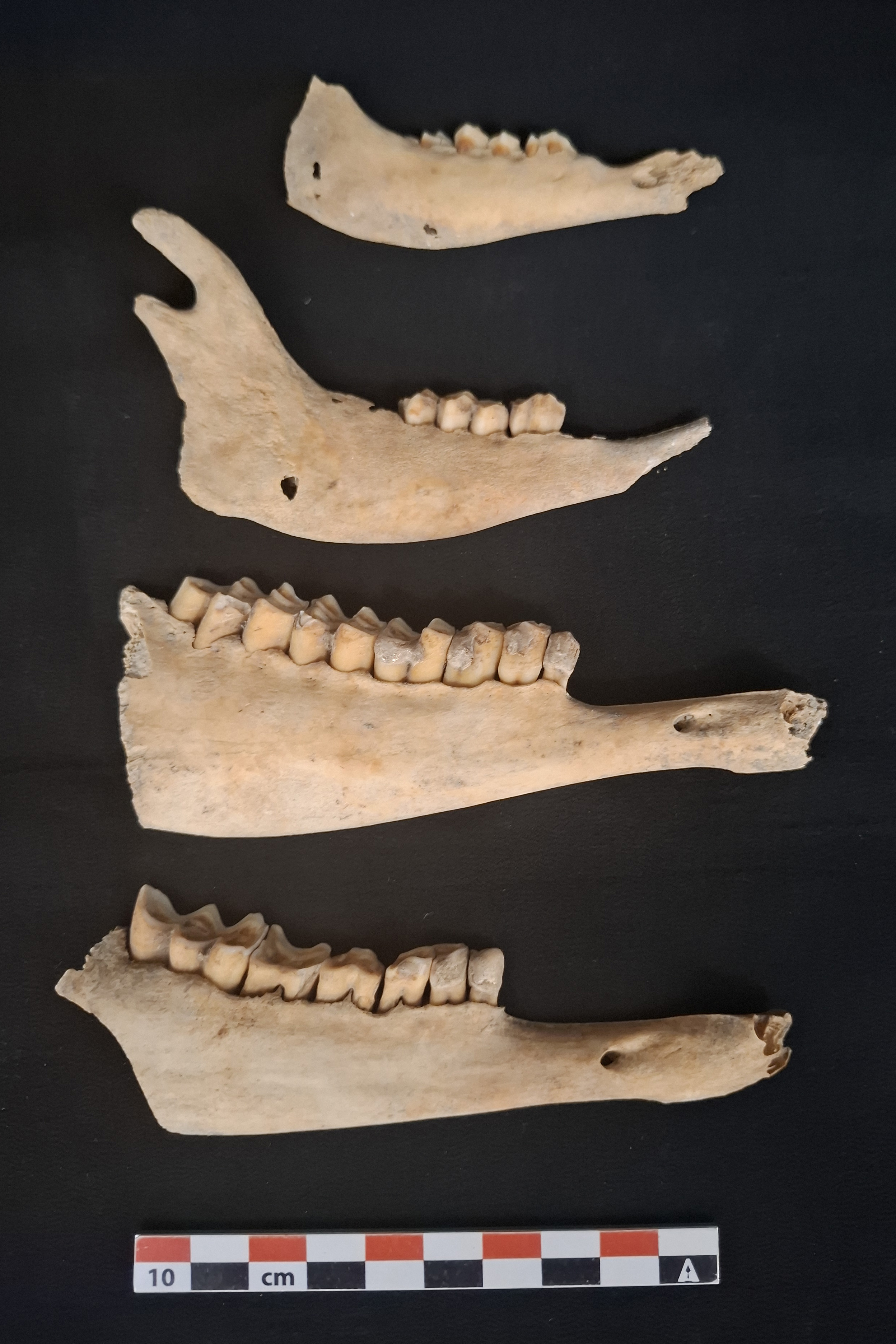
Today’s fauna is 100% anthropogenic
Since the first inhabitants of the island brought the earliest animals with them, a continuous flow of new species into Cyprus can be observed.
“Initially, before animal domestication, they brought the wild boar. After domestication, they brought goats, sheep, cattle, pigs, deer, foxes, dogs and cats. Later came further domestications such as donkeys, horses and chickens. Ducks, geese and even turkeys followed after the discovery of America. The result is that modern Cypriot fauna is 100% anthropogenic. With the exception of one mouse species, which survives to this day and bears the scientific name Mus cypriacus, no terrestrial mammal that existed in Cyprus before the arrival of humans remains. It is most likely that animals such as dwarf hippopotamuses and elephants did not disappear due to human intervention,” said Dr Hadjikoumis.
Depictions with symbolism
Through a guided route with stops in front of representative exhibits of the human–animal relationship, most of them featuring symbolic imagery, the two archaeologists offered the public a unique experience.
Among the exhibits presented by archaeological officer Yiannis Violiaris was a zoomorphic clay flask in the shape of a bull from the Geometric period. As he explained, such flasks had ritual significance, and the preference for animal or bird shapes is clearly linked to symbolic meanings. They were used for ritual libations, both for religious purposes (for deities, particularly chthonic ones) and for funerary rites in tombs.
He then presented a zoomorphic Red Polished Ware vessel from Pyrgos, shaped as a bull, dating to the Middle Bronze Age. This vessel is also possibly linked to ritual use, although given its period it may also have had everyday functions. Analysis of this exhibit provided fertile ground for Angelos Hadjikoumisto speak extensively about the introduction of cattle to Cyprus and their depiction in ploughing, something iconography confirms alongside osteological material from excavations.
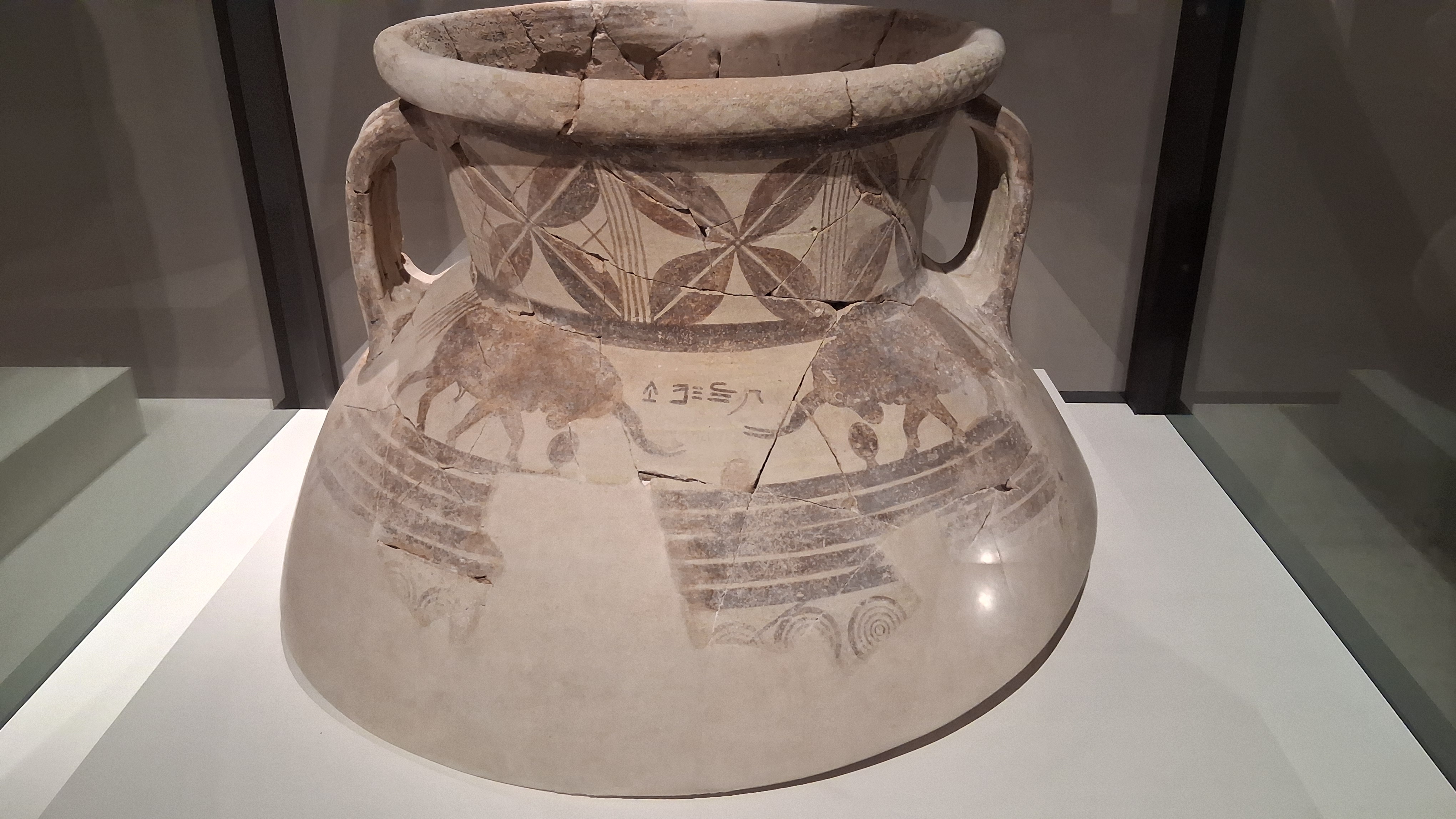
Particular attention was drawn to an oversized locally made amphora (Cypro‑Archaic period) discovered at the sanctuary of Aphrodite in Amathus. Two bulls flank an inscription in the Cypriot syllabary, which is difficult to interpret – possibly containing numerical entries – and represents the earliest surviving Cypriot syllabic inscription from Amathus. According to the archaeological officer, the decoration with two bulls relates to the vessel’s use in a sanctuary.
“The bull in the case of Amathus, and specifically in the sanctuary context, symbolises the male deity alongside the female deity known to have been worshipped there. In art, from the Late Bronze Age onwards, the bull is closely associated with religion. It appears both in sanctuaries and in tombs, while clay bull figurines are widespread,” he explained.
Another stop on the tour focused on a clay figurine of the winged god Eros (Hellenistic period) riding a goat. It is among approximately 200 objects found in an underground rock‑cut tunnel at the foot of the acropolis hill of Amathus. Approaching the symbolism of Eros as a tamer of nature, Yiannis Violiaris said that “his cosmogonic energy to unite the primordial elements of Creation remains intact even when he transforms into a mischievous child. This is evident in his ability to guide and control various animals, fish, birds or mythical creatures and to govern both the visible and invisible worlds”.