Cyprus' Anti-Corruption Authority is entering the final phase of what is regarded as the most complex, demanding and costly investigation in its history.
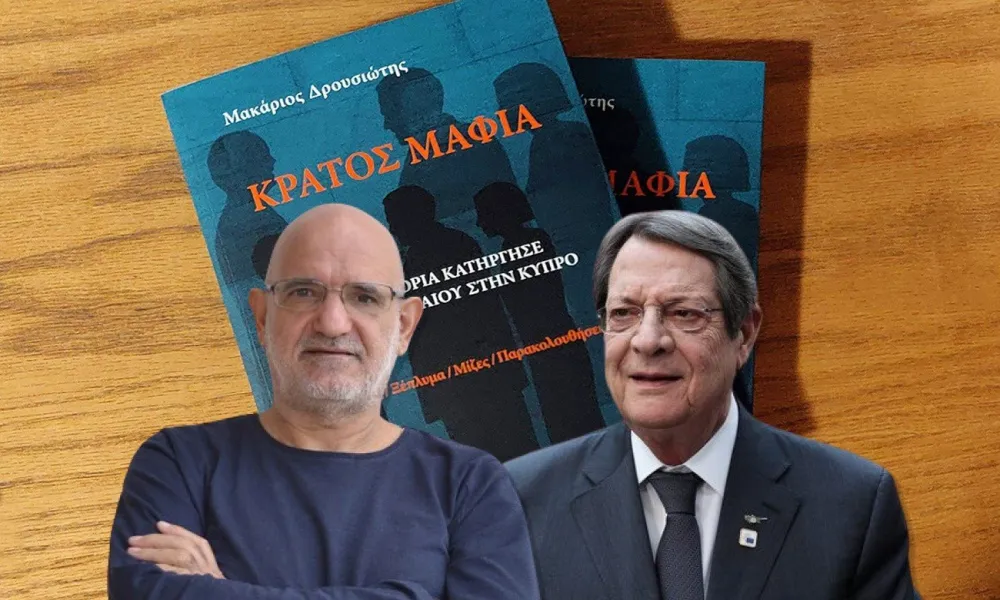
After 28 months of extensive inquiries, the Authority is expected to publish the findings of its investigation within days. By 15 June, it is expected to issue a detailed statement setting out the conclusions of its probe into allegations contained in the book Mafia State by journalist and author Makarios Drousiotis.
Surveillance
At the centre of the investigation was former President Nicos Anastasiades and allegations of possible corruption-related offences.
Published in October 2022, Mafia State contains a series of allegations concerning serious corruption cases in which Drousiotis implicates the former president. The book also details what the author describes as unlawful interference with his personal electronic devices, including his computer and files containing sensitive material related to corruption cases in Cyprus.
Drousiotis previously served as an adviser to Anastasiades at the Presidential Palace and has stated that many of the incidents described in the book were witnessed by him firsthand.
The investigation began on 20 February 2024, when the Anti-Corruption Authority decided to launch an ex officio inquiry into the allegations of corruption and undue influence contained in Mafia State.
To carry out the investigation, the Authority appointed internationally recognised lawyer Gabrielle McIntyre to lead the team, alongside criminal lawyers Charalambos Chrysanthou, Orestis Nikitas and Andreas Efthymiou.
Calls for intervention
Public debate over the need to investigate the allegations predates the Authority's decision to launch the inquiry.
Among the first to publicly call for an investigation was Andreas Mavroyiannis, then a candidate in the 2023 presidential election.
Anastasiades himself also welcomed the investigation. In a letter to Transparency Commissioner and Anti-Corruption Authority head Harris Pogiatzis, he called for the process to be completed as swiftly as possible so that the allegations against him could be examined.
Meanwhile, Anastasiades responded publicly to Drousiotis' allegations through the publication of his own book, The Slanderer, presented as a rebuttal to the claims made in Mafia State.
Terms of reference and witnesses
The final report consists of five chapters and is the product of an exceptionally extensive investigative process.
A total of 129 individuals from Cyprus and abroad provided testimony during the inquiry. Witnesses included former government officials, particularly ministers who served under the Anastasiades administration, journalists, and President Nikos Christodoulides.
Investigators also gathered more than 550 exhibits, amounting to tens of thousands of pages of documents, statements and other evidential material.
The allegations against Anastasiades outlined in Mafia State are numerous. However, due to jurisdictional limitations and practical constraints, the Authority was unable to examine every claim contained in the book.
Following a series of meetings with Drousiotis and taking into account the Authority's limited investigative powers, an effort was made to narrow the scope of the inquiry. The terms of reference ultimately covered the majority of the corruption allegations falling within the Authority's legal remit.
In a statement issued on 20 February 2024, the Authority said the terms of reference included all allegations of corruption contained in Mafia State that fell within its statutory powers.
President's testimony
Particular significance has been attached to testimony given by President Christodoulides in April 2025.
According to information available, the president was questioned about allegations contained in Mafia State concerning, among other matters, the possible acceptance of gifts from a Russian oligarch by the former president.
The allegations relate to claims that flights taken by Anastasiades on private aircraft were funded by a Russian businessman. In his book, Drousiotis alleges that Christodoulides, who at the time served as government spokesman, had told him that the costs of the private jet travel were covered by a Russian oligarch.
If substantiated, such allegations could raise serious questions regarding conflicts of interest and corruption.
Christodoulides was also questioned about claims in the book concerning tensions between former Attorney General Costas Clerides and former Deputy Attorney General Rikkos Erotocritou, including allegations of an effort by Anastasiades to remove Clerides from office.
Anastasiades' response
Anastasiades gave testimony in the presence of his lawyer, Achilleas Emilianides, with questioning reportedly focused mainly on clarifications.
Prior to his testimony, the former president published The Slanderer, a book in which he seeks to rebut in detail the allegations made by Drousiotis. Among other claims, he identifies what he describes as 300 false references in Mafia Stateand responds to them individually.
Anastasiades further argues that the allegations made by Drousiotis were directed not only at him personally but also at the institutions and international reputation of the Republic of Cyprus.
The book was translated into English to allow McIntyre, the head of the investigative team, to examine its contents.
Possible next steps
Attention is now focused on the contents of the report and its potential consequences.
Should the Anti-Corruption Authority conclude that evidence exists indicating possible criminal offences, the report will be forwarded to the Attorney General with a recommendation that a criminal investigation be launched.
In that event, Attorney General George Savvides and Deputy Attorney General Savvas Angelides are expected to recuse themselves due to concerns over impartiality, having both served as ministers under the Anastasiades administration before later being appointed to senior positions in the Law Office by the former president.
The report would then be referred to the Criminal Division of the Law Office under its head, prosecutor Elena Kleopa. The appointment of independent criminal investigators is viewed as the most appropriate course of action to safeguard the credibility and impartiality of any further proceedings.
Upon completion of a criminal investigation, the case file would be returned to the Attorney General together with recommendations on whether criminal charges should be brought.
Conversely, if the report finds insufficient evidence to support criminal offences, Drousiotis could face renewed legal challenges. Such a finding would likely strengthen Anastasiades' position in a civil defamation lawsuit seeking €2 million in damages.
Drousiotis has also filed a separate defamation action against Anastasiades, citing remarks and characterisations contained in The Slanderer.
Cost approaching €1 million
Beyond its political and institutional significance, the case is also notable for its cost.
According to estimates, the final bill is expected to approach €1 million, making it the most expensive investigation ever conducted by the Anti-Corruption Authority.
Investigators' fees are determined by factors including expertise, the complexity of the case and whether investigators are recruited from abroad. The use of foreign experts significantly increases costs through travel, accommodation and related expenses.
The Authority has consistently relied on foreign lead investigators in major cases to minimise challenges to the credibility and independence of its findings.
The Mafia State investigation is widely regarded as one of the most significant tests of Cyprus' institutions in recent years.
The forthcoming report is expected to serve as a key benchmark, not only for any potential criminal or political consequences arising from the case, but also for public confidence in the country's institutions.