


The war between the United States and Iran shows no sign of winding down. Since Washington resumed daily strikes and reimposed a naval blockade on Iranian ports on 7 July, the conflict has widened well beyond its original flashpoint at the Strait of Hormuz, spreading to northern Iran, to US allies across the Gulf, and to American assets and personnel across the region. Iranian officials say more than 46 people have been killed and over 400 wounded by US strikes since hostilities resumed, while the Pentagon has confirmed American casualties of its own, including service members killed in a strike on US forces in Jordan.
The picture that has emerged over the past fortnight is one of a war that keeps finding new ways to expand rather than contract. Kuwait and Bahrain have both reported intercepting Iranian projectiles in recent days, and Jordan says it shot down three missiles launched from Iranian territory. Mediators have floated a 10-day ceasefire, but as of this week Washington has not accepted it, and President Donald Trump has signalled he intends to press the campaign further rather than de-escalate.
It is against this backdrop, a conflict still very much live and still capable of widening further, that the Eastern Mediterranean is watching developments with growing unease. Lebanon, Syria, Jordan and the Gulf states all sit within reach of the fallout, in a region where the underlying balances were already fragile before this latest round of fighting began. For Cyprus, positioned at the geographic crossroads of Europe and the Middle East and hosting British military installations that have themselves featured in the regional security calculus, the stakes are high.
Much of the fighting has centred on the Strait of Hormuz, the narrow waterway between Iran and the Arabian Peninsula through which a large share of the world's seaborne oil and gas passes daily. Iran's attempts to assert control over shipping through the strait were what triggered the collapse of an earlier, tenuous truce in early July, and the corridor has remained a focal point of the conflict since. Any sustained disruption there carries consequences well beyond the immediate combatants, from global energy prices to the security calculations of every state, Cyprus included, that depends on Gulf-transiting supply.

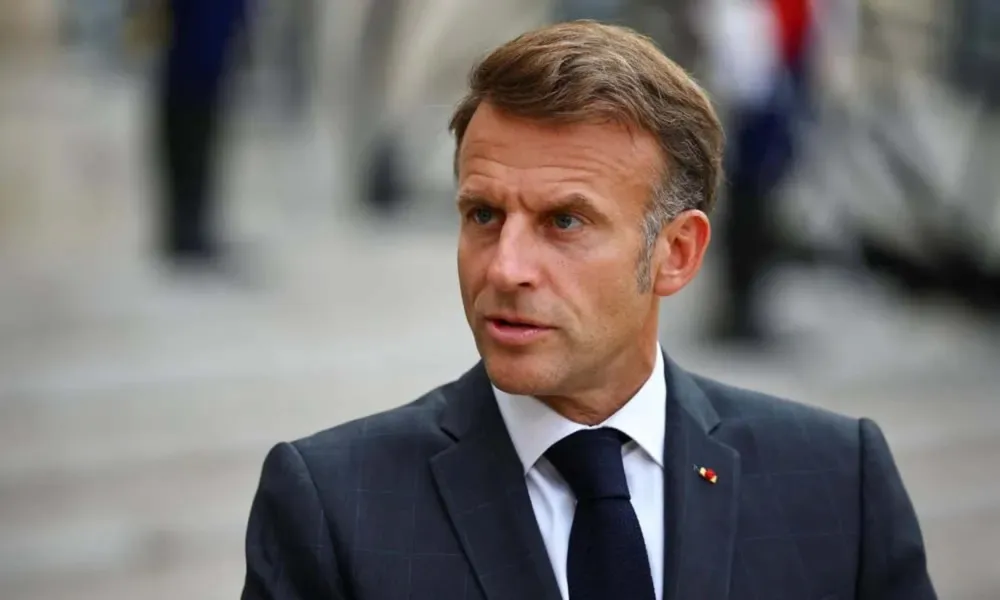
Politis to the point spoke to Dr Manos Karagiannis, professor of international security at the Department of Defence Studies at King's College London, about where the crisis is heading and what it means for our region.
A limited but dangerous confrontation
Asked whether the current situation amounts to a contained confrontation or whether the risk of a wider regional conflict is growing, Karagiannis said both sides appear, for now, to be moving carefully. "The recent escalation points to a limited and carefully controlled confrontation, in which the US and Iran are seeking to impose costs on each other without crossing the threshold that would lead to full-scale war," he said.
The professor cautioned, however, that this balance remains fragile. "In situations like this, a lot can go wrong. A strike with a high death toll, for example, will push the other side into a sharp escalation," he said, adding that if a ceasefire agreement is not reached in the coming days, the situation could slip out of both sides' control and turn into a broader conflict. Each side's retaliation over the past two weeks has tended to be broader than the strike that preceded it.
Risk of spillover into the Eastern Mediterranean
Karagiannis said the new tension is already deepening instability well beyond Iran and the US. "There is a substantial risk of escalating conflict in southern Lebanon, while Syria continues to function as a battleground between Turkey and Israel," he noted. He singled out Jordan, which he described as a target of the Iranian regime. "Jordan remains a decisive factor in maintaining regional stability, despite the low-key tone its political leadership has traditionally adopted," he said.
Jordan has had to intercept incoming Iranian missiles even while trying to maintain its traditional role as a quiet stabilising presence in the region.
What it means for Cyprus
On Cyprus, the professor described a situation that is difficult to assess with precision. "The consequences of the ongoing US-Iran crisis are not easy to gauge accurately. For Cyprus, though, this translates into greater military activity in the region and heightened energy uncertainty," he said. At the same time, he pointed to opportunities to strengthen the country's role as a reliable European partner and regional hub in times of crisis.
Karagiannis assessed that Nicosia does not, on its own, carry the weight needed to take decisive initiatives in the crisis. In the current climate, though, he stressed the importance of keeping open channels of communication with Beirut, Amman and Cairo, capitals that are gaining growing significance amid regional developments.
The island's location has repeatedly placed it in the logistical and diplomatic path of Middle East crises, from evacuation operations to the movement of allied military assets through the Eastern Mediterranean. With Washington reportedly increasing its fighter jet presence in the region and Israeli sources reporting a steady arrival of US refuelling aircraft, the kind of heightened activity Karagiannis describes is likely to remain a feature of the coming weeks rather than a passing spike.