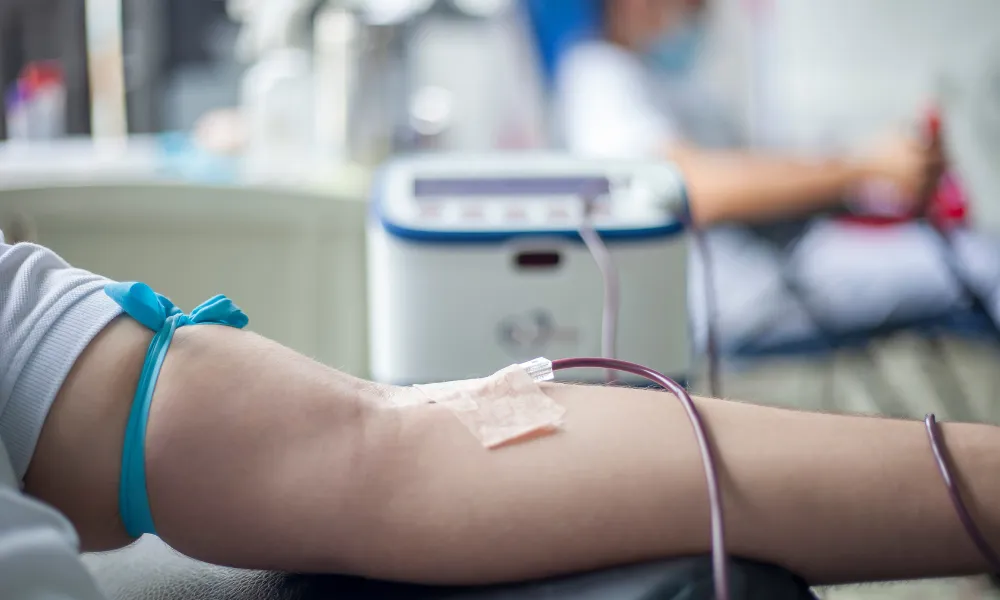

More than 20,000 patients of the UK’s National Health Service (NHS) at 200 GP practices are set to take new blood tests designed to detect cancer in its early stages. The aim is to identify cancer through a simple blood test ordered by a GP, while also reducing unnecessary hospital referrals for invasive tests.
The trial, known as STRIDE-RCT, will examine how well the tests perform in real-world conditions. According to the scientists behind the technology, the tests can detect signals in the blood that show whether a person needs further checks for early signs of cancer, or whether cancer can safely be ruled out.
The four tests in the trial
British media report that four companies are the first to take part in the trial:
- Proteotype, with the Enlighten test
- Pinpoint AI, with the PinPoint test
- Natera, with the Signatera test
- Mercy BioAnalytics, with the Halo test
How the tests work
According to The Independent, each test takes a different approach:
- Enlighten measures patterns of circulating amino acid biomarkers in human plasma and then uses artificial intelligence to assess the likelihood that a person has breast, bowel, lung or prostate cancer. It is intended for people who may have unclear symptoms or who are known to be at higher risk of cancer, and it tells doctors which cases may need further investigation.
- PinPoint works by combining weak cancer signals in the blood to produce a “single, strong test result”.
- Signatera is already used to detect cancer that has returned. It relies on fragments of circulating tumour DNA (ctDNA) released into the blood by tumours.
- Halo analyses particles known as single extracellular vesicles, which circulate at high levels in the blood even in early-stage cancer.
Only 7% of referrals lead to a diagnosis
Promotional material for the PinPoint test states that the number of people referred for urgent cancer diagnostic tests and scans on the NHS is rising every year, but only 7% of them are ultimately diagnosed with cancer.
“A way of accurately triaging patients with suspected cancer, right at the start of the diagnostic pathway, could transform patient outcomes and capacity management across NHS services,” it states.
How results are reported
The test analyses 32 biomarkers at the same time, measuring how they interact and how they relate to cancer risk. Early evidence suggests it may be used to identify signs of bowel, ovarian and lung cancer, as well as pancreatic, liver, bile duct and stomach cancer.
Results are returned to the doctor using a three-colour grading system that recommends the next step:
- Green: low risk, ruling out the likelihood of cancer
- Amber: medium risk, recommending that standard assessment continues
- Red: high risk, prioritising the patient’s case
Who can take part
As part of the trial, people aged 45 and over who visit their GP with abdominal symptoms, such as persistent bloating or discomfort, will be able to take one of the tests.
Minister: a world-leading trial
UK junior health minister James Frith told LBC radio: “This is an exciting and world-leading major trial for earlier diagnosis of abdominal cancers, which are notoriously difficult to detect, very often because their symptoms can be mistaken for something other than cancer.”
“Imagine a patient presenting with vague symptoms, such as a swollen stomach or bloating, or recent changes in bowel habits. Very often, these symptoms can be misinterpreted. This means blood tests could help with earlier diagnosis and placing the patient on the relevant diagnostic pathway, or with ruling out the disease and the relief that it is not cancer,” he added.
Mr Frith said it may take 18 to 24 months to determine whether any of the tests could be suitable for national rollout.
With information from The Independent