
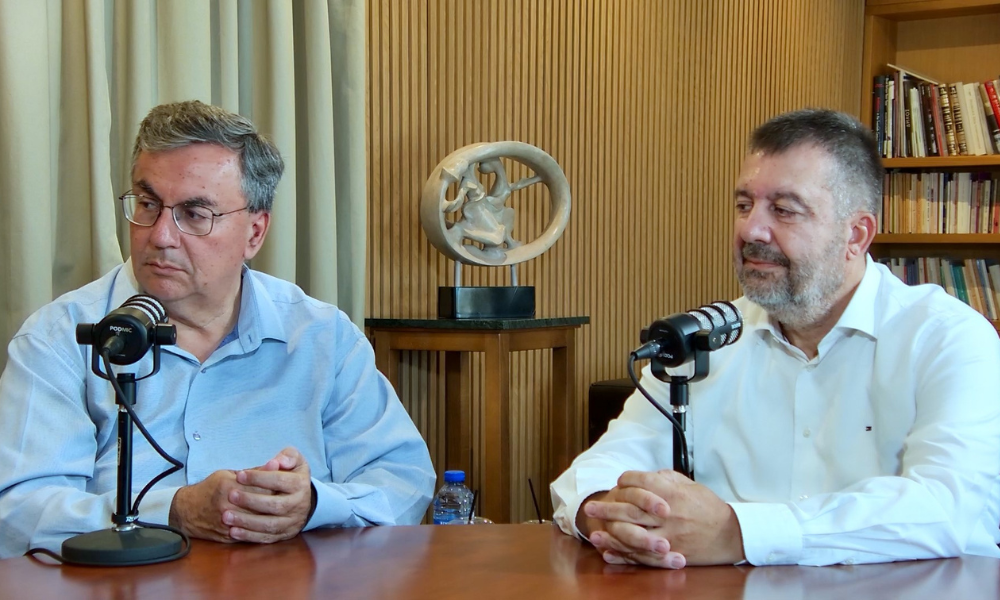
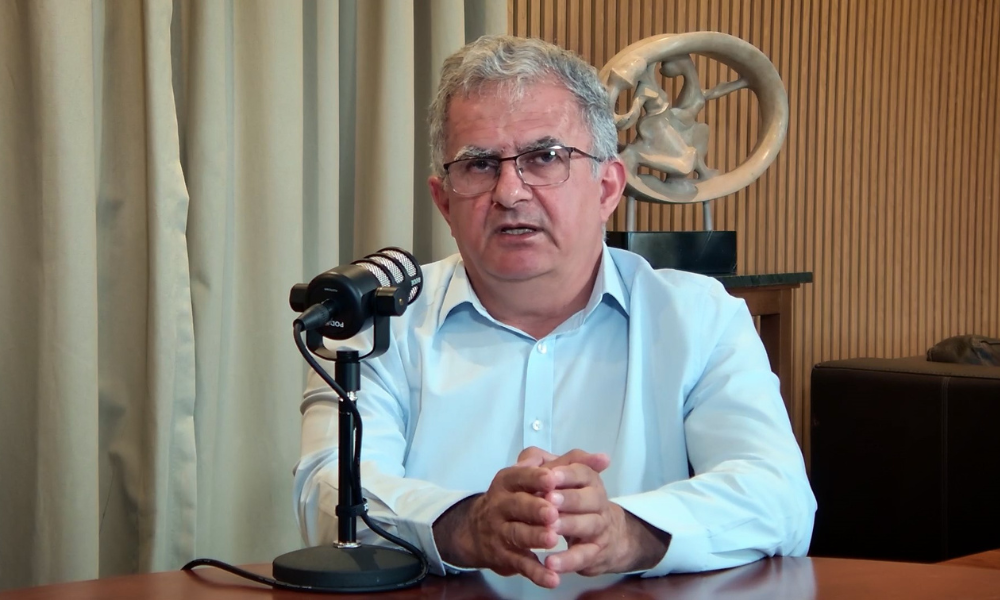
Without robes, without lecture halls, without amphitheatres and students below them, and above all without the safety of formal speeches, five rectors, Tasos Christofides, Filippos Pougiouta, Pantelis Sklias, Panayiotis Zafeiris and Andreas Efstathiou, from two public and three private universities, sat before "Politis" microphones to discuss education as they experience it today and as they see it changing tomorrow. Not only for universities, but for pupils under pressure, students seeking their place in a constantly changing world, families who still influence choices, and the state, which must decide how seriously it wants to invest in knowledge.
Tasos Christofides, University of Cyprus
"The Pancyprian exams need to change"
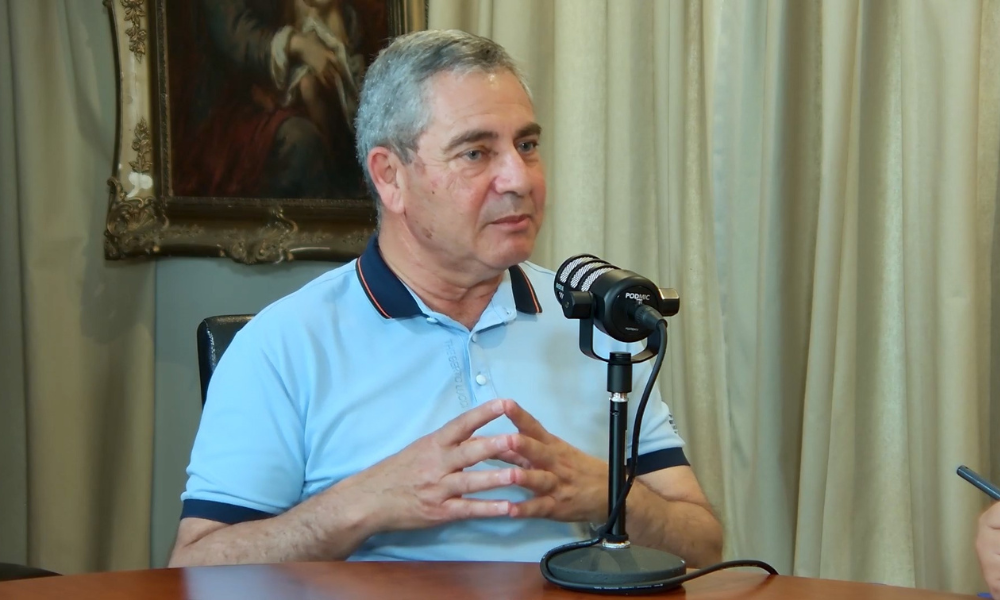
"The Pancyprian exams have run their course. They may be tamper-proof, but they are not meritocratic. It is time to revisit how students are admitted to public universities, both in Cyprus and in Greece. I am not saying this dogmatically, nor because I am against the Pancyprian exams. I am saying it because the institution has run its course and we need to think of something different. Such a drastic change, where pupils enter public universities based solely on their school leaving certificate, cannot happen overnight.
"No one should be able to enter a public university, given that the language of instruction is Greek, without being able to speak, write and follow the coursework."
In my view, the way the Modern Greek exam is conducted today distorts grades and creates an unmeritocratic selection of candidates. Language proficiency should be non-negotiable. No one should be able to enter a public university, given that the language of instruction is Greek, without being able to speak, write and follow the coursework. But the Modern Greek grade should not factor into the admission score. A child who wants to enter, say, the Department of Physics, might have written excellently in Physics and Mathematics, but lose their place to another candidate who wrote well in Modern Greek and only moderately in the core subjects of that field. There should be a language proficiency exam. If someone does not pass it, they should not be admitted to university. But this exam does not need to take place at the end of the year, nor does it need to be part of the Pancyprian exams. Today, preparation for Modern Greek pushes many pupils towards rote memorisation. This does not actually establish real language proficiency. We need to move away from rigid knowledge and towards cultivating skills and abilities. That is where the system currently falls short.
Young students today are under more pressure. They see the difficulties they will face after graduating, whether in the labour market or in postgraduate studies. Competition is more intense than it used to be. At the same time, my own impression is that the level of incoming students is declining year on year. Departments often introduce preparatory courses to bring students up to the level required. That tells me the system is not working as it should. A degree today is the end of the beginning. It is a passport to something else. No one finishes their education with a single degree. That is why lifelong learning is critical."
Panayiotis Zafeiris, Cyprus University of Technology (CUT)
"Let children make their own choices"
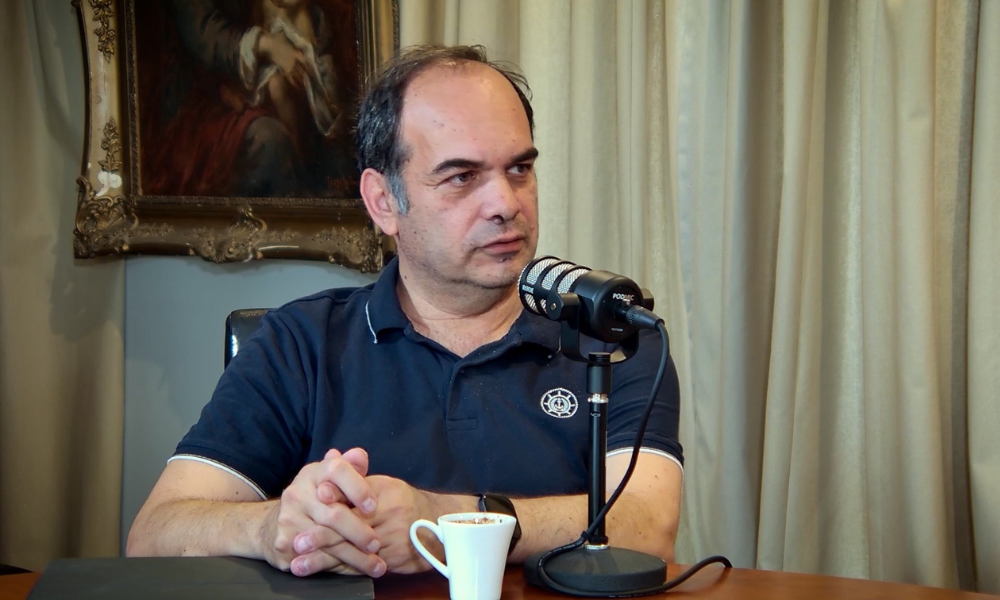
"I believe the integrity of the Pancyprian exams is not in question, and for that reason it is a fairly good system. What I would abolish is interference in higher education from bodies that have no business being involved. And when I say bodies with no business being involved, I often mean the parents themselves. We need to let children make their own choices, develop critical thinking, and decide based on their abilities, interests and prospects. In Cyprus, we often see professions passed down from generation to generation. If a child grows up in a family of lawyers or architects, they may have been exposed to that environment and come to love it. That is not a bad thing. The issue is whether they genuinely want it and have the ability to pursue it. A choice of studies cannot be made simply because the family wants it, or because of the social image surrounding a profession.
Universities cannot be cut off from schools and the labour market. If we want graduates with skills, we need to look at how they are prepared before reaching higher education, and how their studies connect to the real needs of society.
"What I would abolish is interference in higher education from bodies that have no business being involved. And when I say bodies with no business being involved, I often mean the parents themselves."
My message is that universities in Cyprus now have experience. Higher education here is relatively new, but great strides have been made. Our universities are developing, achieving success at every level, and I am optimistic this trajectory will continue.
Cyprus is a small country, and we need to take a more strategic view of higher education. Not every university can offer the same things without an overall plan. We need mapping, to see where there is overlap, where there are needs, and where each university can develop its own specialisation. This does not mean abolishing competition. It means competition should be healthy and should serve quality."
Filippos Pougiouta, University of Nicosia
"Make the transition to university smoother"
"What I would change is the learning process in secondary education, so that the transition to university is smoother, and so that those who do not go on to university also achieve better learning outcomes. At university, learning is primarily student-centred. Students are not passive recipients of knowledge, but active participants in the process. They are asked to develop critical thinking, skills, and the ability to collaborate, communicate and solve problems. That is what shapes a thinking graduate and a thinking citizen.
"What remains, and what matters far more, are skills, abilities and the capacity to learn how to learn. That is lifelong learning."
At university, a large part of the workload is not just hours in the classroom. Students must carry out research, work in groups with classmates, solve problems and organise their own time. That is why it is so important for young people arriving at university to have already developed skills in time management, critical thinking and independent learning. It is not like secondary education, where there is a set timetable every day. At university, someone might have classes in the morning, afternoon or evening. Many students work alongside their studies.
Knowledge fades. What remains, and what matters far more, are skills, abilities and the capacity to learn how to learn. That is lifelong learning. You cannot learn for life if you have not first learned how to learn. A degree is important. It is a passport to the labour market. But it is not enough on its own. The character a graduate builds through participating in university life and in society, through volunteering and extracurricular activities, matters a great deal. These are things employers notice too.
The message is that universities must shape people and character, not just individuals ready to enter the labour market. They must offer knowledge, skills, experiences and values, so that graduates can hold their own in a constantly changing world."
Pantelis Sklias, Neapolis University Pafos
"Build a basket of quality attributes"
"The idea that the Pancyprian exams are a snapshot of a single moment is, in a sense, an outdated way of thinking. The Pancyprian exams, and the Panhellenic exams too, where a similar discussion has begun in Greece, cannot serve, within four or five days, as the sole and exclusive evaluation process for university admission.
Perhaps we need to build a basket of quality attributes and skills that a pupil acquires throughout the whole of their time in secondary education, not only at the end of their final year. That is where we need a fruitful discussion about what we, as universities, expect from quality students, and about the real conditions in secondary education, as they actually stand at any given time in the Republic of Cyprus.
There is certainly a different process of socialisation in recent years compared to what we knew in the past. The way the new generation perceives social reality has changed completely. The use of technology is different, the way it affects daily life is different, and so is the way expectations are shaped for each person's life path.
"We need a fruitful discussion about what we, as universities, expect from quality students, and about the real conditions in secondary education."
As for private universities, each institution's focus is different. Today there are even financial reasons why a student from Pafos might choose Neapolis University Pafos instead of a university in Nicosia or Limassol. It has to do with travel, with accommodation, but also with a university that is undergoing not only quantitative but qualitative upgrading.
Universities are working every day to respond to new needs. Creating interdisciplinary study programmes, where students can choose courses and build their own path, is one of the challenges we will need to address in the coming years.
My message to Cypriot families and to future students is to have confidence in Cypriot university education. Enormous strides have been made. We have faced major challenges through collective effort, and we now have universities in the Republic of Cyprus that can meet the highest international standards of university education."
Andreas Efstathiou, European University Cyprus
"We have more universities than we can sustain"
"The integrity of the Pancyprian exams is something we should preserve. I believe the system, whatever problems it may have, rewards excellence and merit to a degree. What we need to look at more holistically is the map of higher education in Cyprus and how we safeguard quality in a small country.
In my view, Cyprus has more universities than its size can sustain. This affects quality, not because the work being done isn't good, but because our students and our resources are spread thin across many institutions offering the same or similar programmes. When everyone offers, say, Computer Science or Business Administration, without a critical mass, course choices, opportunities for specialisation and departmental dynamism are all limited. If we had fewer, stronger university groupings, with a greater concentration of students and academics, we could offer more choice, stronger departments, and possibly a better international presence. It is not just a matter of the number of universities, it is a matter of strategy, quality and focus.
"Study choices are often made based on career prospects or the sense of security a field is thought to offer. But it is very important for a young person to pursue what genuinely interests them, because when you love something, you become better at it."
Young people need better guidance even before they reach university. We are not yet where we would like to be in cultivating curiosity and broader thinking. Study choices are often made based on career prospects or the sense of security a field is thought to offer. But it is very important for a young person to pursue what genuinely interests them, because when you love something, you become better at it.
Cyprus needs people in fields such as Engineering, Computer Science, Research and Innovation, if it wants to build a more dynamic knowledge economy. We do not have as many PhD students as we would like, and funding remains a major obstacle.
Cyprus could become a small hub for research and innovation, with innovative businesses and benefits for society and the economy. But to achieve this, universities' efforts alone are not enough. Greater investment from the state is needed, to retain good scientists, attract students and create real prospects for the future."