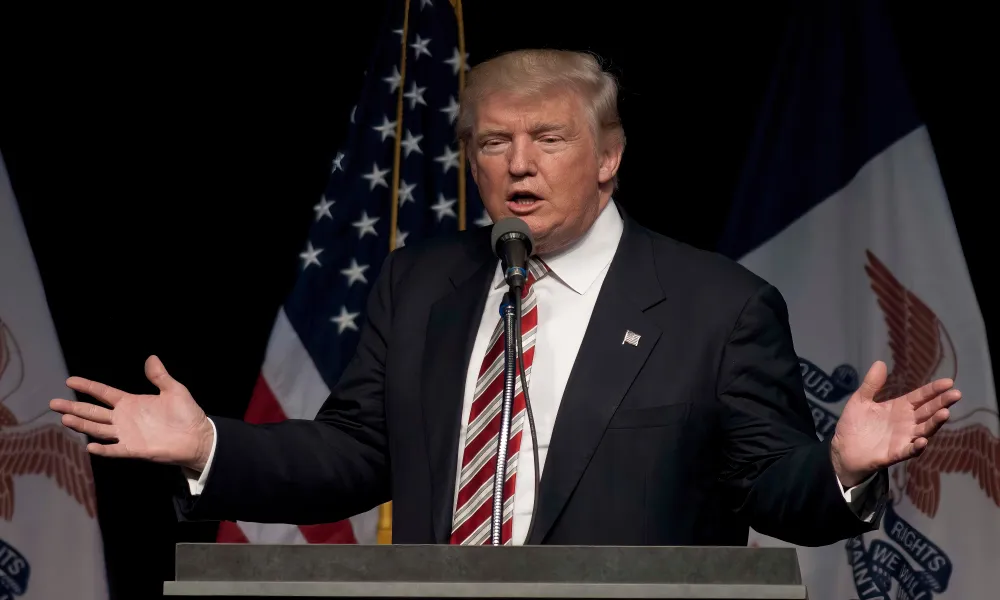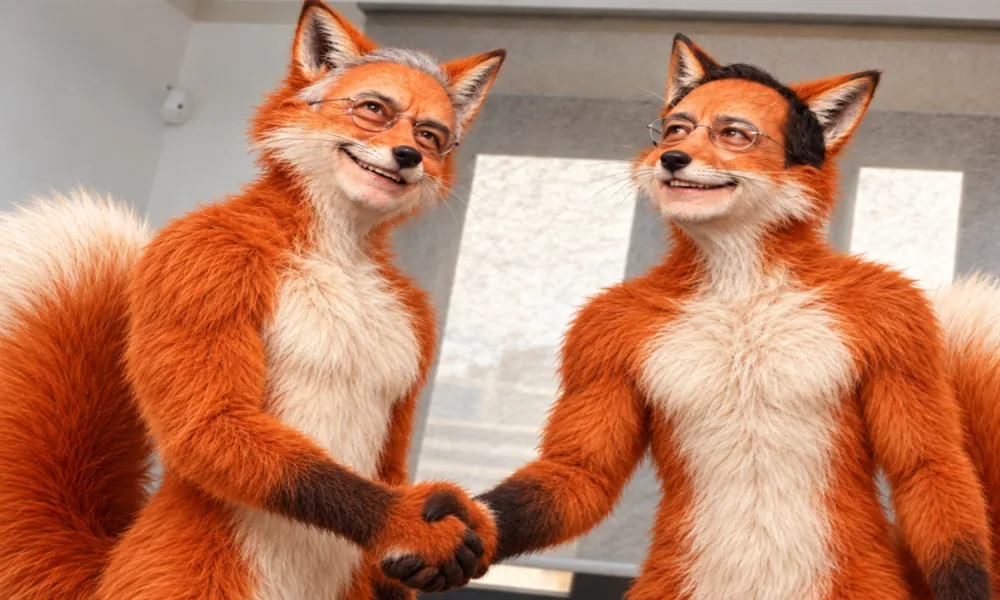

And by a strange coincidence, two of the most recognisable political foxes in Cyprus began their journey in Paphos. Nikos Christodoulides and Averof Neophytou. One from Geroskipou and the other from Argaka.
Some will say that Nicos Anastasiades is also a fox from Limassol. Wrong. He is a wolf from Pera Pedi.
Today, Christodoulides and Averof may be in opposing camps, one may not want to hear the other's name, and the 2023 presidential election may have left wounds that not even the finest Paphian wine can heal. Yet the more closely one observes them, the more one wonders: perhaps they are political first cousins after all?
Averof would certainly disagree. Nikos would probably smile, say he respects all opinions and carry on with his schedule. But the resemblance remains.
Faith in dialogue
First of all, both suffer from the classic illness of Cypriot politics. They believe deeply in dialogue, consensus and collective decision-making, provided that, in the end, what happens is exactly what they had already decided from the beginning.
Averof always had a reputation for viewing politics as a chessboard. Two or three moves ahead, but always leaving his own back exposed.
Christodoulides learned the game well. So well, in fact, that at one point the student, after delivering a textbook check, took the chessboard, left the lesson and headed straight to the Presidential Palace. Perhaps that is the greatest irony of the story.
Averof likely sees Christodoulides politically as a product of a school in which he himself was the professor. Only the student, rather than waiting to graduate, sat the exam before the professor, took the position and declared: "My time has come."
Since then, the professor has discovered how irritating good students can be.
One can appreciate why Foullis risks losing his mind.
Image
There is a second similarity between Christodoulides and Averof: both place enormous importance on image.
In modern politics it is not enough to be good. You must appear to be good. And ideally, it must simultaneously appear that your opponent is useless.
That is why armies of willing commentators, admirers, outraged citizens, anonymous accounts and online warriors gather around every powerful politician in Cyprus. By a remarkable coincidence, they wake up, go to sleep and become angry at precisely the same times.
Some are paid. Others expect political rewards.
Averof, who controls millions, hires people. Christodoulides promises positions.
In short, when elections begin, Facebook and Twitter suddenly fill with more "ordinary citizens with opinions" than there are inhabitants of the Republic of Cyprus.
All anonymous. All operating under pseudonyms. All bold. All vulgar.
The Cyprus problem
Then there is the Cyprus problem.
Here, the two schools almost become one.
Over the past year both Averof and Christodoulides have repeatedly insisted that Cyprus stands before "critical developments". A "window of opportunity" is opening. There is "momentum". The international community is "re-engaging".
A special envoy arrives. Another departs. Dinners take place. Trilateral meetings, five-party meetings, social gatherings and photographs in front of flags follow.
Averof promises that "the homeland comes first" and Christodoulides promises to liberate and reunify the country.
And the refugee waits.
More than fifty years now, but is still asked to be patient because "something is moving".
It is true that Averof spoke many times about a settlement. When everything was overturned by Anastasiades at Crans-Montana in 2017, however, he said nothing publicly. Privately he criticised him, but publicly returned to Cyprus and took charge of his 2018 re-election campaign.
He was naïve enough to believe Anastasiades would support him in 2023.
Christodoulides also played a major role in adopting Tassos Papadopoulos-style rhetoric within the Anastasiades administration and in promoting new major "NO" votes by the public.
Today, of course, he wants a settlement and says he has even persuaded the Archbishop to follow him.
The problem here is hypocrisy.
Both know perfectly well that Turkey does not currently want a settlement and that no agreement is possible without Turkey. Both also know that the Greek Cypriot side has often carried significant responsibility for deadlocks.
What they know best, however, is that Cypriot politics follows one unbreakable rule:
Never allow reality to spoil a good statement, create a "new dynamic" or secure a few extra votes, especially when there is no political cost.
The money
Here we encounter two different schools of capitalism.
One represents, speaking humorously, New Money. The new business class, the new economic elites, people seeking access, influence and photographs with power.
The other is associated more with Old Money. Traditional networks, longstanding economic relationships and people who never needed to learn a minister's phone number because they already had it.
Averof is remembered for battles he fought to secure the airports concession for Shacolas, save Bank of Cyprus in 2013 and protect the Cypriot business interests that were shareholders.
That was when he also fell out with Anastasiades, who supported Russian business interests.
It was then that Anastasiades reportedly made the famous remark:
"Wherever you lift a stone, you'll find Averof underneath."
The rupture became permanent.
The two never truly reconciled, which is why Anastasiades supported Christodoulides and now backs Pamporidis.
Friends
And then we come to perhaps their most interesting shared characteristic: friends.
Or more accurately, former friends.
At the top of the political pyramid, friendships have an expiry date roughly equivalent to a pot of yoghurt or, in Christodoulides' case, perhaps a bottle of ayran.
Today you are a close associate.
Tomorrow "everyone follows their own path".
The day after that, you discover through the news that you have been replaced.
Averof regarded Haris Georgiades as both a friend and protégé. When someone needed to carry the burden of the Co-op scandal, however, he handed it to him without hesitation.
He also directed related stories towards friendly media outlets and publisher allies in the hope that Haris would absorb the damage.
It is worth remembering that Politis was the only newspaper that defended Georgiades at the time, not because he had made no mistakes, but because it was unfair for him alone to shoulder responsibility for the Co-op collapse.
Political associates are like shirts.
Look at how many ministers Christodoulides has dismissed without much explanation.
As long as the shirt matches the suit, you wear it.
Once fashion changes, it goes back into the wardrobe.
There are worse examples.
Politicians have private dinners with someone and exchange ideas. The next day they throw that person to the wolves, portraying them as corrupt and compromised.
In that particular discipline neither Averof nor Nikos requires additional lessons.
Averof, however, possesses a doctorate in cunning, with post-doctoral specialisation in intrigue.
Misunderstanding
Ultimately, perhaps the great misunderstanding in Cypriot politics is that these two men are opposites.
They are not.
They are two different versions of the same software.
Averof is the older version: rougher, more village-style, lacking aesthetics and with fewer graphics.
Christodoulides is the update: better interface, more smiles, more social media, more politeness.
But in the end both feature the same button:
"Install without asking the user."
Paphos, however, can feel proud.
It gave Cyprus two political foxes.
One grew up in Argaka, in caves beneath "Moutti tou Strombou", although rumours suggest little Foullitsa with the bushy tail actually hunted around farmyards near "Moutti tou Leprou".
The other, little Nikolita from Geroskipou, grew up in a cave on the hill behind the old Paphos military camp known as "Kkelle t' Adropou".
And as happens with all foxes, they may quarrel over who enters the henhouse first.
But the henhouse should remember that both of them know exactly where the door is.