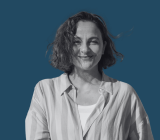
Ricardo discovered Pilates by accident, during his first year studying Ballet, Contemporary Dance and Choreographyat the Superior School of Arts in Bogotá, Colombia, after a hamstring injury threatened to sideline him for months. Nearly two decades later, he is one of Cyprus' most established Pilates instructors, and one of the clearest voices calling for the profession to be formally recognised on the island. In this long-read interview, he talks about his path into teaching, his philosophy of treating the person rather than the condition, and why he believes Cyprus urgently needs a licensing framework for Pilates instructors.
Who he is and what he does
How did you discover Pilates, and at what point did you realise it would become your profession rather than just a practice?
My first contact with Pilates came during my first year studying Ballet, Contemporary Dance, and Choreography at the Superior School of Arts in Bogotá, Colombia. During my training, I suffered a hamstring injury, and my doctor estimated that recovery could take several months. For a dancer, that felt like an eternity.
At the time, I knew absolutely nothing about Pilates. In fact, it was the first time I had ever heard the word. One of my contemporary dance teachers, a Cuban instructor who had trained in the United States, suggested I join her Pilates classes, which were offered at the school. I went purely out of curiosity, with no expectations. I simply thought it would be a gentle way to keep my body moving while I recovered.
To my surprise, Pilates became much more than that. It allowed me to continue training in a way that respected my recovery, and I was able to return to dancing much sooner than I had anticipated.
What truly changed my perspective wasn't only my own recovery, but the realisation that if this method could help someone like me, it could also benefit many other people, not just dancers. That curiosity quickly turned into a passion for learning. Within six months, I enrolled in my first Pilates teacher training course. Looking back, it was only the beginning of a much longer educational journey, but it was the moment I realised that Pilates was far more than a practice for me. It was going to become my profession.
You have been working in Cyprus for many years now. How has the local understanding of Pilates changed since you first arrived?
When I arrived in Cyprus almost twenty years ago, Pilates was still relatively unknown. To the best of my knowledge, there were only a handful of instructors teaching on the island, and public awareness of the method was very limited. Clients, healthcare professionals, and even the authorities were only beginning to discover what Pilates was.
I still remember a story that always makes me smile. When my partner and I went to the authorities to ask about opening our Pilates studio, the word Pilates was mistaken for "Pelares", a familiar Cypriot expression referring to someone doing something silly or crazy. It was a humorous misunderstanding, but it also reflected how unfamiliar the method was at the time.
Over the years, that changed dramatically. More people began experiencing the benefits of Pilates, and word spread naturally through doctors, physiotherapists, family members, and friends. People spoke about moving more comfortably, improving their posture, recovering after injuries, managing back pain, increasing flexibility, and feeling stronger in everyday life. Pilates gradually earned a reputation as a thoughtful and effective method of movement.
The educational landscape also evolved. In the early years, opportunities for Pilates education on the island were limited. As internationally recognised education providers became available, more instructors from different professional backgrounds, including dancers, physiotherapists, physical educators, sports scientists, and other movement professionals, began training together. What I remember most from that period was the atmosphere of curiosity and collaboration. We were all there to learn, exchange ideas, and deepen our understanding of the method. There was a genuine sense of community and mutual respect.
Today, Pilates is far more visible than it was when I first arrived. There are more studios, more instructors, and greater public awareness. That is undoubtedly a positive development.
At the same time, I believe the conversation has evolved in a different way. As Pilates has become more popular, the focus has sometimes shifted from understanding the method itself to simply offering another form of exercise. In my opinion, one of the greatest challenges today is preserving the educational standards, philosophy, and professional identity that have contributed to Pilates' reputation over many decades.
For me, the future of Pilates is not simply about having more instructors or more studios. It is about ensuring that the profession continues to grow with the same curiosity, commitment to learning, and respect for quality education that inspired so many of us when we first discovered it.
Your client base is remarkably diverse, from athletes to cancer survivors, pregnant women and people in rehabilitation. How does your approach differ from one group to another?
The first thing I have learned throughout my career is that every person is a unique individual. Regardless of whether someone is an athlete, a cancer survivor, a pregnant woman, an older adult, or someone recovering from an injury, I never begin by looking at the condition. I begin by understanding the person.
For me, every client is influenced by three important dimensions. The first is the physical aspect, which includes movement, posture, strength, flexibility, joint function, and everything directly related to the body. This is the area in which I work. The second is the emotional aspect. While it is not within my professional scope to assess or treat emotional health, I recognise its importance and, whenever appropriate, I encourage clients to seek support from the relevant healthcare professionals. The third is the person's environment, the way they live, work, and move every day. Understanding whether someone spends long hours sitting at a desk, lifting heavy loads, caring for young children, or coping with a stressful lifestyle helps me design a programme that is realistic and meaningful for them.
In a few words, I don't adapt people to Pilates, I adapt Pilates to the person.
That philosophy has guided my education from the very beginning. It is one of the reasons I chose to complete a comprehensive Pilates teacher training programme under one of the most respected international systems of Pilates education. My training extended far beyond learning exercises. It included anatomy, biomechanics, static and dynamic postural analysis, movement assessment, communication skills, and the ability to adapt the method safely and effectively to the needs of each individual.
My education did not stop there. Throughout my career, I have continued to deepen my understanding through further study in clinical anatomy and pathology through cadaver dissection, the fascial system through Anatomy Trains, and online university-level courses in anatomy and physiology. The more I learn about the human body, the more I realise how much there is still to discover, and that understanding continues to shape the way I teach every day.
This knowledge allows me to better understand the different needs of the people I work with. An athlete does not come to me to learn their sport, they come to improve movement quality, restore function, or address physical limitations that may be affecting performance. A pregnant woman requires an approach that considers both her changing body and the wellbeing of her baby. An older adult has different priorities again, often focusing on maintaining independence, balance, confidence, and quality of life. Every programme is adapted to the individual rather than following a single formula.
Equally important is knowing the limits of my own professional role. I strongly believe in collaborating with doctors, physiotherapists, and other healthcare professionals whenever appropriate. When a client arrives with a diagnosis or a rehabilitation plan, my responsibility is to work within my scope of practice, respect the recommendations of the healthcare team, and use Pilates as a means of improving movement and function.
Ultimately, my approach is not defined by the label attached to a client. It is defined by understanding the individual in front of me, applying the best knowledge I have, continuing to learn, and always placing the person's wellbeing at the centre of every decision.
What is the most common misconception people in Cyprus have about Pilates?
There are actually several misconceptions about Pilates, not only in Cyprus but in many parts of the world. Some people still believe it is only for women. Others think it is simply stretching, or that it is only suitable for rehabilitation. There are also those who assume it is an easy form of exercise because the movements often appear gentle and controlled.
For me, however, the biggest misconception is that Pilates is simply a collection of exercises.
Pilates is a complete system of movement education. The exercises are only one part of the method. Equally important are the principles that Joseph Pilates described and embodied through his work: concentration, control, precision, breathing, flow, and body awareness. These principles continue to form the foundation of the method today.
As Pilates education has evolved, many internationally recognised education systems have also incorporated contemporary knowledge from anatomy, biomechanics, and exercise science to help instructors apply those original principles more safely and effectively. Concepts such as alignment, breathing mechanics, pelvic and rib cage placement, movement efficiency, and postural control have become important components of modern Pilates education. They do not replace the original principles of the method, they help us understand and apply them through the knowledge we have today.
For example, when I remind a client to focus on their breathing, maintain proper alignment, or perform a movement with precision, I am not asking them to follow instructions for the sake of appearance. Those elements are an integral part of the method and are often what make the difference between simply performing an exercise and truly experiencing the benefits of Pilates.
I believe this misunderstanding has become more noticeable as Pilates has grown in popularity. Sometimes the method is reduced to the exercises alone, while the educational philosophy, movement principles, and depth of the practice receive less attention. In my opinion, preserving those foundations is essential if we want future generations to experience Pilates as the comprehensive system of movement education that Joseph Pilates originally envisioned.
Ultimately, Pilates is not just about learning to exercise. It is about learning to move with greater awareness, efficiency, and respect for the body. That, for me, is the true value of the method.
You also train people who want to enter the profession. What qualities do you look for in a future instructor, and what do you insist they master before working with clients?
One of the first things I like to clarify is that I do not teach my own Pilates method. I teach within an internationally recognised system of Pilates education, following an established curriculum with clearly defined educational standards, learning objectives, and assessment criteria. My role is to guide students through that educational journey and help them develop the knowledge, skills, and professional responsibility that the profession requires.
Within that system, there are different educational pathways designed for people with different backgrounds and levels of experience. Some programmes are comprehensive, preparing students through extensive study of all the Pilates equipment alongside anatomy and the fundamental sciences that support the method. Others are designed for professionals who already have an established background in movement or healthcare, such as physiotherapists, physical educators, sports scientists, dancers, personal trainers, or yoga teachers.
To me, this reflects an important educational principle. A person's previous profession should never determine their future opportunities. What matters is whether they are willing to undertake the education, meet the required standards, and accept the responsibilities that come with the profession. Pilates education, at its best, is not about excluding people because of where they come from; it is about preparing them properly for where they want to go.
Above all, I value students who are genuinely committed to learning. Those who are willing to invest the time to study, ask questions, investigate, reflect, and continue educating themselves beyond the classroom are the ones who usually grow the most. They understand that professional development is an active process, not something that ends when a course finishes. In my experience, knowledge is never something we simply receive, it is something we build, one step at a time, through curiosity, commitment, and the willingness to keep learning.
One aspect that I believe deserves greater attention is the distinction between attending a teacher training programme and becoming a certified Pilates instructor. Within internationally recognised education systems, completing the course is only one part of the process. Students are also expected to demonstrate that they have achieved the required competencies through both written and practical examinations before they are awarded certification.
In practice, not every student completes that final stage. Some complete the training but choose not to undertake the certification process. In the absence of a clearly recognised professional framework that defines educational standards and competencies, those distinctions are not always obvious to the public or even to employers.
I believe this is another reason why educational standards are so important. They help distinguish participation from professional qualification and encourage consistency across the profession. At the same time, they provide greater clarity about what should be expected from teacher education programmes, helping to preserve the quality, credibility, and integrity of Pilates education for future generations.
Throughout my own career, I have learned that experience alone is not a measure of professional competence. I have been in this profession for more than two decades, but what matters most to me is not the number of years, it is how those years have been used. Knowledge continues to evolve, and so must we. Science advances, research expands our understanding, and our responsibility is to continue learning throughout our professional lives.
For that reason, I always tell my students that receiving a certification is not the end of their education, it is the beginning of it. A certificate recognises that someone has reached a professional standard at a particular moment in time. It is then the instructor's responsibility to continue studying, questioning, refining their practice, and growing throughout their career.
Ultimately, I hope my students leave the programme understanding that becoming a Pilates instructor is not about memorising exercises. It is about accepting the responsibility of working with people, committing to lifelong learning, and approaching every client with knowledge, humility, professionalism, and respect.
Is there a client story, without naming anyone, that has stayed with you over the years?
To be honest, I find this one of the most difficult questions to answer because every client who has crossed my professional path has left me with a story, a lesson, or a new perspective. If there is one thing my career has taught me, it is that my clients have been among my greatest teachers.
I have had the privilege of working with athletes who returned to their sport with greater confidence after recovering from injury. I have worked with women after breast cancer surgery who told me they could once again lift their arms freely, play with their children, or enjoy simple everyday movements they had once taken for granted. I have seen young people with scoliosis make meaningful progress over time through the combined efforts of their healthcare team and consistent movement practice. Each of those moments has been deeply rewarding.
But I have also learned just as much from the challenges. There have been clients whose progress did not unfold as I expected. Those moments pushed me back to my books, encouraged me to seek guidance from my own mentors, and strengthened my collaboration with doctors, physiotherapists, and other professionals. They reminded me that learning never stops and that humility is one of the most important qualities any instructor can have.
Some of my oldest clients have taught me patience, resilience, and even language. Many of them speak only Greek or the Cypriot dialect, and over the years they have become some of my best teachers, helping me improve my communication while reminding me that movement is a universal language that connects people far beyond words.
Even the clients who eventually decide that my approach is not the one they are looking for have taught me something valuable. They have reinforced the importance of remaining true to my professional philosophy rather than trying to be everything to everyone. My responsibility is not to convince every person that my way is the right way; it is to offer the best of what I know with honesty, professionalism, and respect. Sometimes the best outcome is to recommend another professional whose approach is better suited to that person's needs.
So if I had to answer the question honestly, I would say that there is not one story that has stayed with me, there are hundreds. Every client has contributed, in one way or another, to the professional and the person I have become. That is one of the greatest privileges of this profession.
How do you keep your own training and knowledge current in a field that keeps evolving internationally?
For me, learning has never been something that ends with a qualification, it has become a way of thinking.
At the beginning of my career, I wanted to learn everything. I enrolled in every course I could find, explored different methods, and was constantly searching for new knowledge. Looking back, I realise that part of that journey was driven by the desire to become a better professional and to understand the human body as deeply as I could.
With time, however, I discovered that continuing education is not simply about collecting certificates. It is about learning with purpose. Today I am much more selective, not because I have stopped learning, but because I want every course I undertake to contribute meaningfully to my professional development and, ultimately, to the people who trust me with their care.
When I choose a course today, I ask myself different questions. Who is teaching it? What experience do they bring? How has their work contributed to the profession? Is the information evidence-informed? Does it deepen my understanding of movement and help me become a better instructor? Those questions are just as important to me as the subject itself.
One of the most valuable lessons I have learned is that access to high-quality education is no longer limited to traditional university programmes. Today, many universities and internationally respected institutions make specialised subjects available through continuing education, allowing professionals from different educational backgrounds to deepen their knowledge throughout their careers. My own studies in anatomy and physiology through university-level online programmes, together with further education in clinical anatomy, cadaver dissection, and the fascial system, are examples of how lifelong learning can extend well beyond a single educational pathway.
What matters most to me is not where knowledge comes from, but that it is rigorous, credible, continually evolving, and applied responsibly. The science of human movement continues to develop, and I believe our professional responsibility is to keep learning alongside it.
That is why I often tell my students that receiving a certification is not the end of education, it is the beginning. Every course, every mentor, every client, and every professional collaboration offers another opportunity to learn. I hope I never reach the point where I believe I know everything, because in my experience, the more I learn, the more I realise there is still so much to discover.
Professional recognition and licensing
Pilates instructors in Cyprus are not officially recognised as professionals and cannot obtain a licence to practise. Can you explain, in practical terms, what this means for your daily work?
My personal experience has shown me that the situation is more complex than people might imagine. The lack of formal professional recognition has not prevented me from working professionally or from fulfilling my responsibilities towards my clients.
For me, the greatest challenge has not been the ability to practise. It has been the absence of a clearly recognised professional identity. Much of my daily work involves explaining what the Pilates profession is, what competencies it requires, and how it differs from other movement professions. In the absence of a clearly defined professional framework, that responsibility often falls on the individual instructor.
In practical terms, this means that I cannot rely on a professional title alone to communicate what I do. I have to demonstrate my competence every day through my education, my professional conduct, my ethical practice, and the way I work with each client. The trust that people place in me is built through experience, consistency, and the quality of the service they receive, rather than through a formal professional designation.
At the same time, I believe this reality has made me even more conscious of my professional responsibility. It has encouraged me to continue learning, to collaborate with other professionals, to work within my scope of practice, and to maintain high standards in everything I do. In many ways, the absence of formal recognition has reinforced my commitment to demonstrating professionalism through my actions rather than through a title.
Ultimately, I believe that recognition is important because it creates greater clarity for the public and for the profession. But regardless of the framework that exists, our responsibility as instructors remains the same: to keep learning, to work ethically, and to place the wellbeing of the people who trust us at the centre of everything we do.
How does the situation in Cyprus compare with the rest of the world?
One of the things I have learned throughout my career is that there is no single international model for recognising or regulating the Pilates profession. Different countries have developed different approaches according to their legal systems, educational structures, and professional traditions.
What is becoming increasingly consistent, however, is not necessarily the legal framework, but the recognition that Pilates is a profession with its own educational standards, professional competencies, ethical responsibilities, and clearly defined scope of practice.
Across Europe, for example, professional standards have been developed that describe the knowledge, skills, and competencies expected of a Pilates teacher. These standards recognise Pilates as a specialised movement profession based on the work of Joseph Pilates, while incorporating contemporary knowledge of anatomy, physiology, biomechanics, client assessment, programme design, communication, and the safe and effective use of Pilates equipment. Equally important, they define the professional boundaries of the Pilates teacher, including the responsibility to refer clients to other healthcare professionals whenever appropriate. I believe this is one of the profession's greatest strengths because it demonstrates that recognising Pilates does not mean expanding its scope beyond its competencies; it means defining those competencies clearly and practising responsibly within them.
Internationally, the Pilates profession has also invested heavily in developing its own educational standards and quality assurance processes. Professional organisations and accreditation systems have established rigorous criteria for teacher education programmes, demonstrating that comprehensive Pilates education extends far beyond short courses. It includes structured theoretical study, supervised practice, observation, self-practice, practical teaching, assessment, and a commitment to ongoing professional development.
I believe Cyprus has an excellent opportunity to learn from that international experience. Learning from other countries does not mean copying another country's legislation. It means recognising that valuable work has already been done to define educational standards, professional competencies, ethical responsibilities, and scope of practice. Those experiences can provide a solid foundation while allowing Cyprus to develop a framework that reflects its own legal system, educational landscape, and professional needs.
Ultimately, I do not believe the discussion should focus on whether Cyprus should become like another country. I believe it should focus on building a framework that reflects international best practice while responding to the realities of Cyprus. In my view, that approach would benefit the profession, strengthen public confidence, and, most importantly, serve the people who place their trust in Pilates professionals.
What are the real-world consequences of this legal gap, for instructors, for studios, and most importantly for clients?
I believe the consequences are different for each of those groups, but they are all connected by one common theme: clarity.
For instructors, the greatest challenge is professional identity. In the absence of clearly defined educational standards and a recognised professional framework, people with very different educational backgrounds may all describe themselves as Pilates instructors. That does not necessarily reflect the depth or breadth of their preparation, and it can make it difficult for both instructors and the public to understand what competencies are associated with the profession. In my view, recognising a profession is not about limiting who can enter it; it is about creating transparency regarding the education, competencies, and responsibilities that define it.
For studios, the challenge becomes practical. Studio owners often need to recruit instructors whose qualifications have been obtained through very different educational pathways. Some studios offer only mat or reformer classes, while others provide the full range of Pilates equipment and work with clients who have more complex needs. Without a clearer professional framework, it can be difficult to compare qualifications consistently or to know whether an instructor's education matches the services the studio intends to provide.
For clients, I believe clarity is even more important. People usually begin with a need. They may be looking to recover from an injury, improve their posture, reduce back pain, increase their strength, remain active during pregnancy, or simply move and feel better. Based on those needs, they choose the type of movement they believe will help them.
Once they have chosen Pilates, they should be able to understand who is teaching them, what that person's educational background is, and what professional competencies they have developed. Most clients are not expected to distinguish between different educational pathways or professional competencies, and they should not have to. It is our responsibility, as professionals and as a profession, to make those pathways as transparent and understandable as possible.
Ultimately, I believe that a clearer professional framework benefits everyone. It helps instructors understand their professional identity, enables studios to make informed recruitment decisions, and gives the public greater confidence when choosing the professional who best meets their individual needs.
Does the absence of a licensing framework create risks for the public, given that anyone can call themselves an instructor?
For me, the central issue is not simply licensing, it is clarity. People usually begin with a need. Some are looking to recover from an injury, others want to improve their posture, increase their strength, manage back pain, stay active during pregnancy, or simply enjoy moving and exercising. Based on those needs, they choose the type of movement they believe will help them, whether that is Pilates or another form of exercise.
Once they have made that choice, they should be able to understand who is teaching them, what that person's educational background is, and what professional competencies they have developed. Most clients are not expected to distinguish between different educational pathways or professional competencies, and they should not have to. It is our responsibility, as professionals and as a profession, to make those pathways as transparent and understandable as possible.
From my perspective, the greatest challenge is not the absence of a licence itself, but the lack of clarity around the educational standards and competencies that define a Pilates instructor. When those standards are clear, people are in a much better position to make informed decisions and choose the professional whose education and experience best match their individual needs.
Ultimately, I believe that public protection begins with transparency. The goal should never be to protect a profession from competition; it should be to help people make informed decisions by promoting clear educational standards, professional accountability, and respect for scope of practice. That, in my opinion, is what builds trust and benefits both the public and the profession.
What would a proper recognition and licensing framework look like, in your view? Which body should oversee it?
If I had the opportunity to contribute to designing such a framework, I believe it should begin with a very clear purpose: protecting the public while preserving the integrity of the Pilates profession.
For me, four elements are essential. First, there should be clear educational standards that define the competencies expected of a Pilates instructor. Second, there should be a well-defined scope of practice, so instructors, other professionals, and the public all understand the role and its professional boundaries. Third, the framework should place public protection at its centre by promoting transparency, ethical practice, and informed choice. Finally, it should help preserve the professional identity and integrity of Pilates as a method that has earned international recognition through decades of practice, education, and positive outcomes.
I also believe that such a framework should not be developed in isolation. Pilates is an international profession, and there is a great deal we can learn from internationally recognised educational organisations, experienced educators, professional associations, and the evidence that has emerged over many years. Looking beyond our borders does not mean copying another country's model; it means learning from international experience and adapting those lessons responsibly to Cyprus's own legal and professional environment.
As for who should oversee such a framework, I believe the most important factor is not the name of the institution but the quality of the process. It should be led by the appropriate public authorities while bringing together all the relevant stakeholders, Pilates educators, representatives of the profession, healthcare professionals, movement specialists, educators, and other experts, to ensure that the final framework is balanced, evidence-informed, and designed to serve the public interest.
Ultimately, I don't see recognition as an end in itself. I see it as an opportunity to build greater clarity, strengthen professional standards, preserve the integrity of the profession, and give both instructors and the public greater confidence in what the Pilates profession represents.
Does the lack of recognition affect practical matters such as insurance, taxation, renting premises or cooperating with doctors and physiotherapists?
My personal experience has shown me that the situation is more complex than people might imagine. The lack of formal professional recognition has not prevented me from operating legally or fulfilling my professional obligations.
From 2005 until 2019, my partner and I operated our own Pilates studio. Before opening, we approached the relevant authorities to understand exactly what was required to establish the business correctly. At that time, Pilates was still largely unknown in Cyprus. I still remember the smile on our faces when the word Pilates was mistaken for "Pelares", a familiar Cypriot expression referring to someone doing something silly or crazy. It was simply a reflection of how unfamiliar the method was at the time.
Once we explained what we did, we followed every legal requirement that applied to our business. We obtained the necessary permits, maintained liability insurance, registered with the tax authorities, paid VAT, Social Insurance contributions, and municipal taxes, and employed other Pilates instructors during those years. As a visible and well-established business, we were visited by the relevant authorities on more than one occasion. Those visits never resulted in findings that prevented us from continuing our work, and throughout those years we operated in accordance with the requirements that applied at the time.
One interesting example of the administrative reality came when I registered with the Social Insurance system. At that time, there was no category that specifically reflected the Pilates profession, so I was initially placed within a broader category that even included horse riding and other sporting activities. The administrative classifications have evolved over the years, but that experience illustrates that Pilates itself did not yet have a clearly defined professional identity within the system.
When it comes to working with doctors and physiotherapists, however, my experience has been extremely positive. Throughout my career, I have had the privilege of collaborating with orthopaedic specialists, physiotherapists, and other healthcare professionals who have entrusted me with supporting their patients' movement programmes. They provide valuable clinical information and recommendations, I work within my professional scope to develop an appropriate Pilates programme, and we maintain communication whenever necessary to support the client's progress.
From the client's perspective, this collaboration creates confidence. They see professionals communicating with one another, respecting each other's expertise, and working together towards the same goal. For me, that is what public protection looks like in practice: every professional contributing within their own scope of practice, with the client's wellbeing always at the centre of every decision.
If you could deliver one message to the lawmakers on this issue, what would it be?
My message would be to begin with understanding before making decisions.
Before deciding how any profession should be recognised or regulated, it is important to understand its educational pathway, its professional competencies, its scope of practice, and the role it plays in society. Good policy is strongest when it is built on a genuine understanding of the profession itself, informed by evidence, international experience, and a commitment to serving the public interest.
Pilates has been evolving for more than a century. It is practised in countries around the world and has helped millions of people improve the way they move, recover with greater confidence, remain active throughout different stages of life, and develop a healthier relationship with their bodies. Its longevity is not accidental; it reflects the value that generations of educators, practitioners, healthcare professionals, researchers, and clients have found in the method.
For that reason, I believe any future discussion about Pilates should not become a debate between professions or educational pathways. Instead, it should be an opportunity to define clear standards, encourage collaboration, learn from international experience, and create a framework that gives both professionals and the public greater clarity and confidence.
Ultimately, every profession deserves to be understood on its own terms. When decisions are guided by knowledge, evidence, dialogue, and respect for the identity, educational pathways, competencies, and contribution of each profession, everyone benefits, especially the people who place their health and trust in our hands.