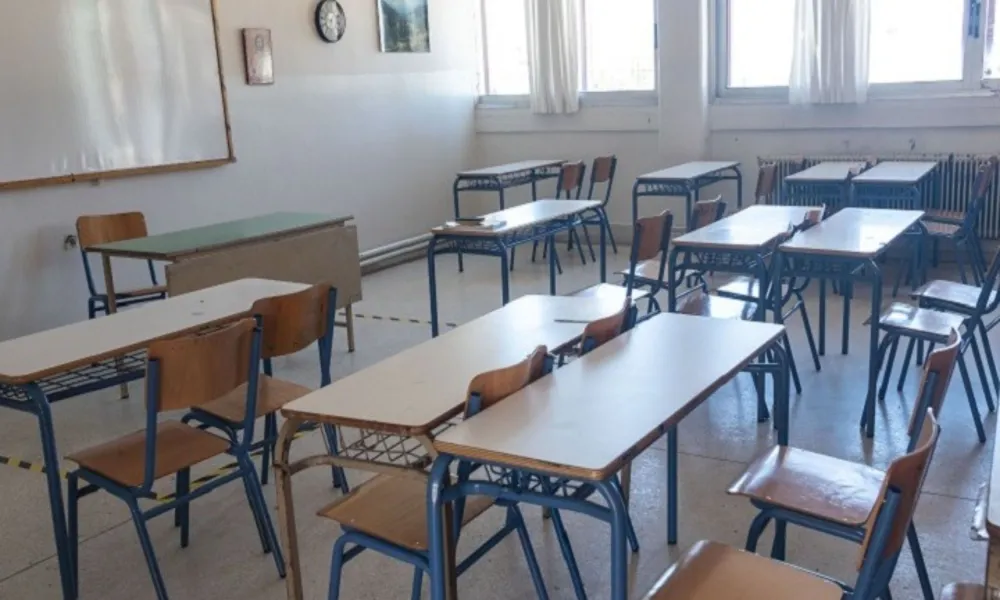

With staff rooms almost full but the staffing process still ongoing, the new academic year for secondary education officially began yesterday.
More than 7,000 teachers returned to schools, beginning preparations for the arrival of more than 41,000 gymnasium and lyceum students next Monday.
Speaking to Politis, George Koutsidis, Acting Director of Secondary Education at the Ministry of Education, described the return as smooth, noting that the percentage of teachers who did not report to their schools remained below 1%.
He added that some of those who were absent may still report during the course of the day.
In any event, he assured that all necessary steps would be taken immediately to ensure that no vacancies remain when students return to classrooms.
These first days are not simply a return-to-work period. They include seminars, meetings and the organisational and pedagogical preparation required to ensure schools are fully operational by Monday.
Appointments continue until the last minute
Behind the picture of a smooth start, however, the final staffing issues have yet to be fully resolved.
The Educational Service Commission was still announcing new appointments and transfers yesterday, confirming that staffing needs continue to be addressed up to the last moment.
This year's staffing includes:
- 706 teachers who received permanent appointments.
- More than 900 teachers who will serve on contracts or on indefinite-term arrangements.
According to OELMEK, additional appointments are expected in the coming days, while hundreds of substitute teachers will be called upon during the school year to meet emerging needs.
Reforms remain under way
The return to schools comes during a year marked by several open policy issues.
Education Minister Athena Michaelidou, speaking at a conference for primary and pre-primary education officials, said the goal was a "smooth and creative school year" and placed a number of reforms high on the agenda.
These include:
- The new teacher evaluation framework.
- Formative assessment.
- The teacher recruitment system.
- Changes to special education.
- A new pedagogical model focused on skills development and new technologies.
For its part, OELMEK made clear that it would remain:
"Present wherever decisions are being taken."
The organisation said its priorities include the creation of a fair and sustainable recruitment system, improvements to the new teacher-evaluation framework and better working conditions.
The first day passed smoothly.
The real test, however, begins when the first school bell rings.