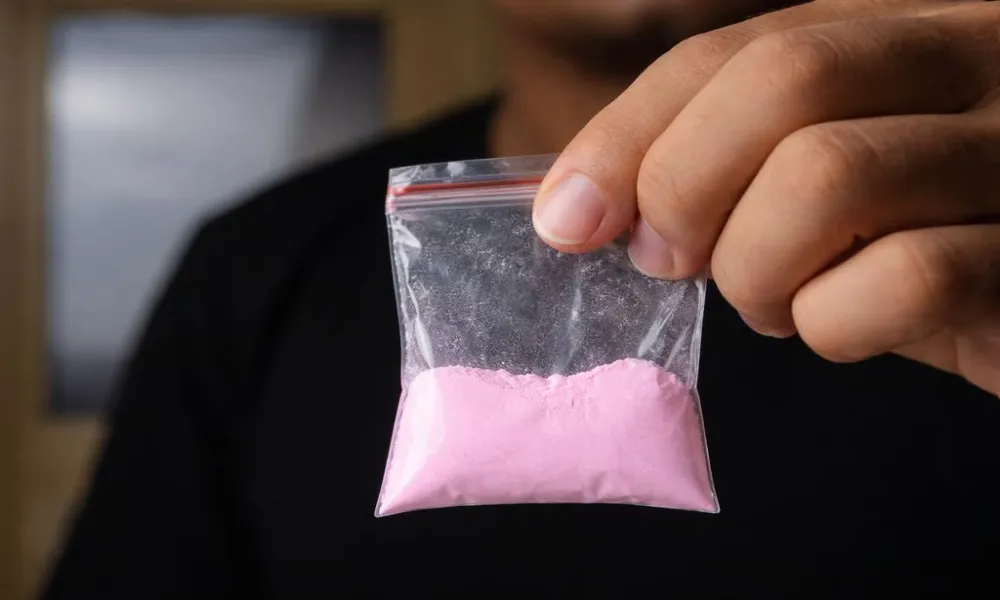

Some 125 kilograms of ketamine, mixed with other narcotic substances, were seized in Limassol during a police operation, shedding light on a drug whose Cypriot footprint had until now been minor but whose international profile is rising fast.
An unprecedented seizure
The discovery of an unprecedented quantity of ketamine by Cypriot standards has brought renewed attention to a substance that, until recently, had a relatively limited presence in Cyprus but appears to be gaining ground internationally. The 125 kilograms were found hidden inside paint containers during a large-scale operation carried out by the Police Narcotics Combating Squad (YKAN) and the Limassol CID (YDAP), in which four people were arrested — two couples, one Israeli and one Palestinian. Alongside the ketamine, a smaller quantity of cocaine and other types of narcotics were also found.
The drug behind Israel's nightlife boom
The sheer scale of the haul is notable in part because of ketamine's role as a core ingredient in a drug that has surged in popularity in recent years, particularly in Israel. Known as "dosa," and internationally as "pink cocaine" or "tusi," it has become a fixture of Israeli nightlife, with comparable mixtures also recorded in Latin America, parts of Europe and the United States.
Despite its name, "pink cocaine" is not a specific form of cocaine at all, but a mixture of psychoactive substances, the composition of which can vary considerably from batch to batch. Ketamine — a substance with anaesthetic and dissociative effects, used legitimately in medicine but also misused for its psychoactive properties — is a central component of many samples.
An unpredictable mix
In "dosa," ketamine is often combined with stimulant or empathogenic substances such as MDMA and caffeine, creating a particularly unpredictable cocktail, since substances with differing effects on the central nervous system are consumed simultaneously. Ketamine can produce a sense of dissociation from one's body and surroundings, altered perception, confusion and impaired coordination, while larger quantities can cause heavy sedation and a loss of contact with one's environment.
Analyses of "pink cocaine" have also identified, depending on the sample, cocaine, methamphetamine, synthetic cathinones and other substances. The drug's characteristic pink hue typically comes from added dyes and is not an indicator of any particular composition or purity. In Israel, "dosa" has been recorded as a particularly widespread party drug.
A cheaper alternative to cocaine
One factor that appears to have driven the drug's rapid spread in Israel is its significantly lower cost compared with cocaine. Israeli media reports describe the pink powder as readily accessible and now widespread across the country's nightlife, from clubs and parties to social gatherings and reception halls.
According to Israel's Ynet, its price has fallen sharply since it first appeared in the country, and it now sells for roughly half the price of cocaine — a factor that has helped it reach a far larger and more age-diverse audience. "Dosa" is now described as one of the most common drugs at parties and entertainment venues, with experts noting that in parts of Israel's nightlife scene it has effectively displaced cocaine.