
Imagine an island where you do not need to travel to enter another country. All you have to do is wait six months.
That is the reality of Pheasant Island, a tiny strip of land on the border between France and Spain that has one of the world's most unusual systems of administration.
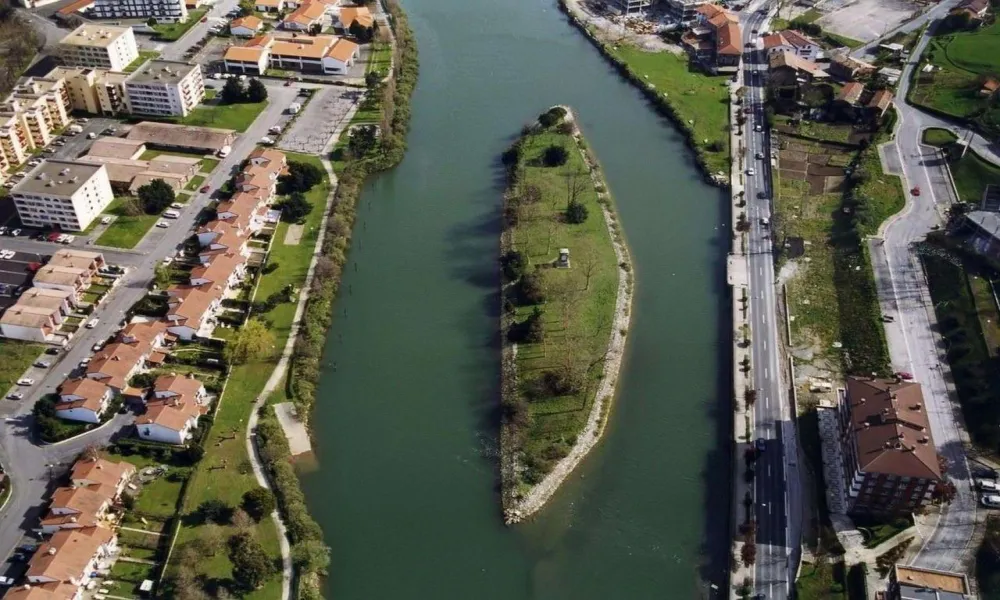
Known in French as Île des Faisans and in Spanish as Isla de los Faisanes, the island lies in the middle of the Bidasoa River, which forms the natural border between the two countries. Located between the French town of Hendaye and the Spanish town of Irun, the island measures about 200 metres in length and 40 metres in width.
It is uninhabited, has no permanent facilities and, despite its unique status, is not freely accessible to tourists.
Six months under each country
What makes the island truly unusual is its status as a condominium, a territory under joint sovereignty.
France and Spain share sovereignty over the island, but responsibility for its administration changes every six months.
Spain administers the island from 1 February to 31 July. From 1 August to 31 January, administration passes to France.
The arrangement is not merely symbolic. It is governed by agreements between the two states and involves the exercise of specific administrative and policing responsibilities.
It is one of the few examples in the world where two countries share control of a territory in this way.
An island where history was made
The origins of the arrangement date back to the 17th century.
In 1659, the island was chosen as neutral ground for negotiations between France and Spain after a long period of warfare.
It was there, on 7 November 1659, that the Treaty of the Pyrenees was signed, bringing an end to the conflict between the two kingdoms. France was represented by Cardinal Mazarin, while Spain's delegation was led by Luis de Haro.
The island's historical significance did not end there.
In 1660, it hosted the meeting of the French and Spanish royal courts ahead of the marriage of French King Louis XIV and Maria Theresa of Spain, daughter of King Philip IV. The marriage formed part of efforts to consolidate peace between the two countries.
No pheasants and no visitors
Despite its name, Pheasant Island is not home to pheasants. The origin of the name remains the subject of differing interpretations, and the island has also been known as Conference Island because of its role in Franco-Spanish negotiations.
Today, public access is generally prohibited.
Visitors can view the island from the riverbanks on either the French or Spanish side, but are not permitted to visit it directly. The restrictions are linked partly to safety concerns, as the river's currents make access difficult and potentially dangerous, while there are no facilities for boats to dock.
Maintenance of the island, including vegetation management, is carried out by the relevant authorities of whichever country is administering it at the time.
More than three centuries after the agreement that helped bring peace between two European powers, the tiny island remains a rare symbol of international cooperation.
It is a piece of land that does not need to move in order to change countries. Every six months, only its administration changes.