Evgeny Zosimov lives in free Famagusta.
“It is a district with a unique but also heavy identity. It bears the name of a city that remains under occupation, and that creates a huge moral obligation for all of us. I fully understand that, as someone who came to Cyprus from abroad, my position is sensitive. However, living here and raising my family in this place, I feel a responsibility to represent the people who look across the bay every day, still holding the keys to their homes. We must realise that the ‘children of occupation’ are now reaching retirement age. We do not have the luxury of waiting another 10 or 20 years. That is why, for us at Volt, solving the Cyprus problem remains the absolute priority. It is the key to unlocking the future of the entire island.”
At the same time, he adds: “As we fight for a solution, we must ensure that our free district is not left to its fate.”
His parliamentary priorities would include, first, upgrading healthcare. As he stresses, Famagusta General Hospital must be properly staffed.
“It is unacceptable for residents, many of whom are refugees who rebuilt their lives from scratch, to feel like second-class citizens and to suffer for basic medical services.”
He would also fight to support local farmers who are being “suffocated” by electricity and water costs.
“We need immediate legislative measures to keep our land alive,” he says.
Tourism, he adds, must also change.
“The district cannot ‘die’ in winter. I will push for incentives to develop sports and medical tourism, so that there is economic activity and permanent jobs for our young people throughout the year.”
Famagusta, free and occupied
More than 20 candidates on party ballots for the parliamentary elections are Cypriots with a migrant background. Politis spoke to some of them and presents their compelling stories, the reasons they are standing and the mark they want to leave on Cypriot society if elected.
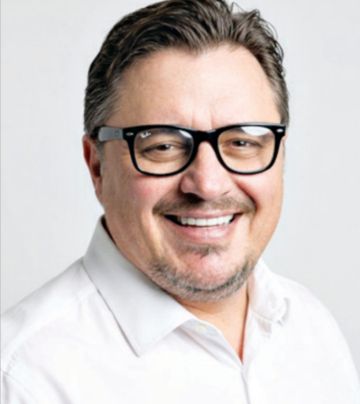
Evgeny Zosimov was born in 1980 in the Soviet Union, in the city of Bryansk, near the borders of Russia, Belarus and Ukraine. His background is a mosaic of the region: his father is from Ukraine, his mother from Russia and his grandfather had Pontic roots. His surname was “Sovietised”, as he puts it – a story common to many families of the diaspora. He lived in both countries, starting school in Donetsk. He first came to Cyprus in 1992, at the age of 12, and has been a Cypriot citizen since 2008.
“Cyprus is my home”
“I will never forget the first feeling when I set foot on the island – the August heat and humidity. What struck me from the start was the sense of safety. I remember walking alone on Finikoudes at 11 at night with an ice cream and feeling complete calm. My parents ran a small travel agency and were among the first to bring tourism from Russian-speaking countries to Cyprus. After spending many summers here, we settled permanently in 1996, when I was 16. Since then, Cyprus has been my home,” he tells Politis.
Smooth integration – and why
Asked whether he faced racism, he answers by framing it differently.
“Cyprus is my place. I grew up here and chose to return here after eight years in the UK. My connection to the island is daily and meaningful. I have three children whose first language is Greek. One of my children is on the autism spectrum and attends a special unit within a mainstream public school, so I know very well the challenges and shortcomings of our system.”
Wanting to contribute in practice, he says, he took on the role of president of the parents’ association at his children’s school.
“I fight every day alongside parents and teachers for the good of our children, and that makes me feel even more connected to the local community.”
He then answers the question directly:
“Personally, my integration was smooth because I respected and embraced our culture from day one. Today, when I speak, people are often surprised by my Cypriot accent. They tell me, ‘Sorry mate, I thought you were foreign,’ and it always ends with a smile.”
A changing Cyprus
“But let’s be honest,” he continues. “The landscape is changing. The Cyprus I encountered in 1992 was open-armed. Today, pressure from migration and economic hardship has made society more cautious. This is a reaction to problems the state left without proper management.”
He adds:
“As Volt, our position is clear: migration must be addressed according to the law, without exceptions, but always with full respect for human rights. We need order, security and the rule of law for citizens to feel confident in their country again.”
The smell of natural gas
His decision to stand for election stems from a 25-year career in the private sector, technology and audiovisual production.
“Because of my work, I found myself on the front line of events that marked Cyprus. One example few people know is that I was the cameraman on the helicopter that captured the first images of the Noble Energy platform in 2013. That footage, which every Cypriot saw on television, was mine. I was up there, I smelled the gas and felt the huge hope that filled the country at the time.”
It was a moment, he recalls, “when we all believed our future was changing.” However, he adds:
“We later saw how poor handling and lack of transparency led to the collapse of interim solutions that could have eased the burden on Cypriot consumers. That experience made me realise that Cyprus does not lack resources – it lacks proper organisation.”
The wall of the establishment
During the eight years he lived in the United Kingdom, he says he saw how a state can function digitally and efficiently.
“When I returned, I saw many close friends – Cypriots eager to contribute – give up on politics because they could not break through this wall of the establishment. It is a stagnant system that operates quietly, shielded by the law, and our social reality can no longer tolerate it.”
He describes this as a “curse” for Cyprus.
“We have a duty to break it. I chose Volt because we need people in parliament who understand technology and want to turn it into a tool of transparency, so that clientelism and citizens’ daily hardship finally end.”
A digital clean-up of the state
If elected, his main focus would be what he calls a “digital clean-up” of the state. Zosimov is a digital transformation specialist in the media sector and is currently based in Protaras, working in e-learning.
“For me, digitalisation is not just a technological upgrade. It is the strongest weapon against corruption, favouritism and clientelism.”
Technologically, he argues, Cyprus is not as far behind as many believe.
“We have made huge leaps in infrastructure. The problem is not the cables or internet speeds. The real problem is the legislative blockade – outdated laws that prevent progress and a bureaucracy that refuses to change.”
As he explains:
“When state processes become digital, automatic and transparent, there is no room for ‘connections’ or lost files. My goal is to close the era of paperwork that burdens citizens and wastes public money.”
He adds that this transformation touches almost every aspect of life – transparency, agriculture and the environment, education and inclusion.
“Citizens should know where every last euro of their taxes goes, through systems that do not allow human intervention or manipulation.”
He points to farmers in the Kokkinochoria as an example.
“Imagine how much easier their lives would be if subsidy applications, permits and compensation were handled quickly and fairly through digital platforms, without waiting months or years.”
Drawing on his personal experience, he also wants technology to support special education.
“We need digital tools that support teachers in special units and give a voice and opportunities to all children, regardless of the challenges they face.”
If elected with Volt, he says he will push for legislation that forces the state to modernise in substance.
“We must dare to introduce artificial intelligence into citizen services and digital learning, and invest seriously in digital organisation.”