
UN Personal Envoy María Angela Holguín begins a new round of contacts today after four months absence from the island, with a view to holding a ‘5+1’ meeting at the end of July or first week of August.
She will meet with President Nikos Christodoulides at 9am and Turkish Cypriot leader Tufan Erhürman at 3pm, while engaging in contacts througout the week. The UN envoy departs Cyprus on Sunday for meetings with the respective Turkish and Greek foreign ministers in Ankara on Monday and Athens on Tuesday.
Work has already begun on preparations for the enlarged meeting. According to well-informed sources, the UN has held brainstorming sessions with the two leaders and their associates on how to move the process forward so as to resume formal talks and reach a settlement before the end of the year.
In her meetings with the leaders today, the former Colombian foreign minister will table some of the ideas under discussion on how to address the challenges impeding progress. UN Secretary-General António Guterres is expected to table these ideas in a more specific format at the next ‘5+1’.
Greater EU involvement
The UN is also working very closely with the European Union, Greece and Turkey. Guterres has been in communication with European Council President António Costa on Cyprus the last two months. The two men know each other very well. Costa served twice as cabinet minister during Guterres’ term as Portuguese Prime Minister from 1995 to 2002.
European Commission President Ursula von der Leyen and Costa have requested a meeting with Turkish President Recep Tayyip Erdogan on the sidelines of the next NATO summit in Ankara on 7-8 July where they will discuss Cyprus.
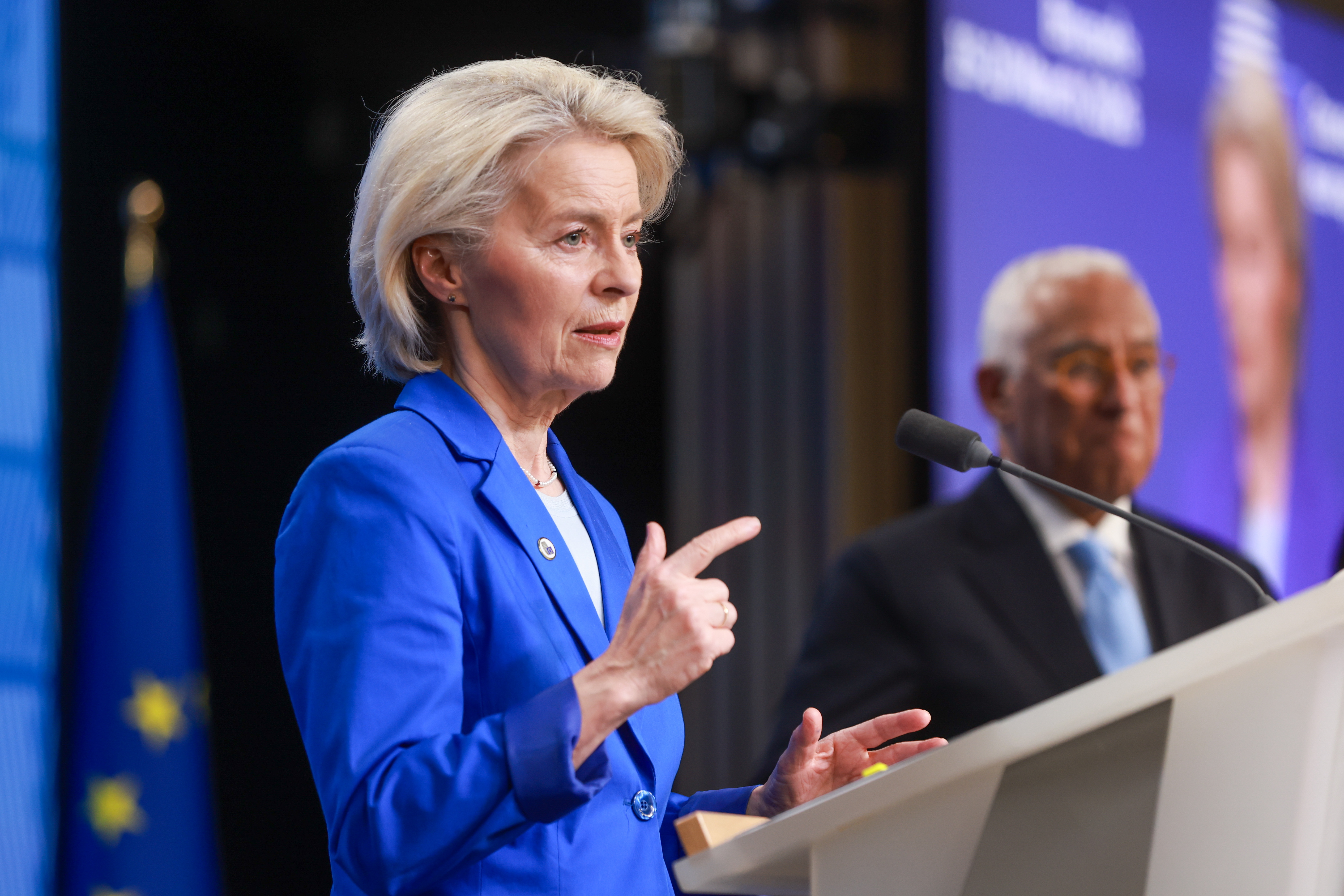
EU foreign policy chief Kaja Kallas is about to host the Bicommunal Technical Committee on Youth in Brussels.
The EU’s interest in a settlement appears to have peaked since Cyprus found itself in the crosshairs of the regional war between the US, Israel and Iran. The regional security environment has changed the perspective in Brussels and certain capitals.
Greater EU involvement in a new push for a solution is also considered very important to address the concerns and needs of all sides. The Turkish Cypriot side will not want to see a repeat of 2004 when it voted in favour of a solution and immediately after, saw the Greek Cypriots enjoying EU membership while they felt left out in the cold. Ankara is also likely to have specific ‘asks’ of the EU related to its own national interests, while the Greek Cypriots will want to ensure adherence to EU laws, principles and values. Efforts will be made to ensure greater EU participation ahead of a new ‘5+1’.
More substance, less CBMs
Given the difficulties faced in reaching agreement on confidence-building measures (CBMs), the aim of the enlarged conference, likely to take place in Geneva, is not to focus on detailed trust-building initiatives but on the bigger picture. This would avoid a repeat of the last ‘5+1’ meeting in New York in July 2025, which failed to achieve much. It also acknowledges that CBMs have the potential to get the sides stuck in the mud. For example, the proposed bicommunal solar park appears to have hit a brick wall while the sides are not moving from their positions on crossing points either.
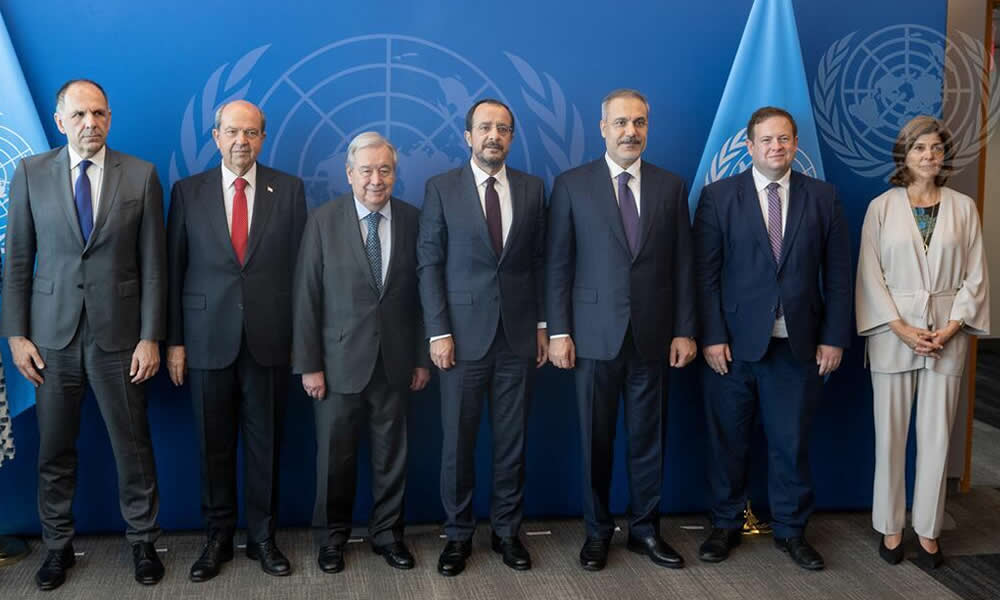
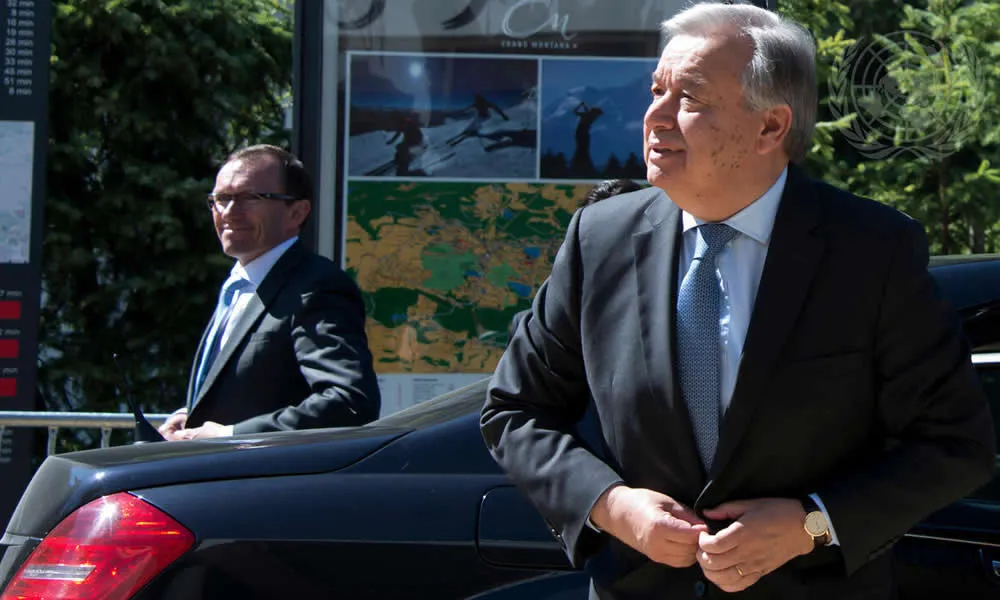
The last 5+1 held in July 2025 in New York. UN Photo/Eskinder Debebe
For formal talks to resume however, the sides must agree the basis of negotiations. It remains to be seen whether they will agree to start from where they left off at Crans-Montana or adopt some other practical basis to kick-start talks.
The goal – following consultations with all sides, taking into consideration their thoughts and concerns – is for the UNSG to present some ideas to the sides at the ‘5+1’ on what the future could look like and see if they can reach a common understanding on a ‘road map’ for the way forward.
He will explain to them what the next phase would be – based on the sides’ own input and insight – and ask if they want to go for it.
The next step would be to resume talks and conclude a strategic agreement, after which they will head towards a comprehensive settlement.
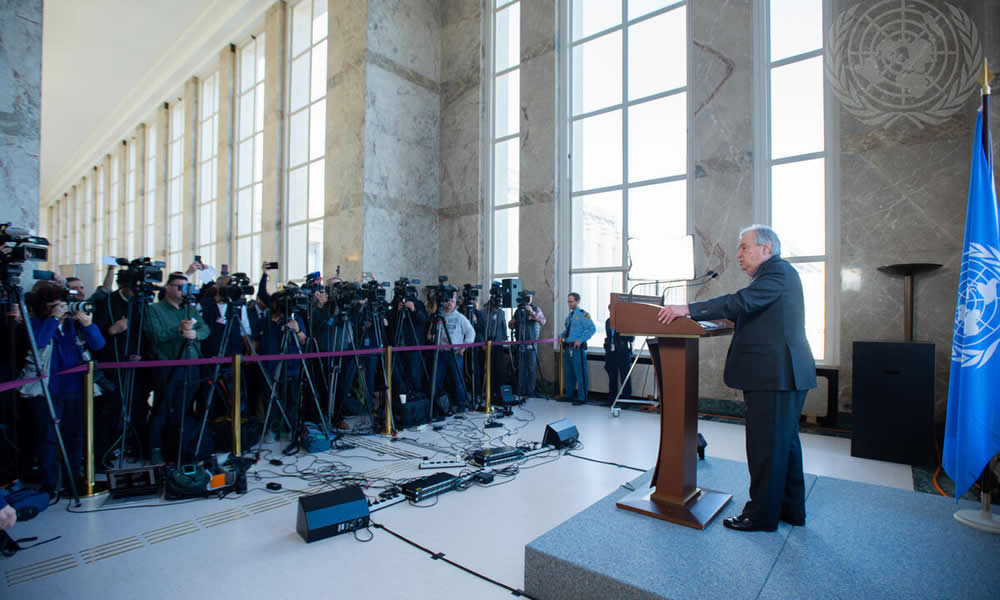
A grand finale?
Guterres started his tenure as UN chief nine years ago with a failed peace effort on Cyprus – known for good reason as “the diplomat’s graveyard”. He is now keen to start – and finish – a new round of peace talks before leaving office.
One question hanging in the air is whether the involved parties want to go all the way? According to sources close to the process, Athens appears keen to push for a solution. Ankara is also sending positive messages, though it is not known whether these are conveyed explicitly or received by reading between the lines. Erhürman came to power on a tidal wave of support on a federal solution platform. However, he has shown little inclination to move unless he’s got solid evidence that this time will be different. Christodoulides talks the talk and will now be tested on whether he can walk the walk. But can he convince his community to walk with him? Or will the fear of the unknown prove too great a hurdle?
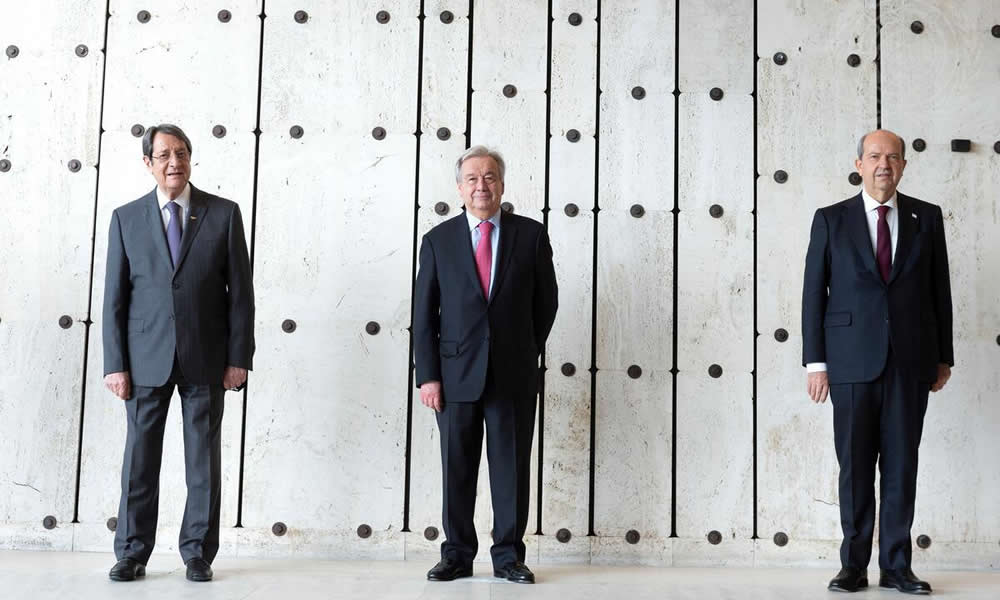
In terms of design, historically, the Cyprus peace talks have always come up short. The lack of transparency, the fact it’s a top-down leader-led process with limited space for broader civic or political engagement are factors that do not increase inclusivity or help share the burdern of responsibility.
New ideas
Aware of the challenges faced, the new process will likely contain some new ideas – and some old ones – on how to reach the finish line.
On the sensitive issue of security and guarantees, the international community is unlikely to accept maintaining ‘guarantors’ in the 21st century. One prospect could be to explore a European and/or NATO security architecture for the island post-solution. On the question of Turkish troops, it remains to be decided the pace and degree of their potential withdrawal, or if some do stay, in what capacity they will do so.
Then there is the question of referendums. One idea being floated is to reach agreement on a solution that will be implemented in phases. That implementation could begin earlier so that each community can see the shape and potential benefits of an agreement, before heading to twin referendums.
For example, Turkish Cypriots could start enjoying trade with the EU and/or direct flights. Greek Cypriots might see the partial withdrawal of the Turkish army and/or the opening of Varosha.
A year or two later, they could be asked to vote on a comprehensive settlement that reunites the island. If they vote ‘no’, the implemented measures remain in place, and both sides have gained something. If they vote ‘yes’, then it’s game on.