

Koukkides-Procopiou opened with a diagnosis. Drawing on a recent policy paper by the European Council on Foreign Relations, she argued that Europe is currently living through its "Home Alone" moment: it has realised in panic that the Americans have left the room and that it must now fend for itself. The hope, still present among both publics and leaders, that a post-Trump era will restore the old order is, in her assessment, "extremely unlikely."
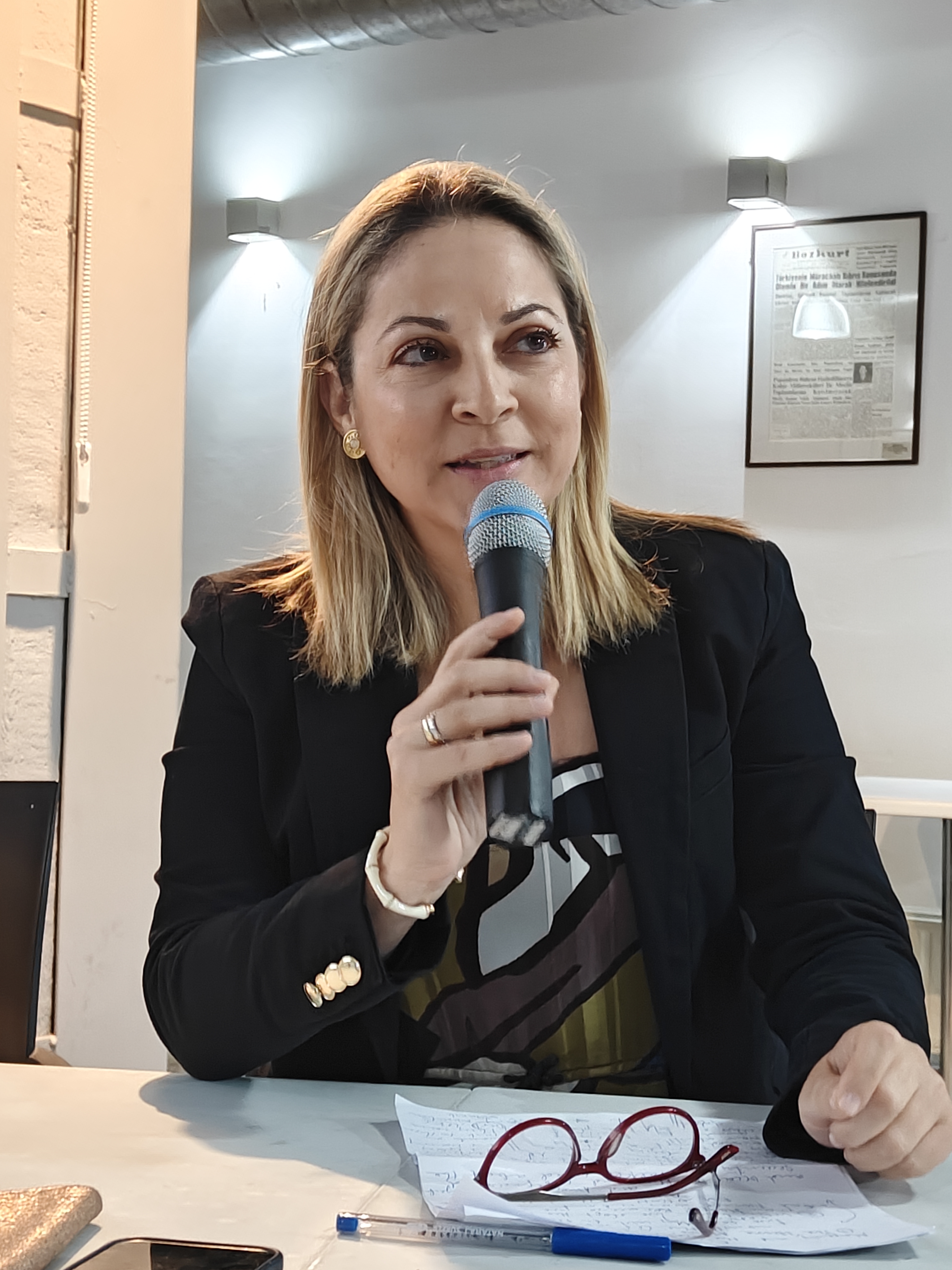
The roots of this predicament, she argued, are not recent. Europeans spent decades constructing a self-serving narrative about the origins of their union, one focused on the romantic notion of founding fathers who wanted peace, while overlooking the material foundations of that peace: the Marshall Plan, the Truman Doctrine and NATO. "There can be neither peace nor prosperity without security," she said. "The EU was as much an American project as a European one, yet the Europeans chose not to see that. Until reality caught up with them." For countries like Cyprus, which joined the EU partly hoping it would function as a security provider, the disappointment has been acute.
The European army debate is asking the wrong questions
The surge of discussion around a European security architecture since Trump's return has generated excitement but, Koukkides-Procopiou argued, little clarity. The debate too often conflates the idea of a European security architecture with the creation of a European army under joint command, while leaving the harder questions untouched.
Article 42.7 of the EU Treaty establishes that NATO obligations take precedence over any EU defence commitments. Should that article be revised and given real substance before any progress can be made? And what happens in the specific scenario that a NATO member, namely Turkey, attacks an EU member, namely Cyprus? How could other EU members come to its defence "with all means at their disposal," as the Treaty states, without violating their NATO obligations? The proposed European Security Council raises equally unresolved questions: which countries would sit on it, how would decisions be made, would member states surrender defence jurisdiction to Brussels, and who would this body ultimately command? "We need decisions, not another decision-making body, especially one with no democratically elected or appointed mandate," she said.
The conversation Cyprus is not having with its allies
There is a frank discussion taking place in European corridors of power that Cyprus has not been willing to engage with openly, Koukkides-Procopiou said. The working assumption among those who make decisions is that no credible European security architecture is possible without Britain, Ukraine and Turkey. Britain brings its UN Security Council seat and its nuclear and maritime capabilities. Ukraine is the last line of resistance to Russian aggression and has developed formidable drone and technological expertise. Turkey commands the largest army in Europe and serves as the buffer before the instability of the Middle East.
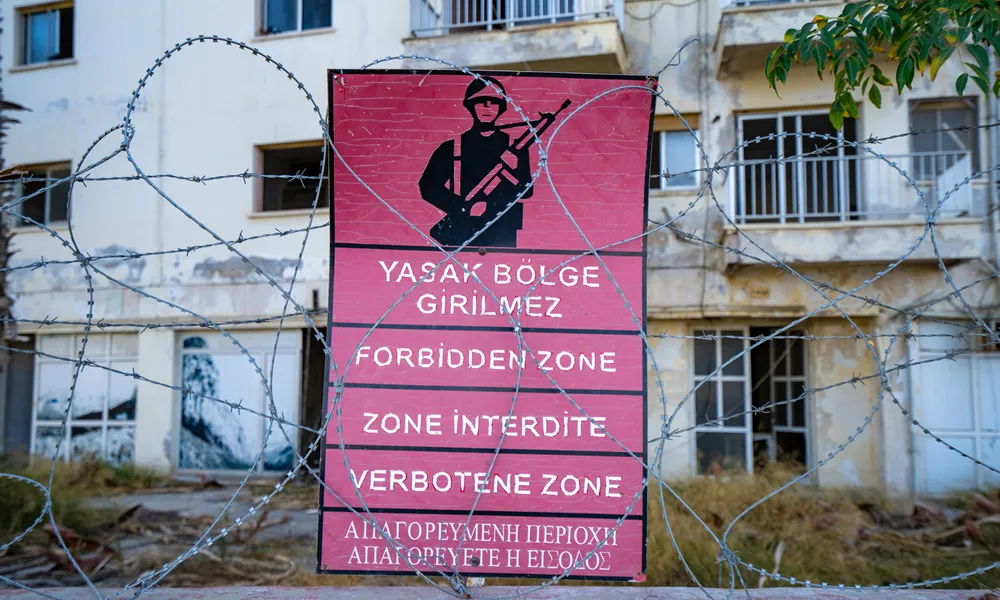
Cyprus, she said, is expected to acquiesce to this in some form, and the recent surge in EU interest in advancing the Cyprus peace process is directly connected to that expectation. "Whether negotiations fail or succeed, no one could say that Turkey did not try, and no one should be able to stop it from setting foot inside European security structures," she said, citing a very senior former EU official who put it to her plainly: "You Greek Cypriots had your chance twice and missed it, the Annan Plan and Crans Montana. You cannot halt the train and keep it hostage in the station forever." The contingency Cyprus has not prepared for, she said, is the one in which the aggressor, the invader and the occupier becomes an official partner in the European security structure.
The Eastern Mediterranean is realigning, with or without Cyprus
Alongside the European dimension, Koukkides-Procopiou pointed to a parallel and arguably more immediate shift: a reconfiguration of the security equilibrium in the Eastern Mediterranean, a region to which Cyprus is geographically and strategically far closer than it is to Brussels. The emerging American thinking, she said, positions Washington as a security integrator for the region rather than its sole provider, enabling allies to build interlocking security and defence relationships that would allow the US to gradually reduce its direct role.
In this emerging framework, she identified three expansionary powers: Iran, Israel and Turkey, none of which shows any sign of curtailing its regional ambitions. Both American and British interests, she noted, are oriented around securing Israel's survival and drawing Turkey in as a counterweight to Iran. The Palestinian question, she said bluntly, is not a decisive obstacle to renewed Arab-Israeli security cooperation if strategic imperatives require it. The Abraham Accords demonstrated as much, as did the intelligence and air defence support extended to Gulf states against Iran.
Rather than a formal regional NATO, which she regarded as improbable, she described what she considers more likely: "an intricate web of interdependent security, intelligence and defence arrangements in the region that will ultimately draw in all players and make it more difficult for them to disengage." Cyprus, she argued, has already been absorbed into this emerging network through the military and strategic choices it has made. That positioning has helped Cyprus manage Turkish pressure, but it has also created a Nash equilibrium in which the major stakeholders already obtain what they need from the status quo and have diminishing incentive to disturb it by pursuing a resolution of the Cyprus problem in the form both communities have traditionally envisioned.
Αdapt or be left behind
Koukkides-Procopiou was unsparing in her final assessment. In an era in which the rules of the game have fundamentally changed, she argued, it is naïve to pursue a resolution of the Cyprus problem on the basis of expectations formed under entirely different conditions. A traditional solution to the Cyprus problem, or any significant EU common foreign and security policy initiative that might support one, is not the preferred scenario. What she would wager on is an arrangement shaped by the strategic interests of the region's major powers, one that Cyprus should seek to influence and turn to its advantage rather than resist, even if it bears little resemblance to what has been sought for decades. "Nostalgia is not a strategy," she said, "and neither is wishful thinking."
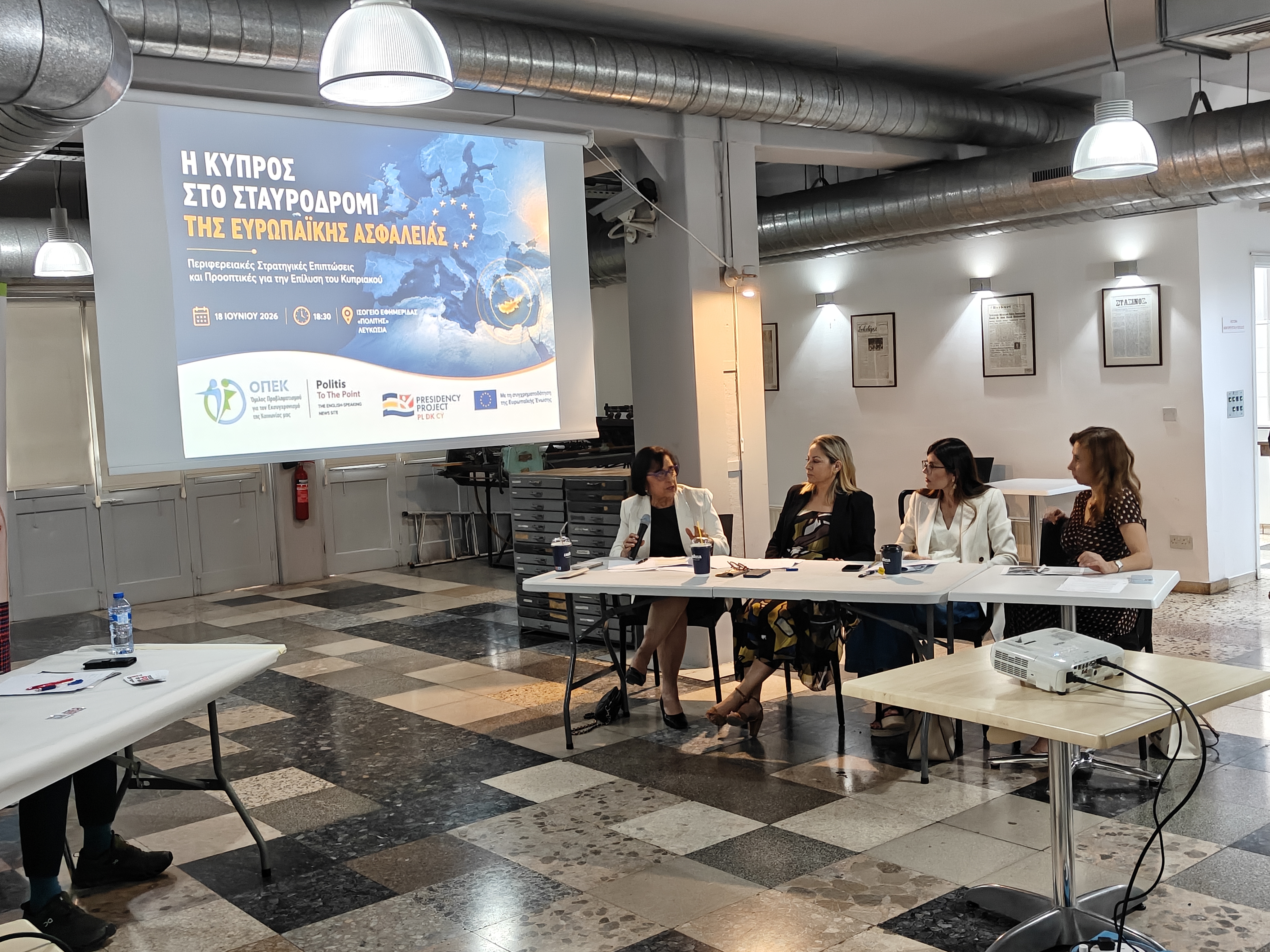
The discussion was moderated by Politis to the Point editor-in-chief Peggy Spinelli and was part of a series of public events organised under the EU Presidency Project 2024-2026. Other speakers included University of Cyprus Professor of International Relations Costas M. Constantinou, former Foreign Minister Erato Kozakou-Marcoullis, AKEL's Cyprus problem officer Stavri Kalopsidiotou and DISY's former MP and political scientist Xenia Constantinou.