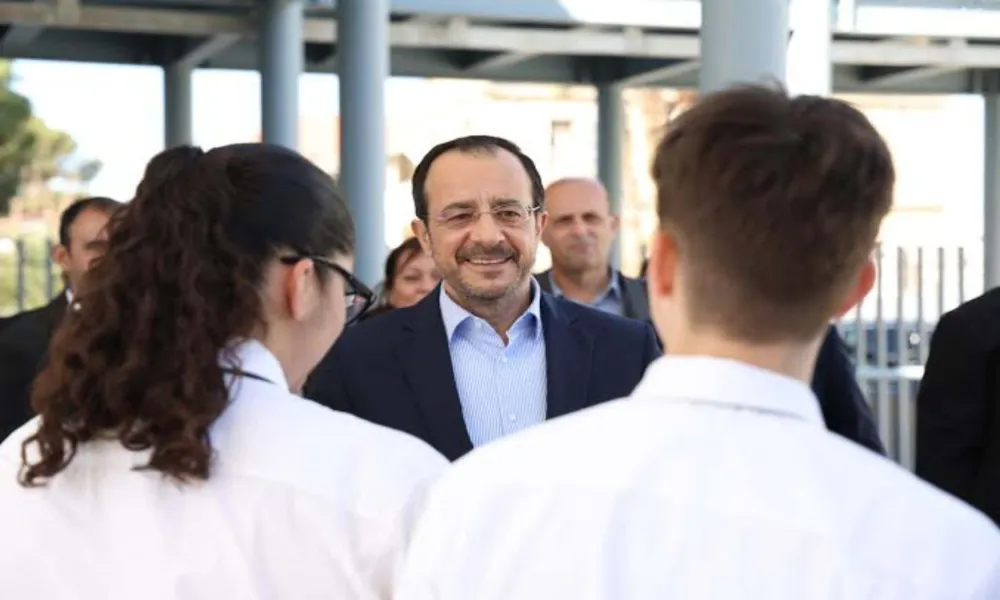

President Nikos Christodoulides, through his statements yesterday that “in the coming days we will hear more news that will demonstrate the momentum that exists on the Cyprus issue,” is seeking to reinforce the perception that developments are forthcoming through the enhanced involvement of the European Union and UN initiatives.
The anticipation of further announcements, and by extension developments in the process, is intended to project an image of increased momentum on the Cyprus issue.
What raises questions, however, is not whether momentum exists, but whether it can be translated into a substantive negotiating process. The President reiterated that Nicosia's objective is the resumption of negotiations “from where they left off”, aimed at a solution fully compatible with European principles, values and the EU acquis. At the same time, he argued that the European Union is, for the first time, demonstrating such strong interest and a willingness to play a leading role, directly linking progress in EU-Turkey relations to specific positive developments on the Cyprus issue.
Where did the talks stop?
It is precisely at this point that the central question arises: at what stage is it accepted that previous efforts and negotiations were left?
When reference is made to continuing talks “from where they left off”, it presupposes a common understanding of where exactly they stopped. What is the point of reference? What negotiating acquis are the two sides expected to continue from?
Without a clear answer to those questions, the call for the resumption of negotiations risks remaining more of a slogan than a concrete negotiating proposal.
The EU and Turkey
At the same time, the President is linking progress on Cyprus with EU-Turkey relations.
The position being advanced is that meaningful developments in EU-Turkey relations can occur “only if meaningful developments on Cyprus come first and Turkey fulfils its obligations”. In theory, this political linkage strengthens Nicosia's negotiating position.
In practice, however, it creates a vicious circle. If substantive negotiations are to take place, it remains unclear how the positive developments that are a prerequisite for progress in EU-Turkey relations will emerge. At the same time, the Turkish side has so far provided no indication that it accepts such a sequence of events, namely that it should first fulfil its obligations towards the Republic of Cyprus and engage in meaningful negotiations before progress can be made in EU-Turkey relations.
The moves by the EU in cooperation with the United Nations are important developments and clear signs of diplomatic activity. They do not, however, necessarily amount to negotiations.
For genuine progress to take place, a mutually accepted basis for talks is required, enabling all sides to be judged on their actual positions rather than on public declarations.
The coming period is expected to show whether the anticipated “news” concerns substantive steps towards restarting negotiations or whether it will amount to yet another cycle of diplomatic manoeuvring.
As long as the discussion remains focused on momentum rather than the content of negotiations, the fundamental question remains unanswered: is there currently common ground for a genuine return to a process aimed at resolving the Cyprus issue, or are we simply witnessing diplomatic movement without a clear political destination?
‘Before the end of the summer’
Speaking yesterday on Politis Radio 107.6 and 97.6, Greek Cypriot negotiator Menelaos Menelaou said that a new expanded conference could take place even before the end of the summer, provided there is sufficient political will.
He acknowledged, however, that obstacles remain, adding that these continue to originate from the Turkish side.
Asked whether those obstacles also concern the Turkish Cypriot side, Menelaou said there has been a shift in Turkish Cypriot positions following the change in the leadership of the Turkish Cypriot community.
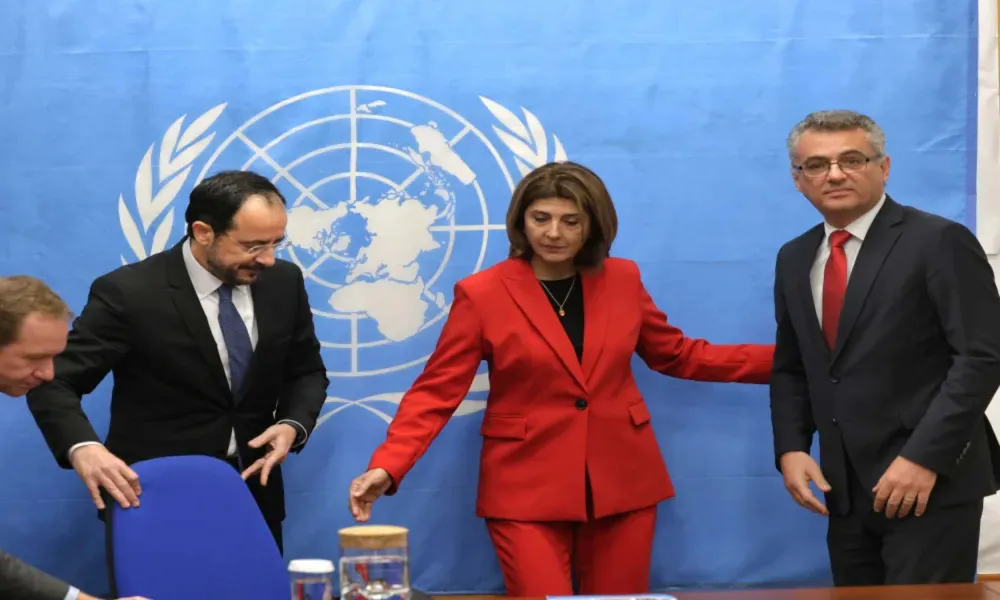
He further suggested that María Ángela Holguín, the personal envoy of the UN Secretary-General, is expected to return to Cyprus during the final week of July after continuing her contacts abroad, particularly in Brussels.
According to Menelaou, the Greek Cypriot side could accept a solution whose implementation would be phased in certain aspects, such as the territorial chapter, but not a phased implementation of the solution as a whole.