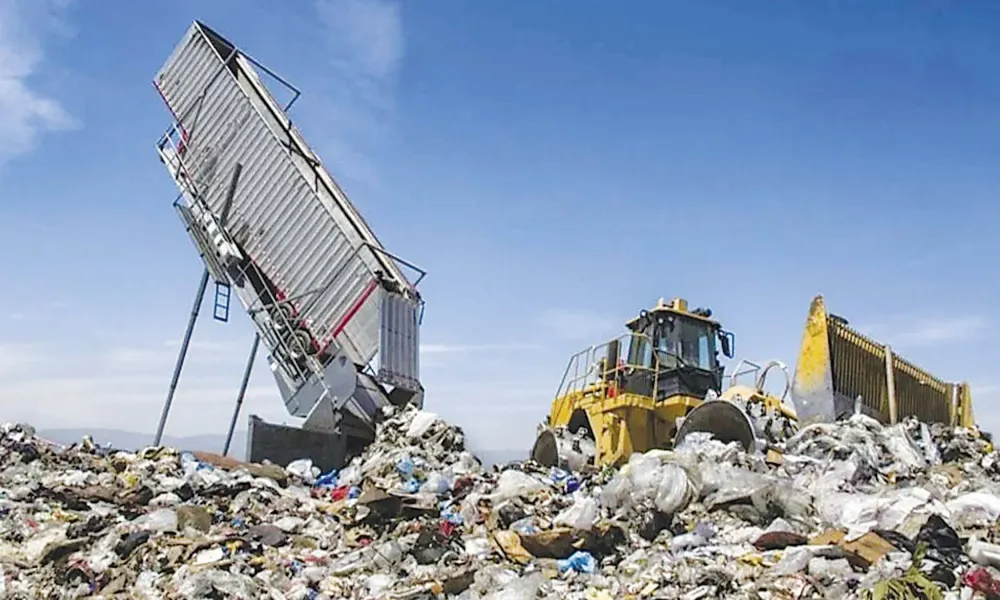
Agriculture, Rural Development and Environment Minister Maria Panayiotou has invited the Union of Municipalities to a meeting on 20 July to discuss the consequences of parliament's rejection of the Municipal Waste Landfill Tax, funding for local authorities and the next steps towards implementing an integrated waste management system.
The meeting comes amid a particularly tense atmosphere, as the ministry has warned that parliament's decision makes it impossible to draw down €23 million from the Recovery and Resilience Plan.
The funding had been earmarked for source-separation projects and the modernisation of waste management by local authorities. Including national co-financing, the total available resources would have amounted to approximately €48 million.
Two different interpretations
The Union of Municipalities welcomed the rejection of the legislation, describing it as a responsible decision by the majority of parliament.
It argues that the vote vindicates warnings it had repeatedly made, namely that municipalities and citizens should not be forced to shoulder the cost of the state's longstanding shortcomings.
Local authorities stress that they support national and European environmental objectives, as well as the transition to a circular economy.
However, they insist that success requires comprehensive planning, adequate infrastructure, cooperation among all stakeholders and a fair distribution of responsibilities.
According to the Union of Municipalities, environmental policy cannot be based on transferring the cost of delays and omissions, for which local government is not responsible, onto residents.
The ministry, on the other hand, described the rejection as a "particularly negative development."
It argues that the government had already reduced the proposed fee from €35 to €10 per tonne, an amount equivalent to less than €1 per month per household.
The ministry also notes that implementation of the measure had been postponed to the latest possible date and that additional funding had been secured for municipalities.
Outstanding issues
The ministry rejects criticism that there is no planning in place, insisting that a specific strategy exists, has been presented to parliament and is already under way with the involvement of specialised consultants.
It also states that management of the Pentaschoinos Integrated Waste Management Facility (OEDA Pentakomo) is expected to be transferred to a new contractor during 2027.
Municipalities, however, maintain that significant issues remain unresolved regarding implementation of the Pay-As-You-Throw system.
These include infrastructure for organic waste, the location of facilities, processing costs, funding for equipment, the recruitment of inspectors, the operation of green points and completion of the necessary legislative framework.