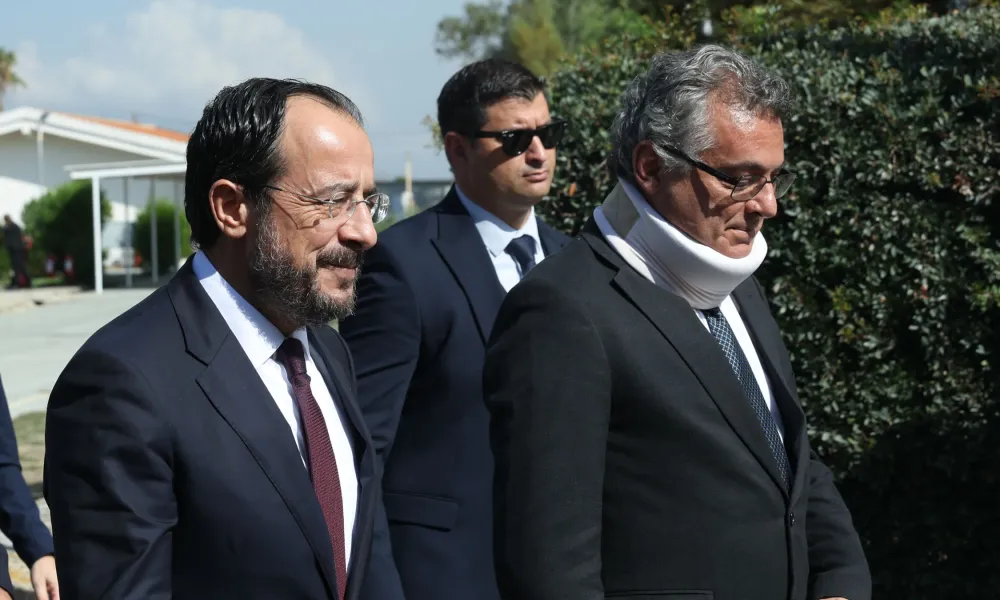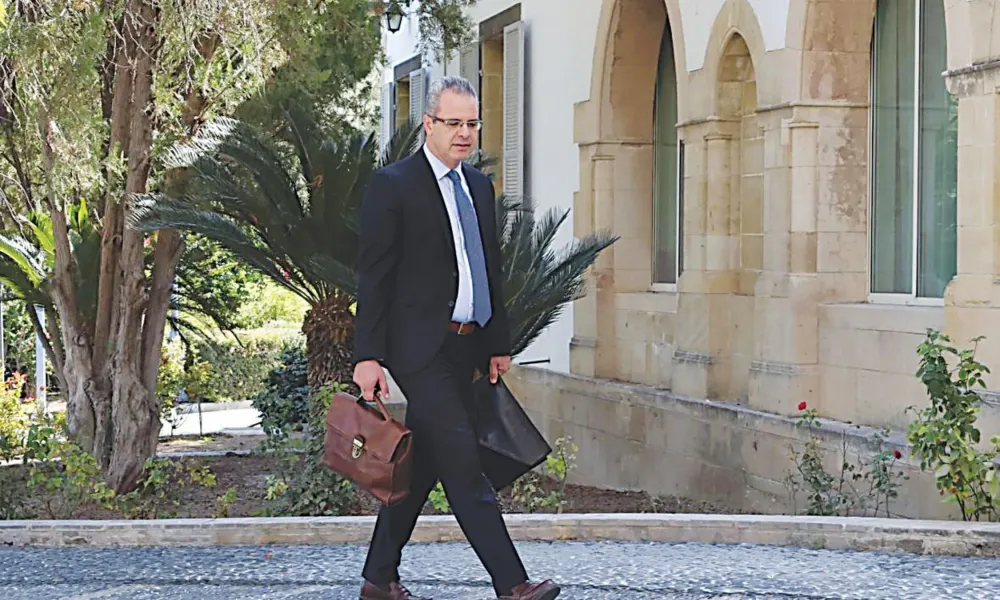

The process of recording and reviewing convergences in the Cyprus negotiations is advancing and is expected to be completed soon, according to Greek Cypriot negotiator Menelaos Menelaou, who says the next natural step should be the convening of a new expanded meeting aimed at deciding on the resumption of formal talks.
Speaking on Politis Radio's Morning Briefing programme, one day after the first meeting between President Nikos Christodoulides and Turkish Cypriot leader Tufan Erhürman following the recent visit of UN Secretary-General António Guterres to Cyprus, Menelaou described the leaders' discussion as positive and substantive.
"A good and meaningful meeting"
Menelaou said the talks provided an opportunity for an extensive discussion lasting around two hours.
According to him, the focus was on the substance of the process and the next steps outlined following Guterres' visit to Cyprus last month.
He said the immediate objective remains the completion of the review of convergences and outstanding issues in order to create the conditions for the next stage.
Review being conducted by the UN
Responding to questions about the process, Menelaou clarified that the review is being carried out by the United Nations, which remains in contact with both sides.
He stressed that the work is based on existing UN records rather than constituting a new negotiation between the parties.
"The indication we have from the United Nations is that the process is progressing and is expected to be completed soon," he said.
Menelaou added that María Ángela Holguín, the UN Secretary-General's personal envoy, is expected to return to Cyprus in early September to continue preparations for the next phase of the process.
Next goal: a new expanded meeting
According to Menelaou, once the review is completed it should be shared with all parties involved, followed by the necessary preparatory work for a new expanded conference.
"The next natural step should be the convening of the next expanded meeting," he said, adding that its objective should be a decision on restarting the negotiation process.
He argued that any renewed negotiating effort should be based on reaffirming what has already been achieved and focusing on the issues that remain unresolved.
Crossing points should not become a precondition
Addressing the issue of opening new crossing points, Menelaou recalled that the UN Secretary-General had presented a compromise proposal in June involving two crossing points.
He said the Greek Cypriot side has accepted the proposal.
However, he expressed concern that the issue is being treated by the other side as a precondition for progress.
"By treating it as a precondition, the side preventing a breakthrough on the issue is at the same time turning it into an obstacle to the next steps as well," he said.
Claims of delays in the process
Menelaou argued that developments over the past period reflected an approach that slowed the pace of progress.
He noted that two expanded meetings took place in March and July 2025, and that following the change in the Turkish Cypriot leadership there had been expectations that developments might proceed more quickly.
"At various stages we encountered an approach of slowing down the process," he said.
He added that the coming period will show whether there is a genuine willingness to accelerate developments.
According to Menelaou, Guterres remains personally committed to efforts aimed at restarting negotiations.
Review should extend to Crans-Montana
Menelaou also stressed that, for the UN review to be complete and useful, it should include all convergences achieved up to the final day of the previous negotiating process at Crans-Montana.
"It should extend to the very last day of the discussions held during the previous effort," he said.
According to Menelaou, only in this way can the negotiating acquis be preserved and future discussions focus on the issues that remain to be resolved.
Civil society initiative
Menelaou also referred to the planned Civil Society Advisory Body, an initiative that he said was originally proposed by the Greek Cypriot side in 2007 and has recently been revived.
He said the members of a 10-member coordinating committee are expected to be announced soon.
The committee will prepare the operation of a broader 100-member body, with equal Greek Cypriot and Turkish Cypriot participation, that will submit recommendations and views to both leaders.
Maronite and Armenian community issues
Finally, Menelaou said President Christodoulides raised issues concerning the Maronite and Armenian communities.
Among the matters discussed were:
- Expanding opportunities for resettlement in Maronite villages.
- Improving access to communities where restrictions remain in place.
- Restoring cultural heritage monuments belonging to both communities.
He said a number of issues remain pending and that obstacles will need to be removed before related procedures can move forward.