
UN Secretary-General António Guterres left the island on 29 July, imploring the leaders to do the groundwork so he could call an enlarged meeting that would produce results.
Four weeks after his departure, the leaders met for their first post-visit session. The outcome was neither disastrous nor inspiring, for anybody watching with hope or dread.
The meeting
They agreed to meet weekly and to finally appoint the 10 members of the Steering Committee of the Civil Society Consultative Body – agreed in principle some time ago.
This begs the question how long will the leaders need to put the first 100 members of the consultative body in place so it can start its deliberations?
At face value, President Nikos Christodoulides came out positive, saying they were on the “right track”. Turkish Cypriot leader Tufan Erhürman adopted a more sombre tone, noting the lengthy meeting was held under the shadow of recent Greek Cypriot interventions to cancel diplomatic, musical and sporting events in the north. In practice, both sides seemed to maintain their positions across all issues.
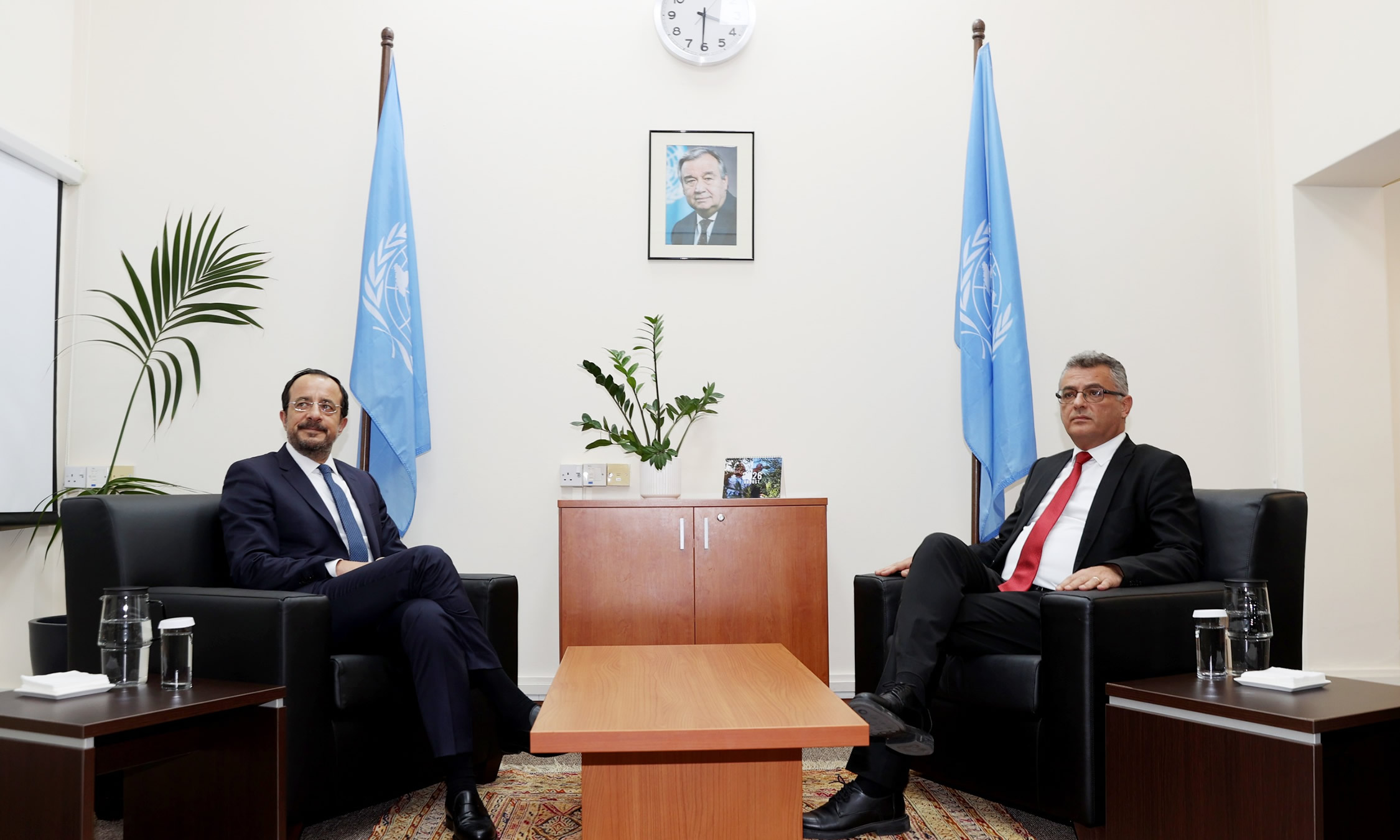
Christodoulides said he proposed engaging in cross-chapter negotiations, for example, linking property with territory, and governance with security and guarantees. With the former, the issues are clearly interlinked. On the latter, it is a question of supposedly taking something of critical importance to one side and linking it with something of equally critical importance to the other.
Erhürman responded that the issue of political equality cannot be subject to ‘give-and-take’ and must be clear from the start. Otherwise, he argued, progress on other aspects of methodology, including ‘convergences’, or on substantive matters will not be possible.
The process
Bundling negotiating chapters into baskets was first discussed during the Christofias-Talat period. The concept was further refined during the Anastasiades-Akıncı round of negotiations.
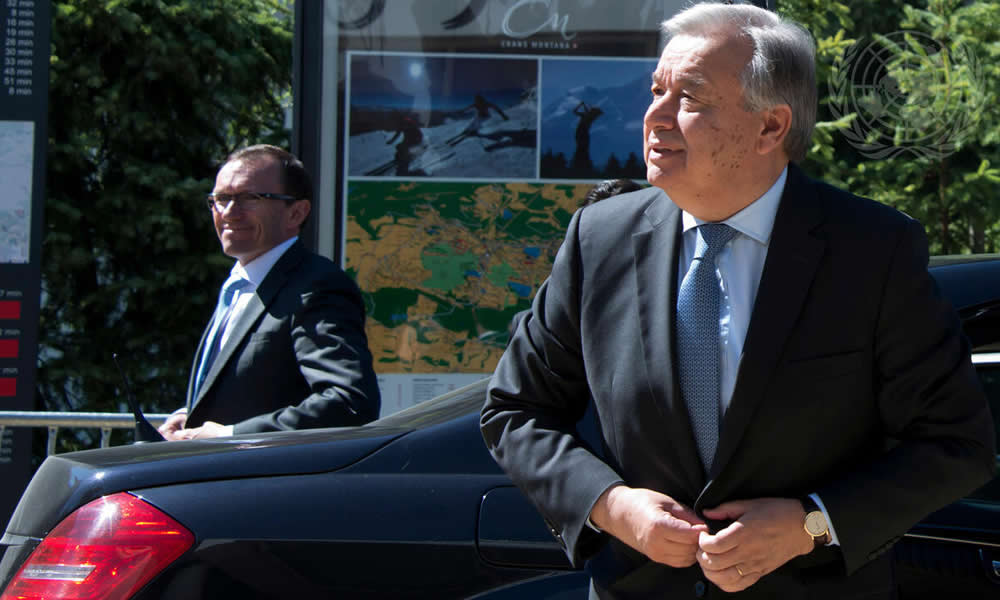
At Crans-Montana, Guterres discovered the Cypriot penchant for negotiating every minute detail. One former official half-joked that the sides know how many cleaners each community will have in federal buildings but have yet to agree on how the federal government will run.
The UN chief saw the interconnected nature of the big issues and tried to address them simultaneously under one framework. He believed solving the core disputes together would make the smaller issues easier to overcome, taking the sides beyond the point of no return.
Had he succeeded, it would have broken the back of one of the longest-standing conflicts in the world.
In principle, cross-chapter negotiations make sense, but they also reveal a flaw in the negotiating process. One cannot convincingly argue Greek Cypriots are less concerned about governance or Turkish Cypriots do not consider security and guarantees important. These issues are of huge significance to both communities and treating them as part of a zero-sum game will not imbue either community with confidence.
Hence, the need for a more inclusive process that includes mechanisms that explore people’s concerns, deconstructs them, and generates potential options to address those fears, with public participation and support.
Failing to acknowledge the lack of inclusivity is more likely to ensure another peace process crashes on the rocks.
There are multiple examples from around the world that show greater public involvement in a peace process increases the legitimacy and ownership of a settlement, strengthening its sustainability among those who will be implementing a solution on a day-to-day basis.
Examples from Northern Ireland to South Africa also show there are different ways to build inclusivity into a process with varying degrees of success.
The Consultative Body currently being put together in Cyprus has been flagged as a sign of progress. Without wishing to prejudge its effectiveness, the sense is that the leaders were not pushing for this to happen as much as they were looking for low-hanging fruit to pick and announce.
Numerous bodies and committees have been set up before, producing significant recommendations that ended up gathering Mediterranean dust on a shelf somewhere.
It would be interesting to see how the leaders approach this new body, and in a broader sense, how they start engaging with their constituencies to discuss the very real, hard options that lie before them.
The way forward – according to each
According to the Greek Cypriot side, the UN will finish compiling its dossier on the negotiating acquis, which should go all the way up to the last hour at Crans-Montana – the implication being that it includes not just convergences but also positions submitted orally and in writing.
The document will be handed to the sides. The UNSG will call a new expanded meeting and based on the document, the sides will agree to resume negotiations from where they were interrupted. Mutually agreed changes can be examined.
The Turkish Cypriot side has a different approach to the resumption of talks. It appears very keen to stick to the following specific sequence, arguing this is the only way to avoid another round of talks for the sake of talks.
The sequence goes like this:
1) Confidence-building measures (CBMs) – prove that the leaders can work together to improve people’s lives.
2) Methodology – divided into four parts
o Agree in principle on political equality – rotating presidency and effective participation – the details can be sorted out later.
o Agree in principle on the existence of past convergences, without submitting any document or going into details. Do not close the door to mutually agreed changes or the introduction of bridging ideas once negotiations start.
o Agree in principle on the need for a timeframe – and then discuss what that will be once negotiations start.
o Provide assurances – mainly from the international community – that the Turkish Cypriots will not be stuck in the same situation should the Greek Cypriots reject a solution again. If the Greek Cypriots refuse, let them counter-propose an alternative that addresses Turkish Cypriot concerns.
3) Substance – not too much has been said about this so far other than the joint statement on political equality based on UN resolutions.
At a glance
As one source close to the talks put it, starting negotiations is not so hard, it’s been done many times before. The question is how to finish them successfully.
The Greek Cypriot approach is simple enough but seems to operate on the assumption that if talks start, and the will exists from Ankara – to a lesser extent the Turkish Cypriots – the final mile can be covered in a canter.
It does not seem too concerned about developing stronger ties of trust and cooperation with the Turkish Cypriots, with whom Greek Cypriots will share a federal state. This is reflected both in words – for example, the rhetoric adopted over the cancellation of events in the north – and lack of action. Christodoulides talks about unilateral CBMs for the Turkish Cypriots but then finds reasons not to implement them.
Nor does the leadership consider the need to bring its domestic audience with it. Such concern is brushed aside with the argument that the public will learn about a settlement after it has been agreed.
The Turkish Cypriot preferred course of action is also problematic. The crossing points saga is getting old, while CBMs need to be impactful for both communities. Erhürman also avoids unilateral CBMs as much as he avoids addressing the Greek Cypriot community. He could allow Maronites to return to their villages or in a grand gesture, invite the original inhabitants of Varosha to return.
It seems neither leader wishes to incur any potential cost (with a domestic audience and/or Ankara) by creating genuine benefits for the other or building much-needed trust between the two communities. That puts a blocker on the Turkish Cypriot sequencing from the start.
Also, the demand to secure agreement on substance from the outset – rotating presidency and effective participation – for one issue only does not sit well, considering both communities have their ‘triggers’.
In conclusion
The world, and particularly the region, is getting very complicated. The idea – for either side – that we can go on ‘normally’ as before really is quite misguided, if not precarious.
Ultimately, this is not about convincing Guterres or waiting for Ankara to soften its stance. Both are necessary but not sufficient. It is about holding honest conversations with the people across the island, and in the process, getting their input. It is about building a relationship of trust and cooperation both domestically and with the other community.
As for the leaders, they need to start inspiring confidence. If they want to increase their chances of success, they need to build trust and work together. Not to adopt positions of the other, but to find effective ways to achieve goals of mutual benefit. That will create momentum that is hard to resist.