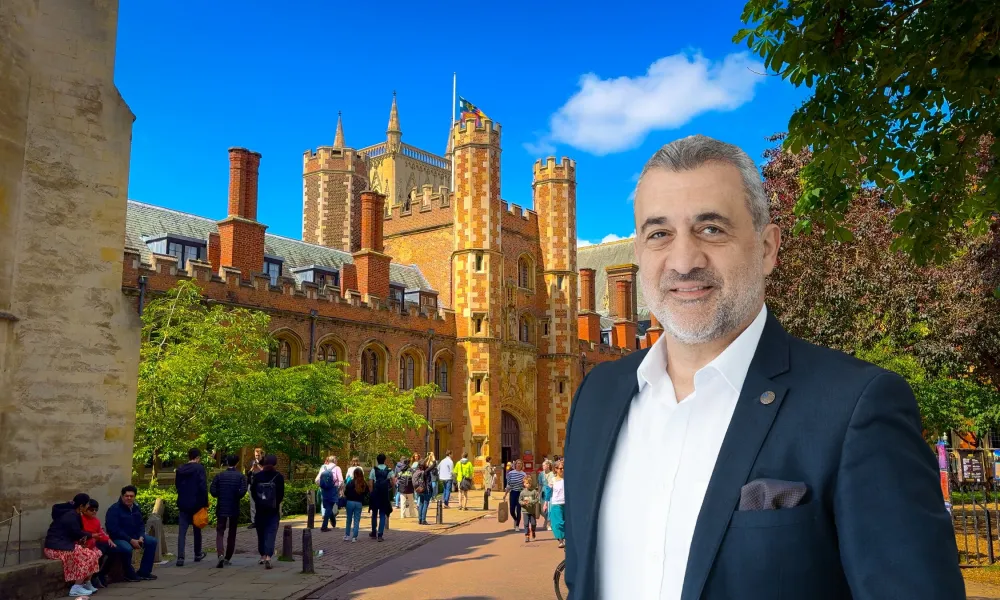

DISY and European People's Party MEP Loucas Fourlas has expressed optimism that tuition fees for European students at UK universities could be reduced, with the issue expected to be discussed at the EU-UK Summit in Brussels on 20 November.
Speaking on Politis Radio 107.6 & 97.6, Fourlas, who serves as rapporteur on UK-EU relations in the fields of education and culture, said there are signs that the British government is seriously examining a return to tuition fee levels that applied before Brexit.
From £9,000 to £60,000
Before Brexit, EU students generally paid around £9,000 per year, similar to British students.
Following the UK's departure from the European Union, European students were reclassified as international students, resulting in tuition fees rising dramatically. In some courses, annual fees now reach £60,000.
Fourlas said restoring the previous fee structure had been a key demand from the beginning of discussions, but British authorities initially opposed the proposal because of the significant loss of revenue it would create.
According to the MEP, Britain announced on 1 November that it is now seriously considering reducing tuition fees for EU students.
The estimated cost of such a move has been calculated at approximately £450 million annually.
What Britain wants in return
Fourlas said the British side appears willing to absorb that cost but is seeking concessions from the European Union.
Among the issues being pursued by London are:
- Inclusion of British products within the European "Made in Europe" framework.
- Access to the Eurodac database.
He added that concerns have already been raised by British universities, which fear losing revenue and are seeking clarification on how any funding gap would be covered.
Despite those concerns, Fourlas said he believes there is a strong possibility that an agreement can be reached, citing discussions with colleagues involved in preparations for the summit.
Erasmus+ returns
Fourlas also highlighted the decision for Britain to participate again in Erasmus+ from 1 January 2027.
He said the programme is expected to allow around 125,000 people from the UK to take part in educational activities across the European Union.
The scheme will not apply only to university students but also to school pupils, trainees, educators and academics.
According to Fourlas, the arrangement is scheduled to expire on 1 January 2028, and could end unless reciprocal commitments are secured from the British side.
Alternatives for students
The MEP noted that Brexit has already prompted many European students to consider universities elsewhere in Europe.
He cited Maastricht University in the Netherlands and KU Leuven in Belgium as examples of institutions offering programmes at significantly lower cost.
According to Fourlas, a master's degree at a British university may cost between £15,000 and £20,000, while comparable programmes in Belgium can be available for around €800 in tuition fees.
He stressed, however, that the existence of alternative options does not lessen the importance of efforts to reduce UK tuition fees.
Concluding, Fourlas said he believes fees will ultimately be reduced and argued that greater educational choice benefits both students and their families.