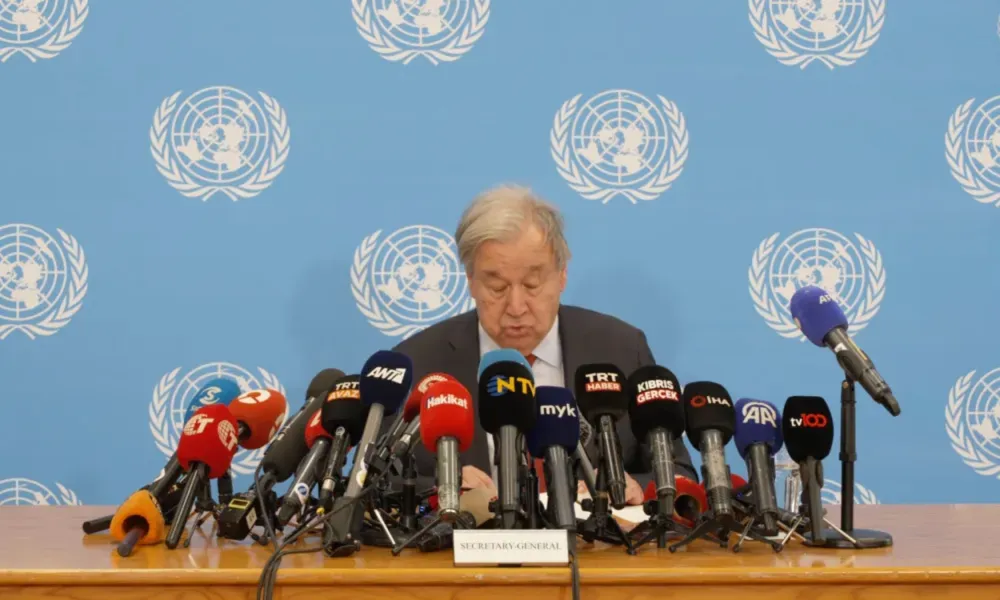

The end of Antonio Guterres’s term of office on 31 December 2026 does not, theoretically speaking, constitute an end date for the Cyprus problem, nor for the UN resolutions. If, of course, no credible process for substantive negotiations has been established by then, his succession could accelerate a very visible and particularly serious shift. Already, since Crans-Montana, it appears that we are moving from an effort to reunify the island towards managing the division.
The resolutions
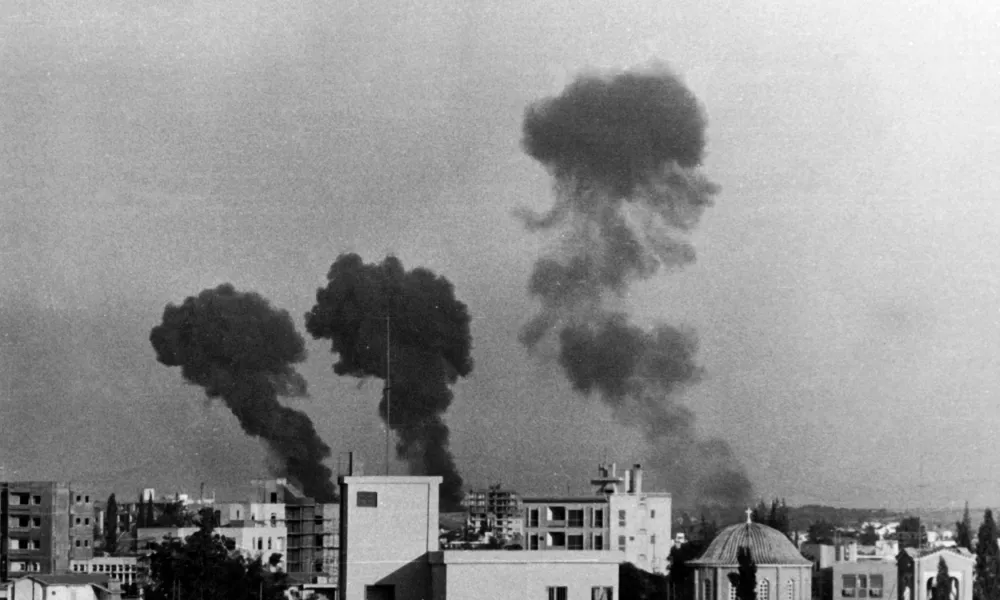
Fifty-two years after the Turkish invasion, some continue to insist that the UN resolutions remain unchanged. Resolutions 541 and 550, which reject the secessionist declaration and call on states not to recognise the self-proclaimed state in the north, contain no expiry date, and therefore do not become invalid because the Secretary-General changes or because decades pass without a settlement. They also argue that the passage of time does not automatically turn an illegal secession into a lawful state entity. This, they argue, remains a substantive shield for the Republic of Cyprus, rather than merely a diplomatic argument. In conclusion, institutional continuity extends beyond Guterres’s term of office.
The difference
There are also some sceptics, although perhaps more accurately described as realists, who point out that maintaining the legal framework is one thing and the political will to implement it another. Guterres took office as UN Secretary-General on 1 January 2017, at a time when there were far fewer international problems, and with two leaders in Cyprus — Anastasiades and Akıncı — who appeared ready to make the necessary breakthrough. He therefore took over the baton from Ban Ki-moon and moved forward. The failure at Crans-Montana in 2017, which followed the 2004 referendums, inevitably left its mark on the process.
In short, the resolutions may continue to be in force, but international players are now limited to preventing incidents, while cuts to the UN budget increasingly constrain the Organisation’s ability to engage substantively in Cyprus. At the same time, the Turkish military presence in northern Cyprus is being strengthened through the permanent deployment of fighter aircraft and drones, while the Republic of Cyprus is also seeking to keep pace with similar military procurement, developing, alongside Greece, its relations with Israel and France.
In a nutshell, it is by no means certain how much Guterres’s successor, who will inherit the Cyprus file, will personally invest in the issue. A new Secretary-General will need time, briefings and, above all, reasons to commit political capital. It cannot be taken for granted either that they will abandon the Cyprus problem or that they will place it among their immediate priorities. What will be decisive, of course, is whether they inherit a process with agreed next steps or yet another catalogue of mutual accusations.
Wars, humanitarian disasters, the climate crisis and economic pressures further restrict the time and resources available to international diplomacy. The comparison with 2017, however, should not idealise that period. The problem for Cyprus is not simply that there are more urgent crises. It is that, following repeated failures, the issue may be regarded as one with a low probability of success. Guterres made two attempts to advance the Cyprus problem: one shortly after taking office and another last May, just a few months before his term ends. On both occasions, he came up against a wall. How likely is it that the new Secretary-General will repeat the same exercise?
Turkey
Turkey’s approach to the Cyprus problem since 2017 has also increased the difficulty. Ankara no longer considers the Cyprus problem in isolation. It links it to security in the Eastern Mediterranean, maritime claims, energy and its relationship with Europe. This linkage carries greater weight today in an environment of intense regional competition. Turkey’s public insistence on a two-state solution, even after the election of the federalist-oriented Tufan Erhürman, demonstrates that a change in the Turkish Cypriot leadership does not amount to a change in Turkey’s strategy.
This creates two possibilities. The Cyprus problem could become trapped in a broader bargaining process, with a settlement postponed until other Turkish objectives have been satisfied. It could, however, also become part of an agreement that offers Turkey economic and diplomatic benefits in return for specific obligations. The challenge for Nicosia is to shape this linkage through rules and reciprocal benefits, so that Turkey’s regional usefulness does not ultimately result in concessions at Cyprus’s expense.
If President Christodoulides were more interested in resolving the Cyprus problem and less in tactics that could benefit his re-election in 2028, perhaps things would be different. Without in any way justifying either Turkey or Tufan Erhürman, what both the United Nations and many Western diplomats in Nicosia are certain of is that, one year before the presidential election, the President of Cyprus is “following exactly the policy pursued by his mentor, Nicos Anastasiades, after Crans-Montana”.
The distrust
Growing distrust between the leaderships is yet another obstacle, but it is not a sufficient explanation. Even a good personal relationship cannot substitute for agreements on power-sharing, territory and security. Conversely, two distrustful leaders can negotiate effectively if there are clear commitments and implementation mechanisms. The Greek Cypriot leadership must explain and be clear about political equality. The Turkish Cypriot leadership must address Greek Cypriot concerns over troops, guarantees and functionality. Assurances of good intentions are not enough.
There is also the distrust of the communities themselves towards the process. When citizens have been told for years that a settlement is approaching, without seeing any results, they withdraw. Younger generations have little lived experience of shared life and often perceive the other side through narratives of threat. A new effort requires a public discussion about how the state would function, day-to-day security and the cost of implementation. Otherwise, even a summit-level agreement could prove socially fragile.
The deadlock
If there is no progress now, then in the post-Guterres era the most likely course, in my assessment, is one increasingly close to permanent partition, albeit without widespread international recognition. This could mean greater integration of the north with Turkey and a reduction in cooperation between the two communities. A more adverse scenario would involve the selective upgrading of the north’s external contacts, which would broaden its practical acceptance without full recognition.
What is therefore urgent is for the next Secretary-General to inherit something more than a request to “continue efforts”. There will need to be documented areas of convergence, clearly identified differences, an agreed methodology and specific commitments from those involved. On the basis of the current situation, this is difficult to achieve, meaning that when the new Secretary-General takes office, matters will become even more difficult.