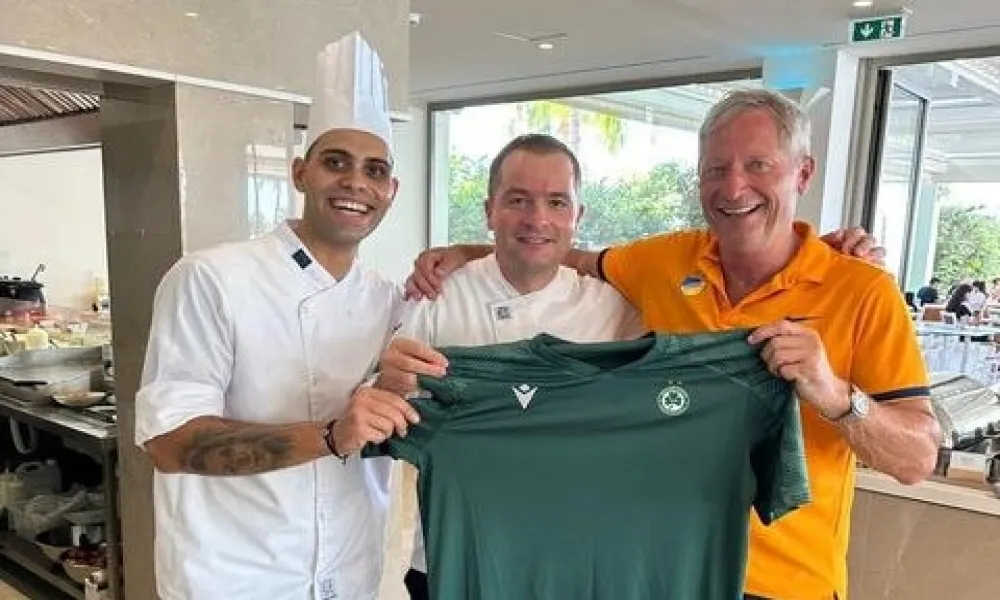

More than 25 trips to Cyprus have been made by Dutch tourist Patrick Raming, who hasbeen living in France for the past five years.
Speaking to Politis, he describes Cyprus as his second family, noting that its greatest advantage is the warmth of its people and their genuine hospitality.
In our conversation, he explains what keeps bringing him back, the changes he hasobserved over the years and the improvements he believes are still needed.
First visit in 2002
His first visit to Cyprus was in 2002, when he joined the beach volleyball team ofMichalis Sarris at Cavo Maris. “It was a team made up of prominent Cypriot professionals from the business and hospitality sectors. These Cypriots immediatelymade me feel at home and took me to their favourite beaches and tavernas. It was an excellent way to get to know the island’s most popular spots,” he recalls.
Since then, he has formed dozens of friendships and developed relationships that, as heputs it, go far beyond simple acquaintances. “Over the years, I have met many wonderfulCypriots who have become more than friends. I feel they are family. And you have to seeyour family regularly,” he says, explaining the main reason he has continued choosing Cyprus for more than two decades.
He also vividly remembers his first impressions of the island. As he describes it, he was immediately won over by the combination of the warmth of the people, their cheerfuldisposition and the high level of hospitality. At the same time, he was impressed by the beaches of Protaras and the wide range of activities available to visitors on a relativelysmall island.
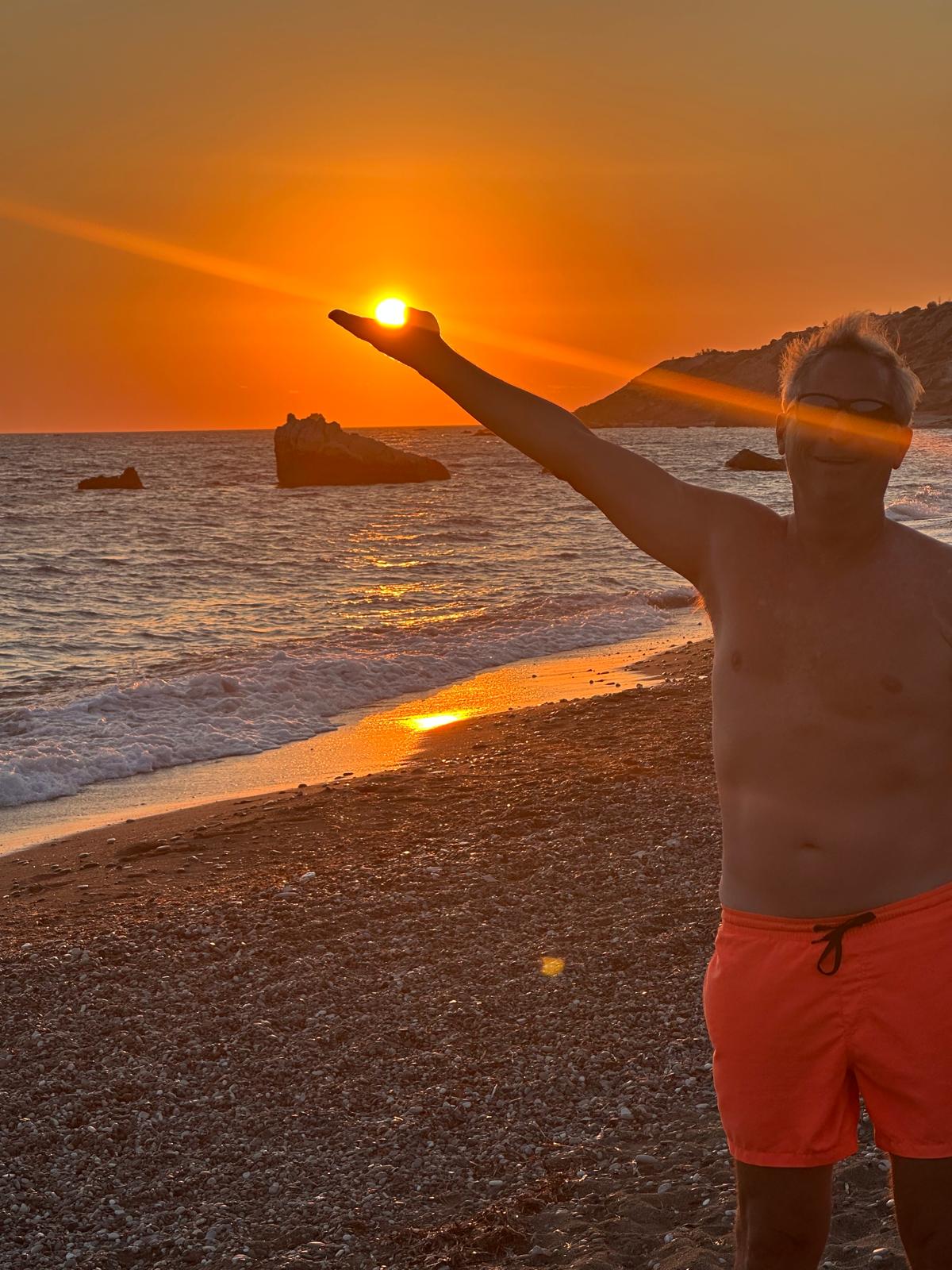
“The greatest advantage is the people”
Asked what sets Cyprus apart from other Mediterranean destinations, his answer isunequivocal: the Cypriots.
“They are warm, hospitable and, yes, quite expressive and loud, but in a cheerful way,” he says with a laugh.
“What I believe makes the island special is the huge variety of activities it offers — culture, archaeology, food, beaches, nightlife and so on — but above all, how easily accessible all of these are thanks to good infrastructure and the fact that everyone speaks fluent English, so there is no language barrier,” he says.
Among his favourite places are the beaches of Protaras, Latchi, Aphrodite Hills and the wine villages in the mountains of Cyprus. He is particularly impressed by the progress made by the Cypriot wine industry in recent years.
“I stopped counting when I reached 100 friends”
After more than two decades of visits, it is hardly surprising that he has developedstrong personal connections on the island.
Asked how many friendships he has formed in Cyprus, his answer is revealing.
“I started counting and stopped when I reached 100,” he says.
For him, Cypriot hospitality is undoubtedly one of the country’s most importantcompetitive advantages. As he explains, Cypriots make time for their visitors and show genuine interest in whether they are enjoying themselves.
“One thing that impresses me is that Cypriots focus more on solutions than on problems,” he stresses.
Development and change
His frequent visits to the island over the past 24 years have given him the opportunity to observe the changes that have taken place.
According to him, the biggest transformation has been in property development, thegrowth of the hotel sector, the expansion of the restaurant industry and improvements to the road network.
“The motorways have completely changed the travel experience. I remember that in thepast, to get to Aphrodite Hills I had to drive through the whole of Limassol and all thecity’s roundabouts,” he says.
Cyprus tourism has evolved in the right direction, he believes, now offering far more choices in terms of hotels, restaurants and activities. However, he also has a concern.
“I also see a trap in all this development: the authenticity of Cyprus is at stake. Perhapsthat’s nostalgia speaking,” he says.
What needs to improve
Although he acknowledges the significant progress that has been made, he believesthere is still room for improvement, particularly in the Protaras area.
In his view, the area lags behind other Cypriot tourist destinations in terms of upgradinginfrastructure, cleanliness and the development of luxury hospitality facilities such asthose found in Limassol.
At the same time, he says he is surprised by the large number of abandoned or unfinished buildings that still exist in the area, while describing the increased traffic congestion during the summer months as a “real nightmare”.
Despite these observations, he has no hesitation in recommending Cyprus to friends and relatives.
“It has something for everyone. From beaches and sports to culture and gastronomy. The people are welcoming, the weather is excellent and the distances are short,” hesays.
And when the conversation turns to Cypriot food, he responds with humour.
“Every time I come to Cyprus, I put on a few kilos,” he says with a laugh. Among his favourite dishes are souvlaki, sheftalia, stifado and grilled halloumi, which, he admits, heconsiders the perfect match for a glass of Yiannoudi or Xynisteri.