
Cyprus has signalled interest in exploring future cooperation with a third country for the transfer of migrants, Deputy Minister for Migration Nikolas Ioannides said on Friday.
Speaking to Politis during a press conference held alongside the EU’s informal summit on migration and asylum, Ioannides said the Republic of Cyprus would examine its options for negotiating such agreements after the end of its EU Council presidency. He did not specify which countries might be considered.
The proposed cooperation would involve transferring migrants who do not have the right to remain in an EU member state following the examination of their asylum applications to a third country. This option has now become legally available to EU states following the implementation of the Migration and Asylum Pact, which entered into force on Friday.
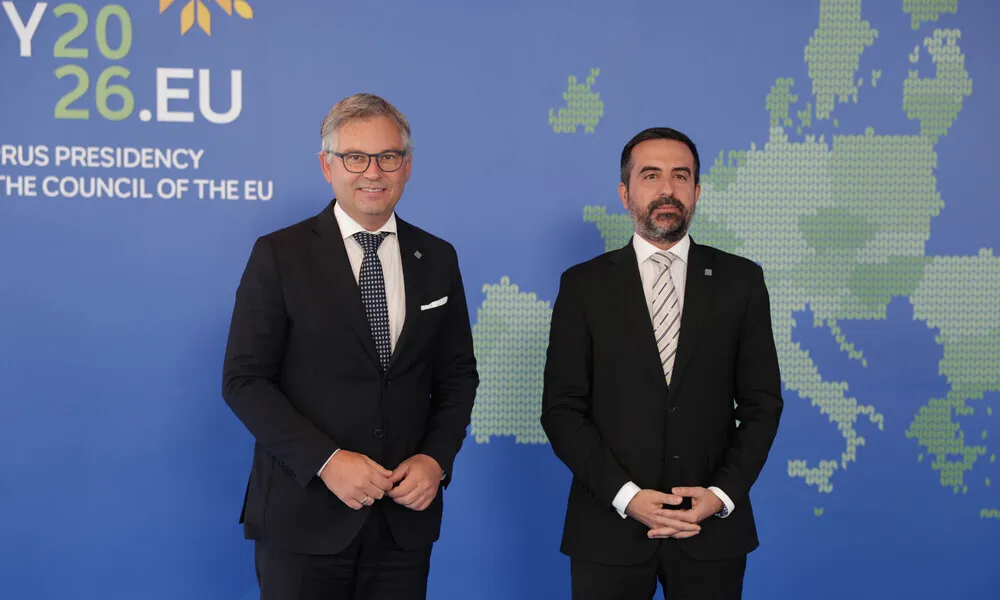
EU Migration Commissioner Magnus Brunner described the pact as a milestone for the Union’s migration policy, introducing a comprehensive framework for managing migration flows.
“The EU has carried the burden for years, now it has the rules to manage it,” he said.
Brunner also referred to existing partnerships with countries such as Jordan, Tunisia and Egypt, adding that new agreements are needed, including with Morocco. He stressed the importance of addressing migration flows originating from the east, particularly from Bangladesh, via Libya.
Responding to questions about criticism of the pact and the regulations governing agreements with third countries, both Brunner and Ioannides said all measures are based on respect for human rights and international law. They noted that the UN High Commissioner for Refugees (UNHCR) had participated in shaping the framework.
Brunner added that Austria, Germany, Greece, Denmark and the Netherlands are already engaged in negotiations for similar agreements with third countries. He clarified that EU agencies are not directly involved in these negotiations, although any resulting agreements will be subject to European oversight.
The new pact represents the first substantial overhaul of EU migration policy since 2008. According to official briefings, it establishes a common European system that introduces new procedures for managing migration in normal times, while also addressing crisis situations and the use of migration as a geopolitical tool, including by smuggling networks.
For the first time, a unified framework will apply across all EU member states. Discussions at the summit also focused on ensuring the long-term success of the pact.