
Europe is ageing. People are having fewer children than in the past. The number of births in the EU has fallen from 6.8 million in 1964 to 3.5 million in 2024, creating a range of challenges for the bloc.
Who will fund pensions? Who will care for an ageing population? Who will drive innovation and build competitive businesses?
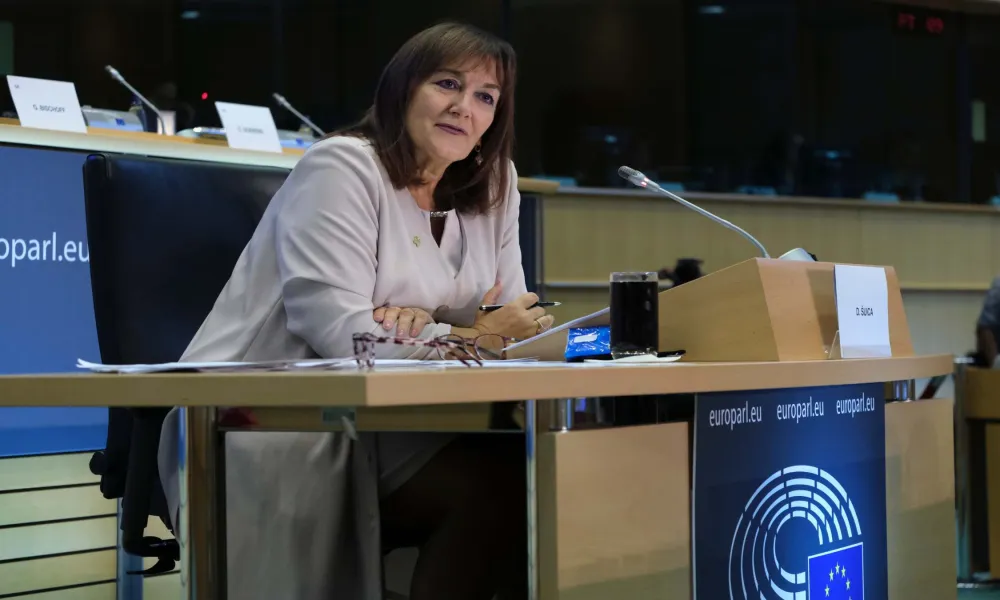
According to Dubravka Šuica, who has overseen demographic issues at the European Commission over the past seven years, demographic change should not be viewed as an unavoidable destiny.
"Demographic change is already here," she says. "But we have the policy tools to address it and turn it into an opportunity."
Longer lives, new opportunities
Šuica argues that an ageing population is not exclusively a negative development. Rising life expectancy means more people are living longer and healthier lives.
A child born in Europe today can expect to live beyond the age of 80, while women are projected to live past 90 by the end of the century.
This creates opportunities for new markets focused on healthy ageing and longevity, while allowing more people to benefit from advances in healthcare, technology and financial services.
According to Šuica, these developments can generate stronger economic activity, particularly within the so-called "silver economy."
Falling birth rates
At the same time, declining birth rates pose significant challenges.
With fewer people entering the workforce, questions arise about the long-term sustainability of public spending on healthcare, education and pensions.
Šuica argues that governments must rethink how these systems are financed while ensuring that younger generations are not disproportionately burdened.
Young adults already face a higher risk of poverty than those approaching retirement, she notes, making solidarity between generations essential.
Health, housing and migration
The commissioner points to preventative healthcare and healthy ageing as part of the solution.
She notes that healthier populations require fewer resources and can continue contributing to society for longer. According to the Commission, every euro invested in prevention can generate substantial savings in future healthcare and productivity costs.
Housing is another key factor.
Homeownership among Europeans aged 25 to 35 declined by 16.3% between 2007 and 2024, prompting the EU to adopt its first affordable housing strategy in 2025 to help member states address the problem.
Migration also has a role to play, she says, helping countries meet labour market needs in the short term, provided it is managed responsibly and within an appropriate legal framework.
Untapped workforce potential
Šuica highlights the fact that around 20% of the EU working-age population is currently outside the labour market.
This includes 37 million women of working age who are unemployed or economically inactive and more than four million long-term unemployed people.
She argues that if all member states achieved labour market participation rates similar to those of Sweden, the impact of population ageing on the labour force could be almost entirely offset.
Looking ahead
Šuica notes that the EU's Demography Toolbox, presented in 2023, already provides governments with a comprehensive set of policy instruments to address demographic challenges.
She is also advocating the creation of a dedicated European Demography Agency to support national bodies and help bridge the gap between demographic data and policymaking.
A new European Demography Forum is expected to be launched next year, bringing together policymakers and stakeholders to improve coordination and long-term planning.
"There are no easy solutions," Šuica concludes. "But the EU is ready to contribute, keeping its eyes on the future while taking action today."