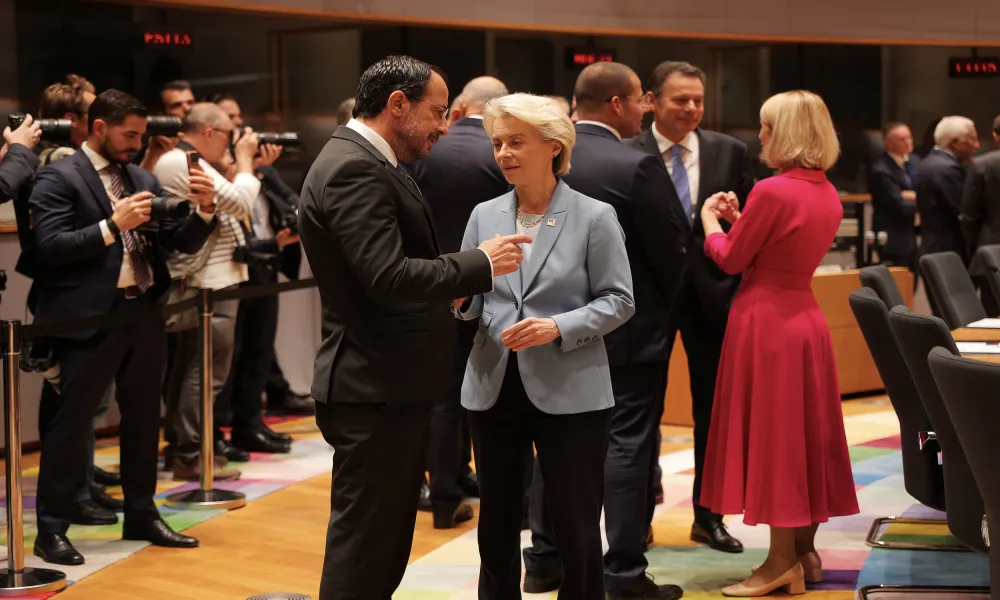

European leaders agreed on a compromise over high energy costs after intense negotiations over carbon pricing and national intervention measures. While acknowledging the need for additional action, the European Council stopped short of approving a delay to the ETS2 carbon trading system or setting a timetable for new market interventions.
The outcome leaves the European Commission responsible for examining additional options, while highlighting continuing divisions among member states over how to balance affordability, competitiveness and climate policy goals.
Cyprus among seven states seeking changes
European leaders reached a difficult compromise on tackling high energy costs following disagreements over the Emissions Trading System (ETS) and the scope for national intervention.
Although leaders recognised the need for additional action, the European Council's conclusions do not include a decision to suspend the system or a binding timetable for new measures aimed at reducing energy prices.
At the centre of the debate were Greece, Italy, Cyprus, Hungary, Poland, Slovakia and the Czech Republic, which called for greater flexibility in implementing EU energy policy and sought a delay to the second Emissions Trading System (ETS2), covering road transport and building heating.
The countries argued that additional carbon costs introduced during a period of elevated energy prices could place further pressure on households and businesses.
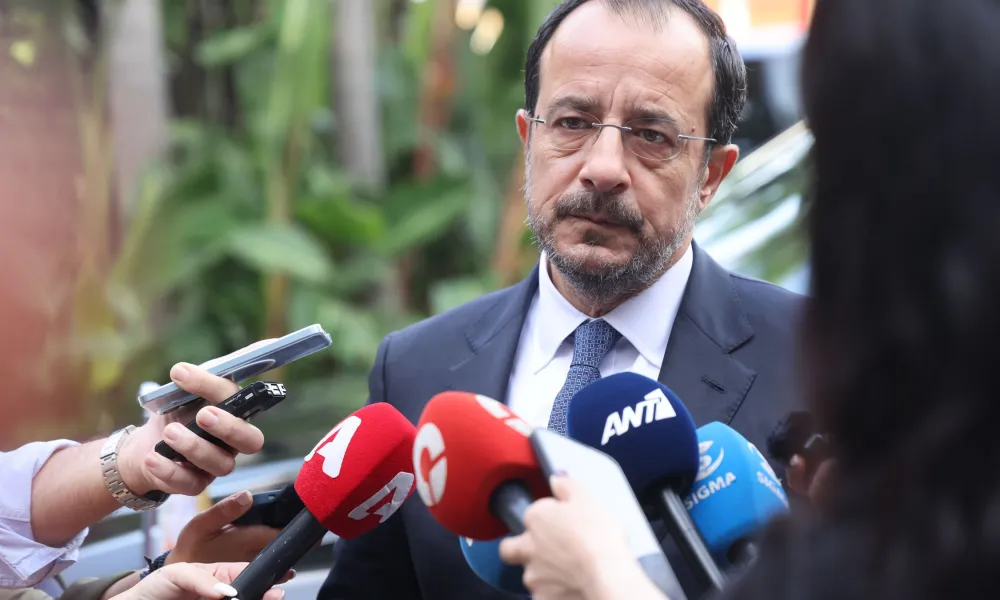
President Nikos Christodoulides outlined the position of the Republic of Cyprus, calling for greater flexibility from the European Union regarding both national support measures and the implementation of ETS2.
“Our request is simple and clear: The need for further flexibility from the European Union for national measures, while at the same time allowing a further suspension of the Emissions Trading System,” the president said.
Disagreements over energy pricing
The negotiations exposed significant differences among member states regarding the causes of high energy prices and the most appropriate response.
Slovak Prime Minister Robert Fico questioned the effectiveness of the EU's common electricity market, highlighting large price differences across the bloc. According to Fico, electricity costs around €50 to €60 per megawatt-hour in some regions, while exceeding €100 in others.
Italy aligned with the four Visegrad Group countries, namely Poland, Hungary, the Czech Republic and Slovakia, in supporting a postponement of ETS2 until 2030.
Countries including Sweden defended the EU carbon trading system, arguing that it remains a key instrument for achieving climate and energy transition objectives.
The differences threatened to push the summit into deadlock. The final compromise text acknowledges that conditions vary considerably between member states, including substantial disparities in electricity prices.
The wording represents a political concession to countries facing higher energy costs, although it does not establish a common European mechanism for immediate price reductions.
Commission tasked with considering further action
Under the summit conclusions, the European Commission is invited to examine and, where necessary, propose additional short-term measures to address elevated energy prices.
Particular emphasis is placed on taking account of differing national circumstances and significant variations in electricity costs across the EU.
At the same time, leaders stressed that any national interventions must safeguard the proper functioning of the single market. The reference reflects concerns that extensive state support measures could distort competition between businesses in different member states.
In practice, immediate intervention options appear focused largely on the provision of state aid within existing EU rules. The extent of support will therefore depend heavily on the fiscal capacity of individual governments.
The invitation for the Commission to prepare further proposals is not accompanied by a specific deadline or a decision to establish an additional EU-wide funding mechanism.
No agreement to delay ETS2
Discussions on the Emissions Trading System produced a similar result.
Despite pressure from seven member states, the final conclusions do not include a decision to postpone ETS2 until 2030. Instead, the Commission has been asked to update its assessment of the system's impact, with particular emphasis on its design and safeguards intended to prevent excessive price increases.
European leaders also called for accelerated legislative work on the Market Stability Reserve to reduce sharp fluctuations in carbon allowance prices.
The European Council further recognised the need to protect the competitiveness of European industry by promoting a more predictable and transparent carbon market with lower volatility and reduced effects on electricity prices.
At the same time, leaders reaffirmed the central role of carbon pricing in the EU's climate and energy transition strategy. The pricing of emissions continues to be regarded as an important tool for encouraging investment in cleaner technologies and supporting innovation.
Greek push for a coordinated response
Greek Prime Minister Kyriakos Mitsotakis urged the Commission to develop additional proposals aimed at containing energy costs beyond measures already presented.
Athens also supported a more coordinated European response, arguing that addressing the energy crisis should not rely solely on national budgets.
Both objectives are reflected in the political direction outlined by summit conclusions. However, they are not accompanied at this stage by specific financing decisions or implementation measures.
Focus remains on the energy transition
Despite disagreement over short-term interventions, EU leaders reaffirmed that the energy transition remains the bloc's long-term response to dependence on international fossil fuel markets.
The conclusions highlight the development of domestic clean energy sources, stronger electricity networks, energy storage and improved efficiency as key tools for gradually reducing energy costs.
Leaders also emphasised the importance of accelerating electrification, expanding renewable energy deployment and supporting other low-carbon technologies.
Alongside these objectives, the European Council stressed the importance of international cooperation to secure energy supplies and maintain uninterrupted trade in energy products with partner countries.
What comes next
The summit outcome leaves unresolved the most pressing concerns over energy costs for European consumers and businesses.
The European Commission must now assess options for further intervention while taking account of significant differences between national energy markets.
For Cyprus, attention will focus on the scope for national support measures and future discussions on ETS2, given the characteristics of the island's energy system and its reliance on imported fuels for electricity generation.
For now, the Brussels compromise does not provide an immediate solution to high energy prices. Responsibility for the next steps has largely shifted to the European Commission and national governments, which must seek solutions within the limits of fiscal capacity and the EU regulatory framework.