
By Filip Polo reporting from Ireland
Cyprus' 2028 presidential election is not outside the scope of European concerns over the risk of foreign interference and electoral manipulation through artificial intelligence, according to information obtained by Politis.
The ability to create and mass-distribute fabricated videos, images and audio recordings is creating new challenges for the security of electoral processes, as such material can be used to mislead voters and influence public opinion.
Warnings from Brussels are clear: no country is immune to threats of this kind, and Cyprus is also facing this challenge.
As argued by officials, the risks are not limited to the spread of false news. Artificial intelligence now makes it possible to create fake videos, audio messages and images that can appear authentic, be disseminated on a massive scale and shape public opinion.
An organised campaign can damage the credibility of candidates, create confusion among voters and shape election debate and agendas at will.
The issue was raised with particular emphasis during the informal European Council summit in Dublin on 13 November, where European leaders held a dedicated discussion on artificial intelligence for the first time.
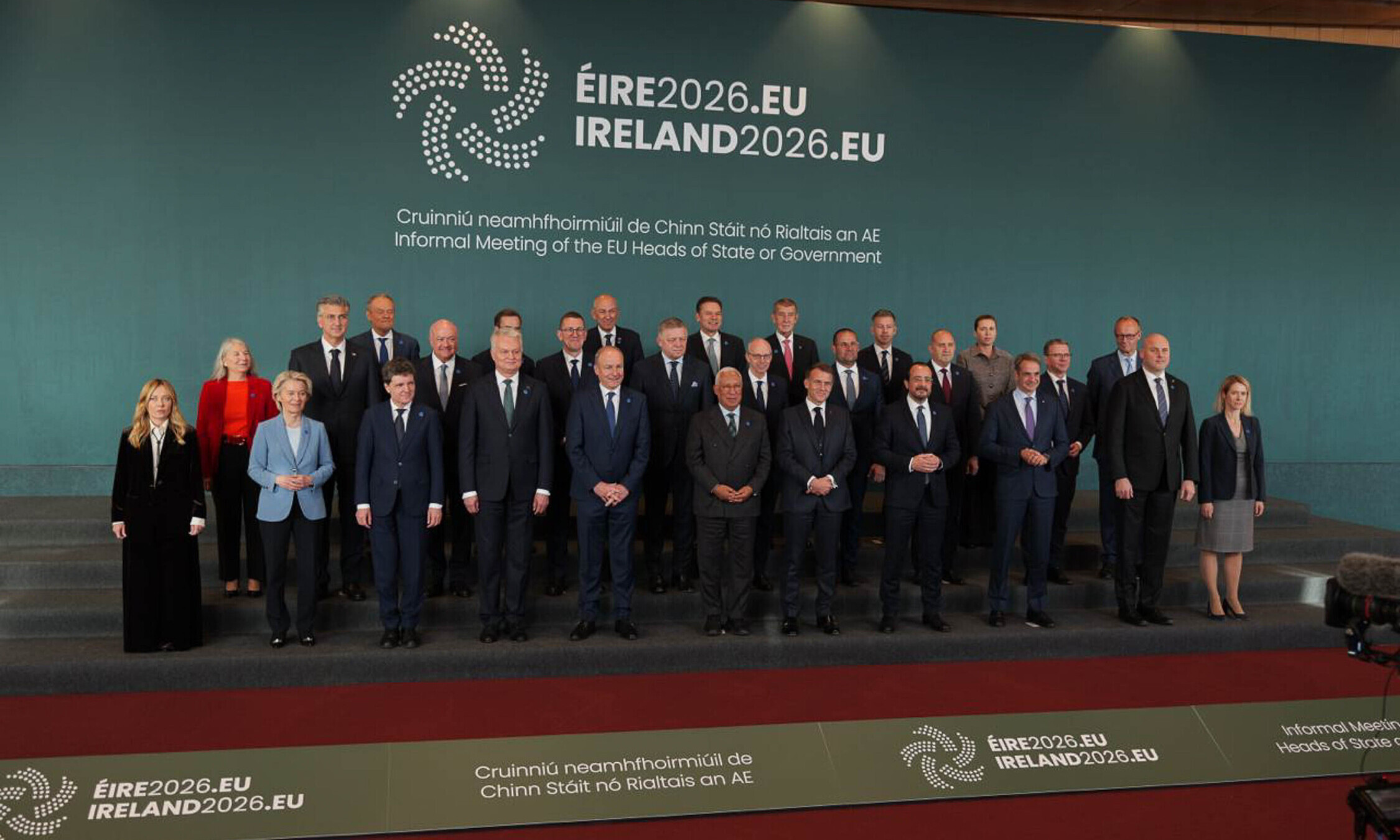
President Nikos Christodoulides sounded the alarm, stressing that the malicious use of technology to influence electoral processes poses a threat to all EU countries.
He made clear that the response cannot come after interference has already occurred, but that an appropriate framework for prevention and protection must be in place beforehand.
"No country is immune"
Speaking on the sidelines of his visit to Dublin, the Cypriot president expressed concern about the potential use of artificial intelligence to influence electoral processes and outcomes.
He referred to recent incidents involving schools, as well as developments surrounding election processes in Romania and other countries, noting that the threat concerns the European Union as a whole.
Asked whether these risks also affect Cyprus, Nikos Christodoulides said that once such phenomena are recorded in other member states, all countries are vulnerable.
He further noted that 2027 will be a year of elections across Europe, making it even more important for citizens to be informed and for governments to adopt preventive measures.
His remarks take on added significance in light of Cyprus' 2028 presidential election.
"We should not simply analyse these malicious actions after we see them occur, but have a framework in place so that such malicious actions cannot take place," the President said, stressing the responsibility of authorities to inform citizens and take preventive action.
The ability of a state or organised actor to use artificial intelligence to spread misleading content and manipulate public opinion, even with the aim of influencing election results, is at the core of concerns among European governments.
For this reason, discussions in Dublin were not confined to the economic prospects of the new technology but also extended to its security implications.
There is significant concern in Brussels about the risk of foreign interference in electoral processes, with the European Union seeking ways to strengthen protection of elections.
At EU level, efforts are under way to introduce specific measures to prevent and counter disinformation and electoral manipulation.
These initiatives are expected, naturally, to also apply to Cyprus.
Europe wants to win the race
Beyond the risks, European leaders also discussed the EU's position in the global race for artificial intelligence.
As argued during the discussions, Europe has a strong research base, specialised human capital and dynamic start-up companies, but remains heavily dependent on non-European providers for critical technologies, ranging from advanced models and computing power to microchips and cloud infrastructure.
The message from the summit was that the Union must strengthen its own technological capabilities, attract investment and accelerate the adoption of artificial intelligence by businesses and public services.
Technological sovereignty, competitiveness and security are now viewed as interconnected objectives.
Two figures with extensive expertise in the field participated in the discussion.
Arthur Mensch, co-founder and chief executive of France's Mistral AI, presented the prospects of artificial intelligence and the opportunities for developing a stronger European ecosystem.
He was followed by Geoffrey Hinton, who was awarded the Nobel Prize in Physics in 2024 for his contribution to artificial neural networks and is regarded as one of the pioneers of artificial intelligence. Hinton highlighted the broader challenges accompanying the technology's development.
Cyprus' role
For the Cypriot government, the timing is significant.
On 10 November, the Council of Ministers approved the country's first National Artificial Intelligence Strategy, with a horizon extending to 2032.
According to government policy declarations, the objective is for Cyprus to develop into a trusted artificial intelligence hub in the Eastern Mediterranean through increased productivity, stronger skills and enhanced domestic technological capabilities.
The strategy provides, among other things, for the development of national computing infrastructure and the use of European capabilities such as EuroHPC, AI Factories and Pharos-CY.
At the same time, the government is placing emphasis on the development and deployment of artificial intelligence, focusing on competitiveness, productivity and technological sovereignty.
Nikos Christodoulides said the technology sector currently contributes around 15% of Cyprus' GDP.
He also announced a visit to the United States at the end of November aimed at attracting additional companies, primarily in the technology sector, and encouraging the return of Cypriot professionals and talent working abroad.
A significant part of the strategy also concerns education.
Through the Ministry of Education, the government is promoting the modernisation of curricula, with emphasis on strengthening digital skills and AI literacy.
Other priorities include upgrading technical and vocational education, teacher training, the pilot introduction of Technical Gymnasiums and the introduction of Career Guidance and Counselling in primary education.
At the same time, Nicosia supports the proposed EU Kids Act and the development of a common European online age-verification system, with a proposed age threshold of 15, in which it participates together with six other member states.