
Greece is marking the 53rd anniversary of the 1973 Polytechnic uprising, with commemorative events culminating today in Athens and Thessaloniki.
The focal point of the anniversary remains the traditional march to the US Embassy in Athens, accompanied by extensive security measures and traffic restrictions.
Events peak in Athens
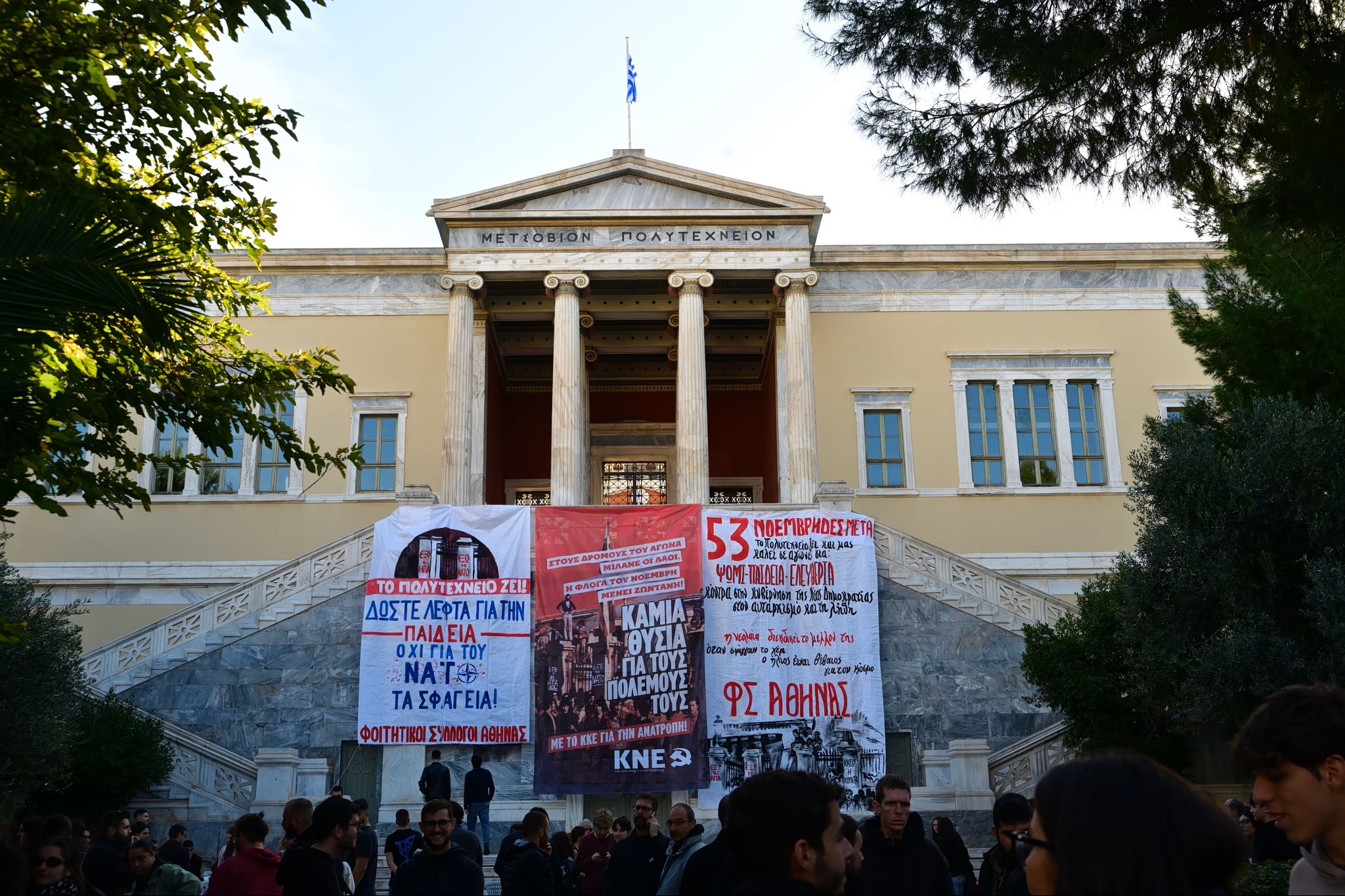
The three-day commemorations began on Sunday, with citizens, students and representatives of organisations visiting the historic Athens Polytechnic campus to lay flowers and wreaths.
The Polytechnic gates opened to visitors at 9am on Tuesday and will remain accessible until 1pm. Visitors may enter through the main Patission Street gate, as well as the Stournari and Tositsa entrances, while activities are taking place outdoors.
The main march is scheduled for the afternoon, with student groups, trade unions and other organisations gathering in central Athens from 3pm.
More than 5,000 police deployed
Security has been significantly stepped up in the capital, with more than 5,000 police officers involved in operational planning.
According to ERT, police forces have been deployed around the Polytechnic and other central locations, supported by aerial surveillance using drones and helicopters.
Traffic restrictions are already in force and are expected to intensify during the afternoon demonstrations.
By order of police, the Syntagma, Evangelismos and Panepistimio metro stations will close from 2pm.
Marches planned in Thessaloniki
Commemorations are also taking place in Thessaloniki, centred on the Faculty of Engineering at Aristotle University.
Student organisations and other groups have scheduled rallies and marches from 5pm, while extensive traffic restrictions are expected from 4pm onwards.
According to ERT, measures include road closures, parking bans and the temporary closure of six metro stations.
The uprising that became a symbol
The Polytechnic uprising began on November 14, 1973, when students occupied the university in protest against Greece's military dictatorship.
The movement quickly attracted widespread public support, with thousands gathering around the campus and voicing opposition to the junta.
Students established a makeshift radio station inside the Polytechnic, broadcasting appeals to the public and popularising the slogan "Bread, Education, Freedom".
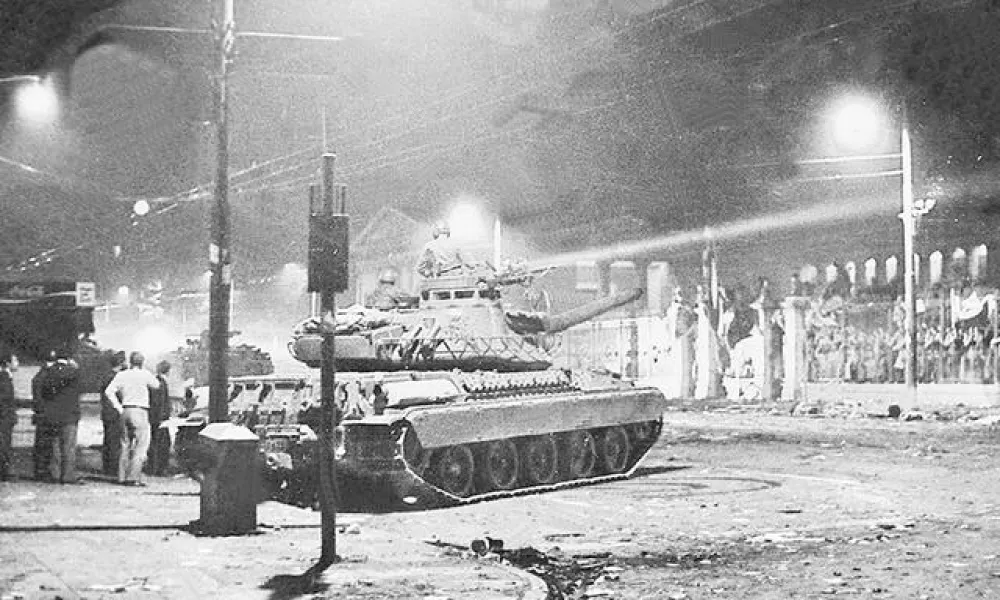
The uprising reached its climax during the early hours of November 17, when a military tank crashed through the Polytechnic gates and security forces moved in.
Historical research has documented at least 24 deaths linked to the crackdown.
Although the uprising did not immediately bring down the dictatorship, it became one of the defining moments of resistance to military rule. The junta eventually collapsed in July 1974 following the coup against Archbishop Makarios in Cyprus and the subsequent Turkish invasion.
More than five decades later, the Polytechnic uprising remains a powerful symbol of the struggle for democracy, freedom and social rights.
Source: ANA-MPA