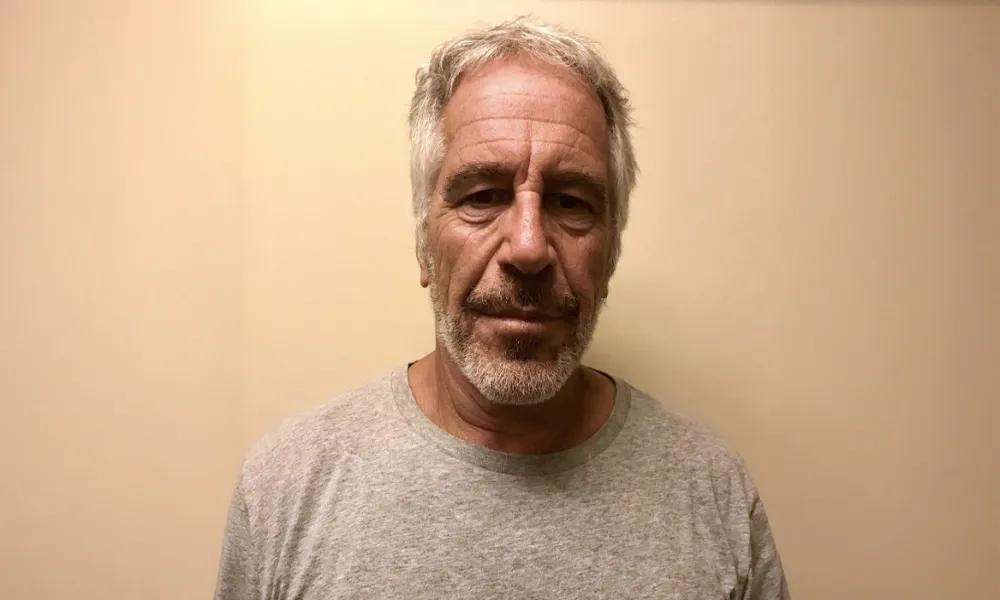

Fresh questions have been raised about the death of Jeffrey Epstein after forensic pathologist Professor Michael Freeman argued that the convicted sex offender was likely killed rather than having taken his own life.
Speaking to the BBC's Newsnight programme, Freeman said his review of the forensic evidence led him to conclude that Epstein was probably strangled in his prison cell on August 10, 2019, before his body was staged to resemble a suicide.
“So you are saying that Epstein was killed by another person?” Michael Freeman, a prominent expert in forensic medicine, speaks to #Newsnight about his claims that Jeffrey Epstein’s death was a “result of a homicide”. Warning: Distressing details of death and injury and discussion of suicide
— BBC Newsnight (@BBCNewsnight) November 16, 2026
Epstein was being held in a federal jail in New York while awaiting trial on charges related to the sexual exploitation and trafficking of underage girls.
Injuries cited as evidence of strangulation
Freeman said several injuries appeared inconsistent with suicide.
According to his assessment, these included significant bleeding on Epstein's left shoulder, facial injuries that may have resulted from blows, and marks on the neck.
He placed particular emphasis on marks above the ligature imprint that he believes resemble fingernail scratches.
Freeman argues these injuries may indicate Epstein was attempting to remove a ligature while being strangled.
In his view, the injuries suggest Epstein was first strangled and later suspended using the same ligature in an effort to make the death appear to be a suicide.
"The injuries and the way the body was found do not fit together," he said, concluding that the evidence points to homicide.
Review based on documents and photographs
Freeman acknowledged that he did not personally conduct the autopsy.
Instead, his analysis was based on forensic reports and photographs provided by Mark Epstein, the deceased financier's brother.
Mark Epstein has long challenged the official conclusion that his brother died by suicide.
Freeman said he reviewed the material independently and without payment.
The forensic expert has previously worked as an expert witness in deaths in custody cases in the United States, including matters connected to the death of George Floyd.
Official findings remain unchanged
Freeman's conclusions differ from the findings of the official 2019 autopsy.
According to evidence reviewed by the Office of the Inspector General at the US Department of Justice, Epstein's injuries were considered more consistent with suicide by hanging than with homicide by strangulation.
The forensic examiner who conducted the autopsy also noted that no defensive injuries were found that would typically be expected in a violent strangulation.
Freeman disputes that interpretation and argues that photographs showing the body's original position before it was moved would normally be expected in such a case.
According to a previous Justice Department investigation, the correctional officer who found Epstein called for assistance, lowered the body to the floor and began resuscitation efforts.
"Show me where I'm wrong"
Asked by the BBC whether his conclusions could be viewed as a conspiracy theory, Freeman rejected the suggestion and said he welcomes scientific scrutiny of his analysis.
"Don't just take my word for it, let everyone examine it," he said.
"Show me where I'm wrong. I'm completely open to that."
Despite the renewed claims, the official ruling on Epstein's death remains suicide by hanging. Freeman's assessment represents an independent review of existing forensic material and not a new official finding of homicide.
Source: BBC, via Proto Thema