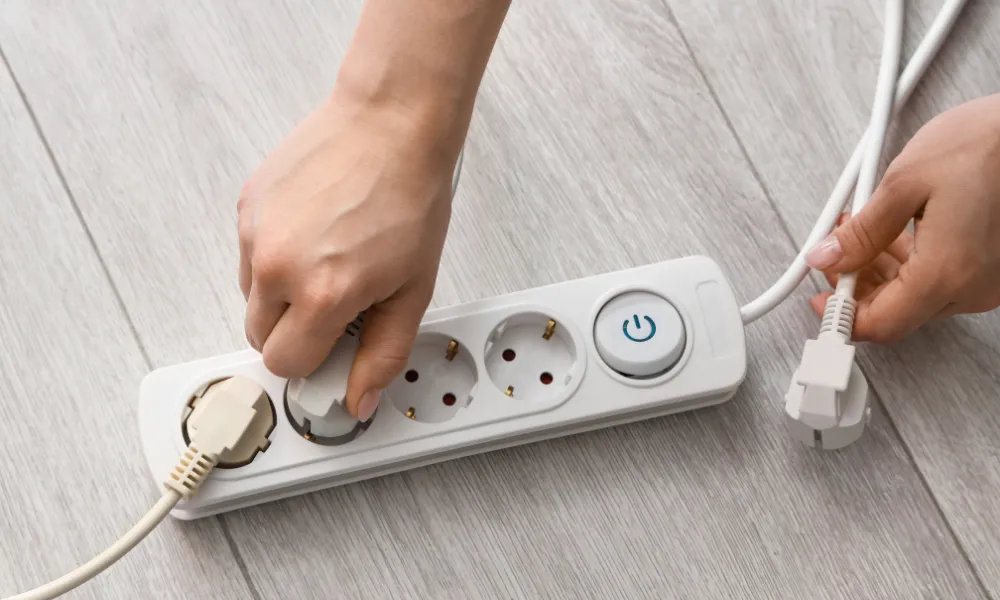

Extension leads are useful when sockets are limited, but they are not designed to power every household appliance. Equipment that heats, cools or operates continuously can place far greater demand on a cable than smaller electronic devices.
The important question is not simply whether an appliance switches on. It is whether the extension lead can safely carry the required electrical load for as long as the appliance is operating.
Why an extension lead can overheat
Every extension lead has a maximum current it can safely carry. When one or more connected appliances demand more power than the cable was designed to handle, heat can begin building inside the wiring.
This becomes particularly dangerous when the cable is coiled, covered or positioned where heat cannot escape. Continued overheating can weaken or melt the insulation surrounding the wires, creating the potential for electrical failure or fire.
Appliances with heating elements, compressors or motors are among those most likely to place excessive strain on an extension lead. The following five should therefore be connected directly to a fixed wall socket.
Portable electric heaters
Electric heaters are designed to turn electricity into heat and can draw substantial power for extended periods. Unlike appliances that operate briefly, a portable heater may remain switched on for hours.
Connecting one through an extension lead adds another potential source of heat to equipment that is already operating at a high temperature. If the cable is undersized, covered or unable to release heat properly, the risk of overheating increases.
Portable heaters should always be plugged directly into a wall socket and should not share an extension with other equipment.
Washing machines
A washing machine does not use the same amount of electricity throughout every programme. Demand rises significantly when the appliance begins heating water.
Modern machines can draw between 2,000 and 2,500 watts during peak operation. This sudden increase places considerable pressure on an extension lead, particularly if another appliance is connected at the same time.
A fixed wall socket provides a more appropriate connection for the fluctuating demands of washing, heating and spinning cycles.
Kettles
A kettle may operate for only a few minutes, but it requires a large amount of electricity to heat water quickly. That intense, short-term demand can place more strain on an extension lead than its brief running time might suggest.
The risk becomes greater when a kettle shares a multi-socket extension with another high-powered kitchen appliance, such as a toaster or microwave.
Short operating time does not necessarily mean low electrical demand. Kettles should be connected directly to the wall rather than grouped with other appliances on a kitchen extension.
Microwave ovens
Microwave ovens also require a substantial amount of power within a relatively short period. Their rapid electrical demand can strain an extension lead, especially when the same cable is supplying several kitchen devices.
Crowded kitchen counters often encourage households to connect multiple appliances through one extension. However, the combined load can exceed the cable’s safe operating limit even when each appliance functions normally on its own.
A microwave should therefore have access to a dedicated wall socket whenever it is in use.
Fridge freezers
The concern with fridge freezers is not limited to the amount of electricity they draw at any single moment. These appliances operate continuously, with the compressor switching on and off throughout the day and night.
That repeated demand creates a long-term load on the cable. An extension lead that remains warm for prolonged periods may gradually suffer damage, particularly if it is coiled behind the appliance or covered by furniture and other objects.
Because refrigeration equipment must remain powered around the clock, a fridge freezer should be connected directly to a permanent wall outlet.
The load matters more than the number of plugs
A multi-socket extension may appear safe because several spaces remain unused. However, its capacity is determined by the combined power demand of everything connected to it, not by the number of available sockets.
One high-powered appliance may be enough to place the cable under excessive strain. Connecting two or more heating or motor-driven devices at the same time raises the risk further.
The safest approach is straightforward: appliances that generate heat, contain powerful motors, use compressors or operate continuously should not rely on extension leads as a permanent power source.