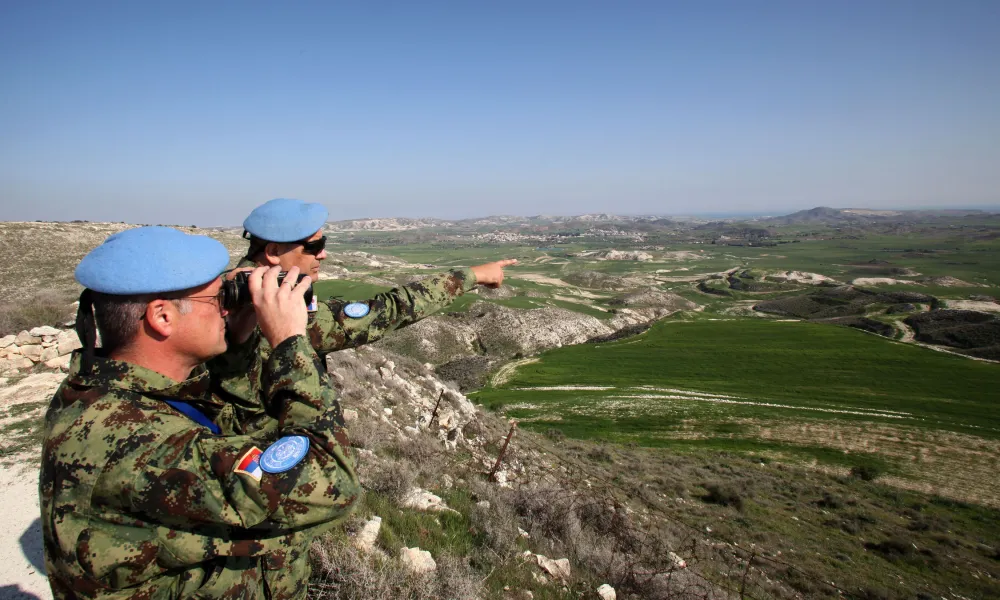

As the dust settled on Monday’s trilateral announcement, Cypriots on both sides of the dividing line were left with the prospect of two new crossings whose impact remains the subject of debate.
While the leaders ensured the peace effort would continue its slow grind forward, the cold hard reality is the two crossings earmarked for opening – Kampos-Karavostasi and Louroudjina-Lympia – are unlikely to have a significant impact on the majority of Greek Cypriots and Turkish Cypriots.
Limited impact
Both are very localised points with limited road networks, unlikely to improve transport or accessibility for most. They will mainly serve the surrounding communities, with a few hundred residents in Kampos and Louroudjina the main benefactors.
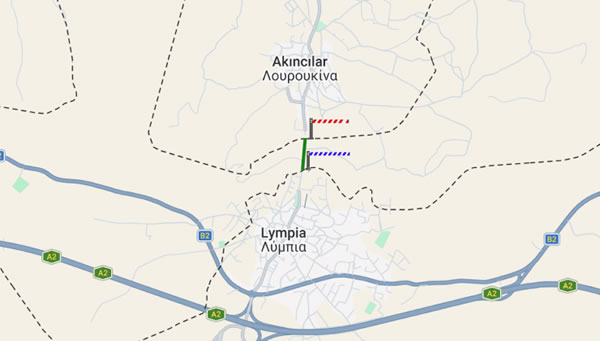
Under 3,000 Lympia residents will have closer access to a crossing point, but as an isolated village, Louroudjina does not necessarily provide an easy or quick transit point to the north.
Meatier prize
On the other hand, the Mia Milia crossing in eastern Nicosia, on the table since March 2025, is considered a bigger prize that could go some way to alleviating the pressure on Agios Dhometios. Despite improvements, the crossing west of the capital continues to see heavy traffic, remaining unreliable, unpredictable and for some, a deterrent. Mia Milia also has the capacity to facilitate economic interaction between the two communities through Green Line trade.
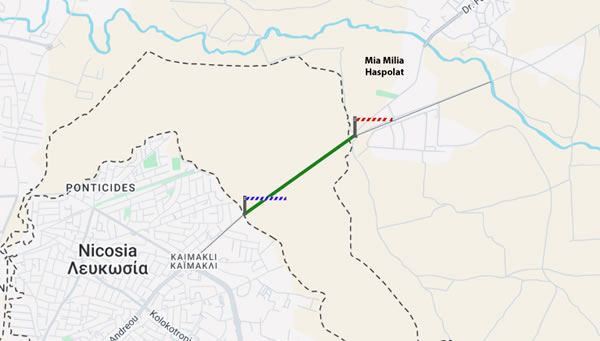
The main reason the leaders did not announce its opening on Monday was because the Greek Cypriot side links it with the opening of Athienou-Pyroi-Aglandjia, which could provide quicker access to the capital for the 5,000-plus residents of Athienou.
Spanner in the works
The Athienou crossing did not pass muster after Turkish Cypriot leader Tufan Erhürman linked it to the opening of an access road in the buffer zone from Arsos to Pyla. His argument was that if part of the buffer zone (around 2-3km) can be used to connect Athienou to Aglandjia, why can’t the Arsos-Pyla road, also in the buffer zone, be used to provide easier access for Turkish Cypriots to Pyla.
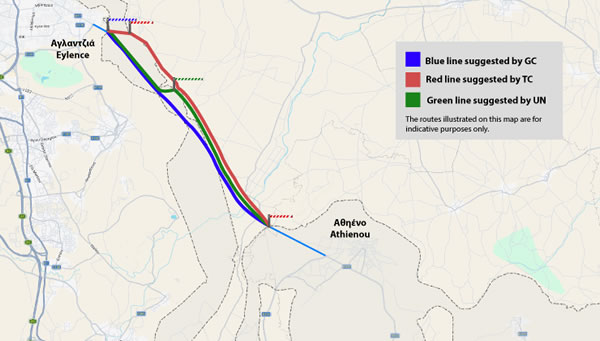
He also questioned who would be responsible for the section of road in the buffer zone near Aglandjia in case of accidents or criminal activity, but that argument could be used to prevent civilian access to all areas of the buffer zone. The crossing point at Kampos Tsiakkistras alone, which Erhürman approved on Monday, is expected to traverse 2km of buffer zone.
The ghost of Pyla
Regarding the Pyla access road, this was part of an “understanding” reached between the sides in late 2023, following an attack by Turkish Cypriot forces against UN peacekeepers after the latter prevented Turkish Cypriot construction work from starting on the Arsos-Pyla road.
After the clashes, then UN Special Representative Colin Stewart appeared to broker a compromise that would allow the road’s construction while preserving the status of the buffer zone. It also included a checkpoint, application of Green Line Regulation controls, a ban on military and commercial use of the road, no presence of security forces (other than UN) within the buffer zone, the development of 400 residential plots, along with infrastructure works, and photovoltaic parks.
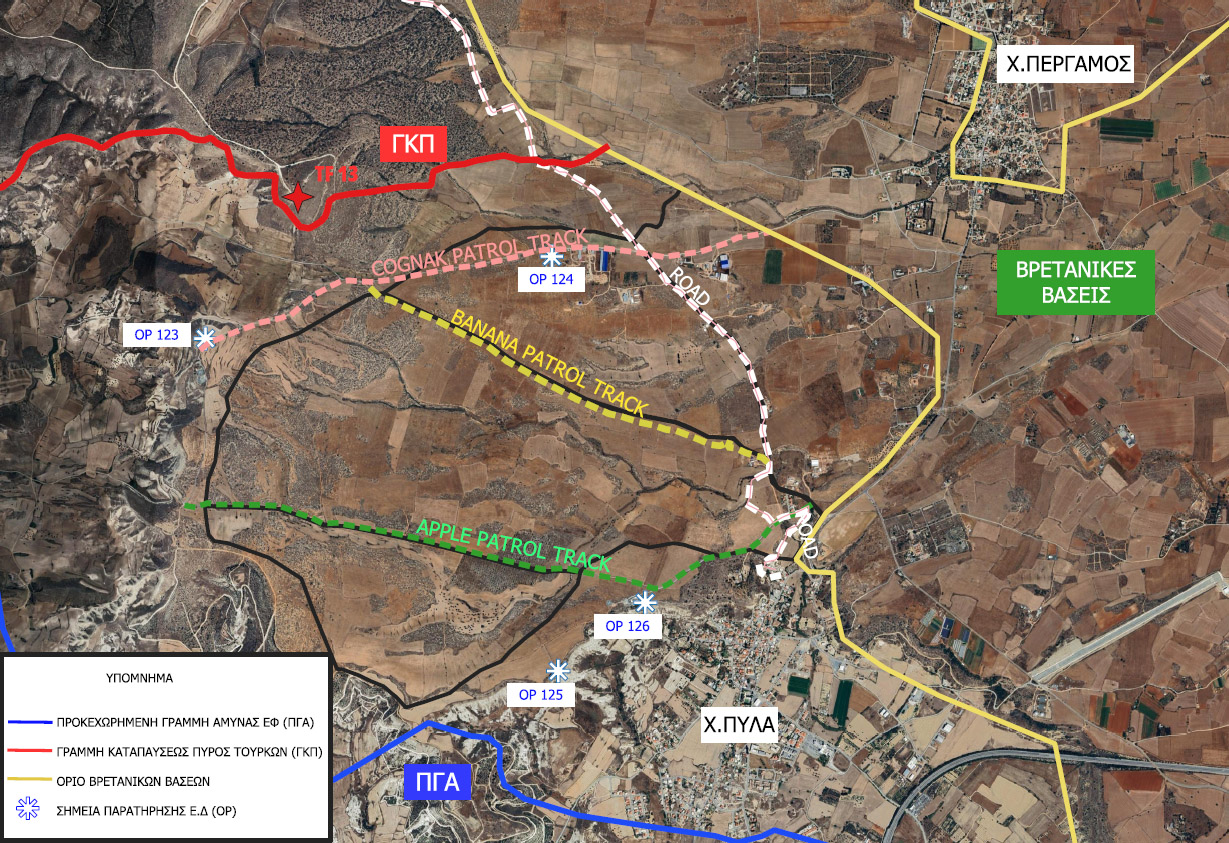
Implementation began in late October 2023 and was suspended within a matter of days, with reports suggesting the Turkish military objected to urban development on the plateau. The plan based on the “understanding” has remained frozen since.
Cherry-picking
When Erhürman introduced the Arsos-Pyla road to the leaders’ efforts to open four crossing points, the government made it clear the Turkish Cypriot side cannot cherry-pick parts of the Pyla “understanding”. Either the whole package is implemented, or the leaders bring it to the table for discussion along with other confidence-building measures (CBMs), said Government Spokesperson Konstantinos Letymbiotis.
But what are the chances of reviving the Pyla “understanding”? Alas, there’s a reason it’s called an ‘understanding’ and not an ‘agreement’. It has a lot to do with the manner in which it was brokered, with neither side fully aware of what the other was agreeing to during discussions. In short, the chances of a durable agreement are limited as things currently stand. It is no coincidence there hasn’t been an effort to bring it back to the table for discussion in the three years since.
At the same time, Turkish Cypriot incursions into the Pyla plateau continue regularly, with the UN expending resources to monitor ongoing violations of the buffer zone through unauthorised access and temporary presence.
Last chance saloon
The leaders will have one last chance to convince UN Secretary-General António Guterres in a trilateral likely before November’s end. If they agree on two more crossing points, will Guterres give Cyprus one more roll of the dice and convene a 5+1 before he leaves?
And will the EU convince Ankara to support more substantive progress when EU Special Representative Raffaele Fitto meets Turkish Foreign Minister Hakan Fidan in Ankara on 20 November?