
Water safety can break down even when adults are nearby. At a busy pool or crowded beach, the absence of one clearly designated supervisor may leave everyone assuming that somebody else is watching the child.
The death of a child in a swimming pool on the Greek island of Paros has renewed attention on the precautions needed wherever children enter the water. Guidance from doctors, the Hellenic Red Cross and Safe Water Sports shows that no single measure is enough. Effective protection depends on supervision, safer surroundings, appropriate equipment and the ability to respond immediately.
One adult must have one clear responsibility
Water emergencies are not always easy to recognise. A child in difficulty may be unable to shout, wave or attract attention, allowing the situation to become critical before anyone nearby realises what is happening.
Supervision must therefore be active, continuous and assigned to a specific adult. That person should not be looking at a phone, reading or carrying out another task at the same time.
Children under five require particularly close attention and should remain within immediate reach of the supervising adult. An older brother or sister cannot take the place of an adult, even for a brief period.
The same rule applies in shallow water and when flotation aids are being used. Drowning is not confined to the sea or deep swimming pools. It can also occur in paddling pools, rivers, lakes and other places containing relatively small amounts of water.
The safest intervention happens before swimming begins
At the beach, families should look for organised swimming areas with lifeguard coverage and pay attention to warning flags and instructions. Areas affected by strong currents, rough water or unfamiliar conditions should be avoided.
Swimmers should remain close to the coast and avoid heading unnecessarily far from shore. Anyone caught in a current should remain calm and swim parallel to the coastline until clear of it, before turning back towards the beach.
Entering cold water gradually can also reduce the risk of thermal shock. Diving should only be permitted when the depth is known and the area beneath the surface has been checked. Rocks, jetties and sudden changes in depth may not be visible from above.
Swimming pools present a different set of risks because a child may reach them without an adult noticing. Suitable fencing and a self-closing gate can restrict unsupervised access. Toys should be removed from the water and surrounding area after use, while rescue equipment should remain visible and easy to reach.
Swimming lessons do not remove the danger
Learning to swim gives children valuable skills and can reduce their vulnerability in the water. It does not, however, make supervision optional.
Currents, waves, cold water, exhaustion and panic can overwhelm even a confident swimmer. A child’s ability during a swimming lesson may not reflect how they will respond to an unexpected situation at sea.
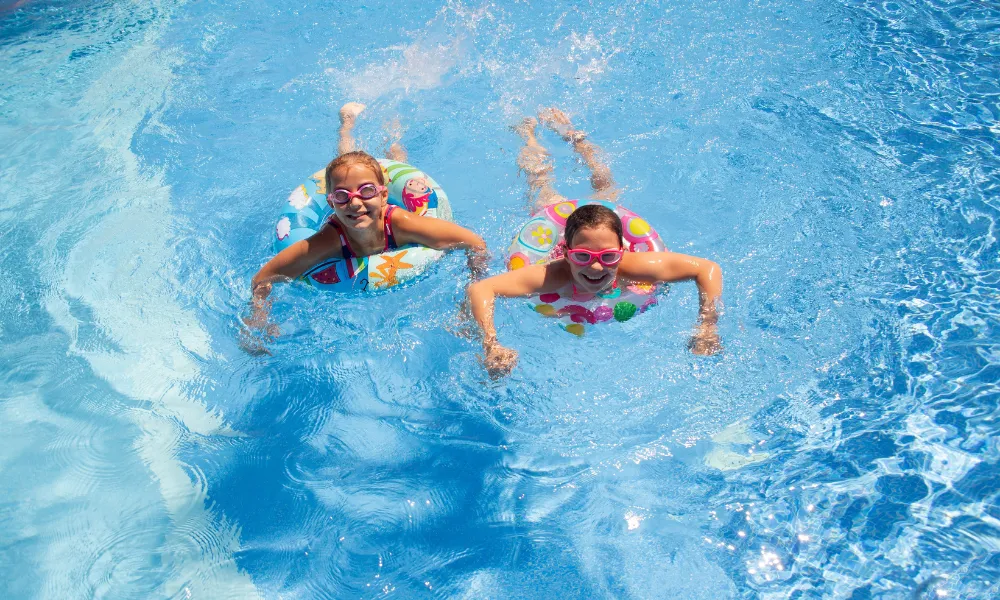
The same distinction applies to safety equipment. Armbands and inflatable toys may be used during play, but they are not rescue devices and should never be treated as protection against drowning.
A certified, correctly fitting lifejacket should be worn during activities such as boating, canoeing and stand-up paddleboarding. Its size and type must be appropriate for the child and the conditions. Even with a lifejacket, a child still requires an adult within immediate reach.
Poolside behaviour also matters
Safe Water Sports advises swimmers to check pool-depth markings and remain in a section where they feel comfortable and can stand if necessary. Diving should only take place where it is permitted and after confirmation from a parent or lifeguard.
Running and pushing around a pool should be avoided because wet surfaces can become slippery. These actions may cause someone to fall, suffer an injury or be knocked into the water.
The organisation also recommends showering before entering a pool and avoiding food, soft drinks, sweets and chewing gum while swimming.
Its guidance advises allowing between two and three hours after a meal before entering the water. The Hellenic Red Cross similarly advises against swimming immediately after eating or consuming alcohol. After a large meal, children should avoid strenuous swimming or energetic play in the water.
Families need a plan for emergencies
Parents and carers who receive training in basic life support and cardiopulmonary resuscitation can begin assisting while professional help is on the way.
If a serious incident occurs, emergency services should be contacted without delay. In Greece, assistance can be requested through 112 or 166. Anyone trained in CPR should follow their training and the instructions provided by the emergency operator until responders arrive.
A child should also be assessed by a health professional after a concerning incident in the water, even if they appear to have recovered. Medical evaluation may be needed to exclude possible complications.
Drowning remains a major public health risk
Figures cited by the Hellenic Red Cross show that Greece recorded an average of 378 drowning deaths each year during the latest five-year period, with most occurring at sea.
The World Health Organization estimates that drowning causes approximately 300,000 deaths worldwide every year, making it the third-leading cause of death from unintentional injury. Children under five account for almost a quarter of victims, while high mortality is also recorded among people over 70.
The figures underline why water safety cannot depend solely on swimming ability, inflatable aids or the presence of other people nearby. The strongest protection comes from several safeguards being applied at the same time, beginning with one adult whose attention remains fixed on the child.
Source: Euronews