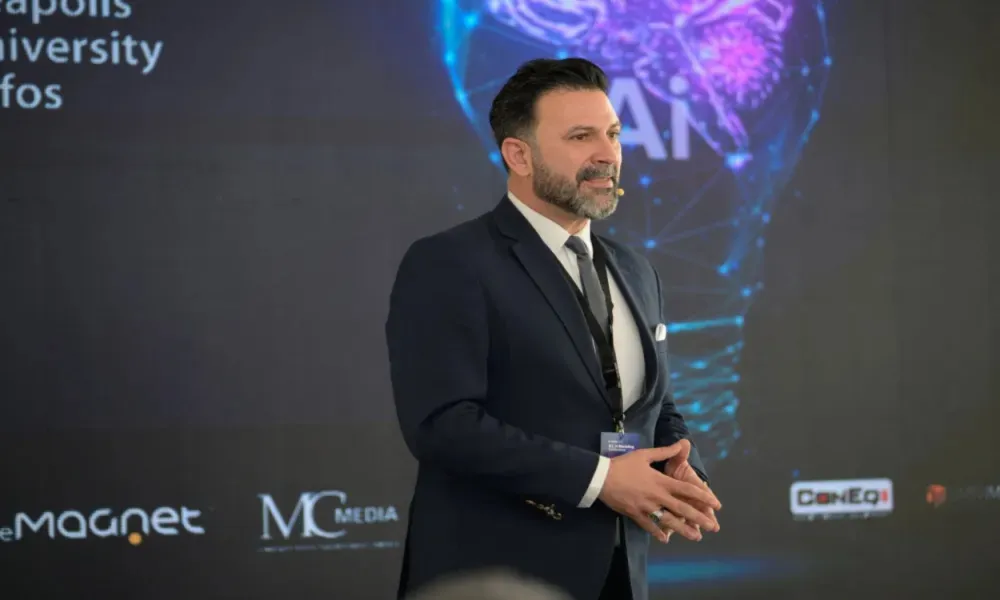

Restrictions on digital platforms, education for children and active participation by parents and schools are essential to address problematic social media use among minors, according to Savvas Hadjichristofis, Vice Rector for Research and Innovation at Neapolis University Pafos and Professor of Artificial Intelligence.
Speaking on Politis Radio 107.6 and 97.6, Mr Hadjichristofis said research data confirm that problematic social media use among young people is a genuine concern, particularly in relation to reduced wellbeing, sleep disorders, addiction and lower levels of social interaction.
Research findings on social media use
Mr Hadjichristofis said data from the World Health Organization showed that problematic social media use reached 11% in 2022.
He noted, however, that research has not established a clear connection between social media use and depression. At the same time, he described online bullying as a particularly serious issue, often facilitated through anonymous or multiple user accounts.
Age limits under discussion
Referring to age restrictions, Mr Hadjichristofis said countries including Spain, the United Kingdom and Australia are moving towards a minimum age of 16 for social media access.
In France and Greece, discussions are focusing on an age threshold of 15, while Denmark permits access from the age of 13, subject to parental consent.
Responsibility should fall on platforms
Mr Hadjichristofis argued that the concept of a ban is problematic because children should not be punished solely for using a platform.
Instead, he said responsibility should rest with the technology companies themselves, which should be required to implement:
- Age verification measures
- Time limits on usage
- Restrictions during night-time hours
- Mandatory breaks following extended use
Concerns over mandatory identification
The academic also expressed opposition to mandatory identification of all users through identity cards.
According to Mr Hadjichristofis, such a measure could place sensitive personal data at risk and limit the anonymity that remains necessary in certain circumstances.
Role of parents and schools
Mr Hadjichristofis said family, school, society and technology should now be viewed as four interconnected pillars.
"Children follow our example, not our words," he said, arguing that adults cannot expect children to limit screen use if they themselves display signs of digital dependency.
Artificial intelligence in education
Regarding artificial intelligence, Mr Hadjichristofis said AI should not be provided to children under the age of 13 as a ready-made tool.
Instead, he said educators should use the technology to create more interactive learning experiences. For university students and professionals, he added, artificial intelligence should function as a support tool and assistant, rather than a replacement for independent thinking and personal judgement.