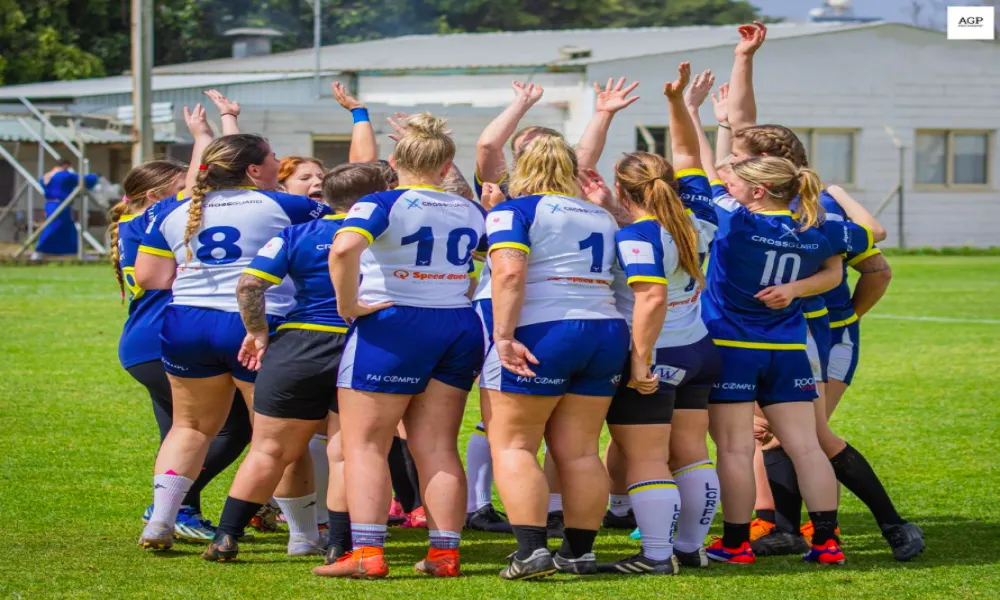

Danae had never touched a rugby ball until a month ago. Now she trains twice a week, wears her bruises without embarrassment, and talks about the sport with the urgency of someone who has been looking for it for years without knowing it. "From the first day I felt like I belonged here," she says. It is evening in Limassol, and the players of AEL Limassol Rugby are gathering at the pitch for training. Somewhere in the laughter and the tackles, something is shifting in Cypriot sporting history.
Women’s rugby in Cyprus did not exist until 3 years ago when the local clubs introduced Touch rugby as an entry level for women and girls. For many decades, mainly on British university pitches, Cypriot students discovered the sport, loved it, and then came home to find there was nowhere to play.
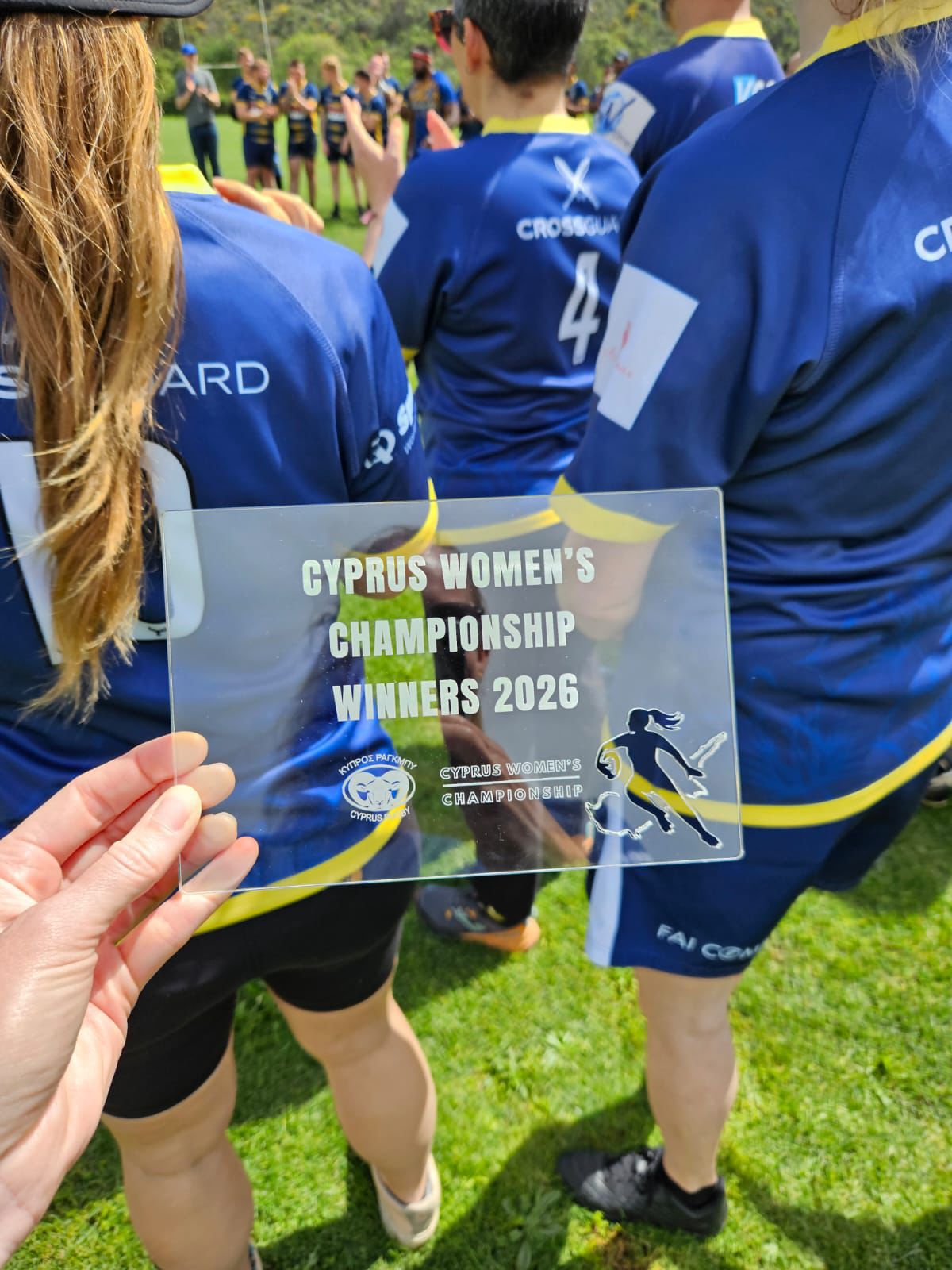
On 4 April 2026, the first women's full-contact rugby matches ever played in Cyprus took place at the AEL Limassol Rugby ground in Limassol. The games were held as part of the third round of the men's Cyprus Rugby 7s Championship, drawing a large crowd. Of the 16 players who took part, seven are already eligible to represent Cyprus. In May, for the first time, women will represent the island at an international training camp, with the goal of building a national team capable of competing in Rugby Europe competitions by 2027.
The sport that built something extraordinary, in the dark
Rugby came to the island with the British military personnel stationed in the 1950s and spent fifty years confined to the bases at Akrotiri, Episkopi and Dhekelia. In 2003, a South African expat named Theo Lenos took the sport outside the wire and organised the first official match played beyond the bases. Three years later, the Cyprus Rugby Federation was founded. In 2007, the men's national team, the Mighty Mouflons, played their debut international on 24 March in Paphos, beating Greece 39–3 in front of 2,500 spectators.
What followed was one of the most unlikely stories in world rugby. Between November 2008 and November 2014, Cyprus won 24 consecutive international test matches, a world record. The streak ended with a loss to Latvia. It was eventually surpassed by England Women, who reached 25 consecutive wins in September 2022. A small island with no rugby tradition, running on membership fees and fundraising activities had built something entirely unexpected.
"It's a shame rugby isn't better known here," says Dave Lee, Development Officer at the Cyprus Rugby Federation, speaking on a training evening in Limassol. "The city has the biggest club on the island. The potential is there." AEL Limassol Rugby, formed in 2025 when the long-standing Limassol Crusaders club formally merged with the AEL sports family, won the beach rugby championship this year, and the men's section competes in Cyprus Rugby Men’s XV and 7s Championship’s each season.
But right now it's the women's programme that carries the most excitement.
A year of learning to fall
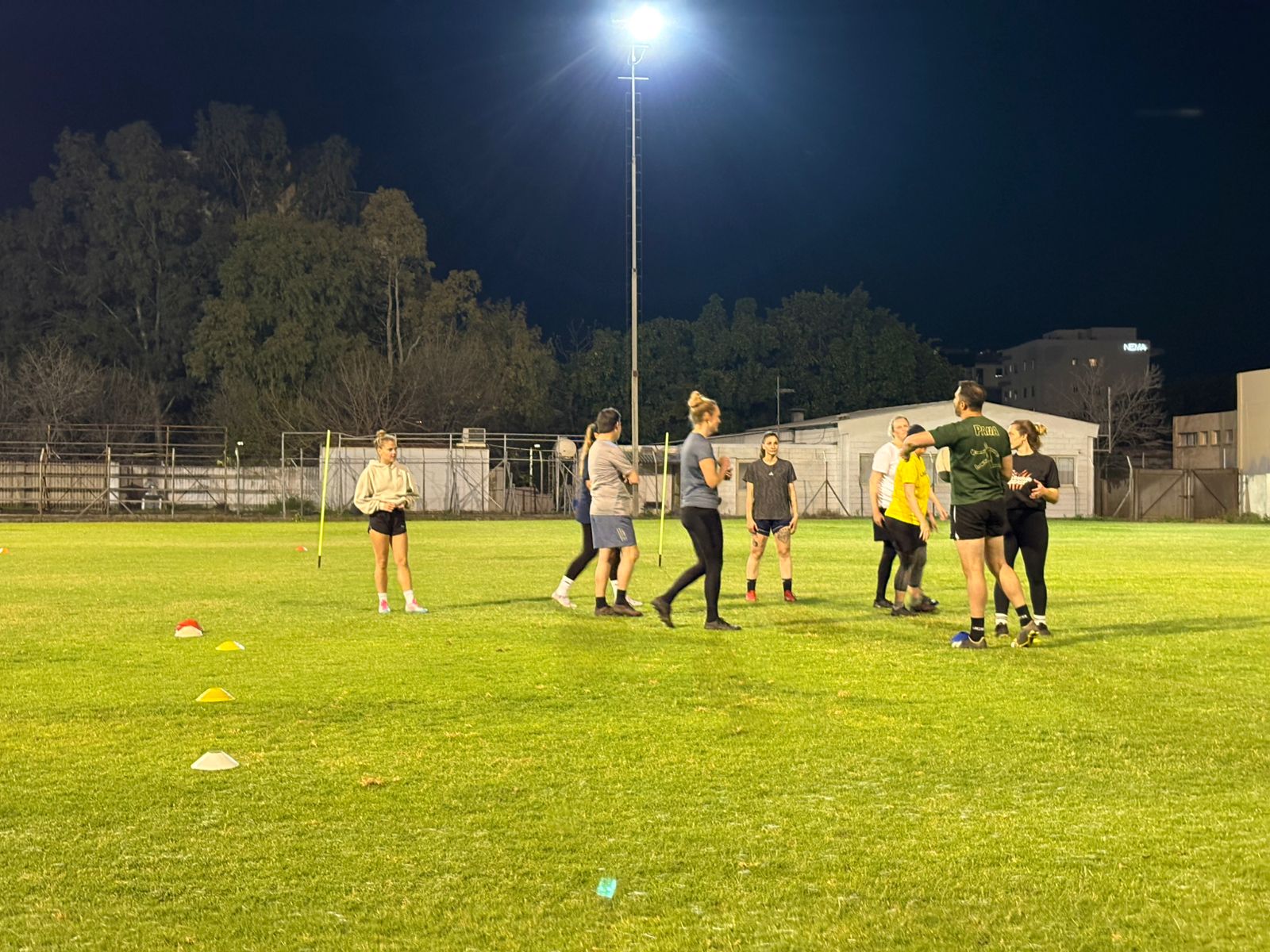
The women's programme began in September 2024 and with the creation of the women's AEL Limassol team the first full-contact women's training sessions are now taking place in Cyprus. For a year, under the guidance of coach Steve Wrigglesworth - a very experienced coach in the filed of women's rugby, a group of women learned how to be a winning team.
Danae surprised herself when she joined the squad in March 2026 not knowing what to expect and found something that looked like nothing else she had seen in Cypriot sport. "Rugby makes you feel part of something from the first day," she says. "It's contact, it's laughter, but it's also hard work and a real team." In training, the more experienced players stop to explain, demonstrate, correct. Nobody lets you feel like you don't belong. "In football or volleyball, if you don't know, you're out," she says. "Here, if you don't know, they embrace you as part of the team, they show you, and you learn quickly. That's what's beautiful about it."
She watches the other players with admiration. They are the foundation of everything being built now. "Now, more of us are coming."
The shadow of the ball
What makes this story remarkable is what has been working against it. Cyprus is a country where sport, in practice, means football. An almost total cultural monopoly. The budget, the media coverage, the public conversation, the school pitches on weekends: all of it orbits the Cypriot First Division and the clubs that play in it. Every other team sport competes for whatever is left, which is rarely much.
Women's sport, in this context, operates at a second remove. It is underfunded and nearly invisible. Rugby, which has no institutional backing, and no television presence to speak of, is further still from the centre. The clubs run on what their members contribute and the federation stretches its resources. And still the sport grows, because the people inside it are stubbornly committed to it.
"Cypriots love sport at their core," says Lee. "But football has dominated so completely that something like rugby has never been able to get the attention it deserves. I hope that changes." The women's programme has no guarantee of institutional support but it has is the momentum of a historic first, a group of players who trained for a year before they had anyone to play against.

London, and then home
The next step is Eton Manor RFC in London. On 2 May, the first open training camp for the Cyprus women's national team will open its doors to any woman born in Cyprus, with Cypriot parents or grandparents, or who has lived on the island for five consecutive years. Team Manager Christy Yiannoudes said she is confident that this team can achieve what the men's team achieved, and establish itself as a competitive presence in Rugby Europe. The target is international competition by 2027.
There is something quietly poignant about the choice of venue. England is where Cypriot women first found this sport. Where they fell in love with it in their student years, then came home and found no field waiting for them. They trained when there were enough of them and they are the ones who prepared the ground for Danae and all those coming now.
This time they are going to England to come back with something different: a national team, a jersey number, and for the first time, a pitch that will be waiting.