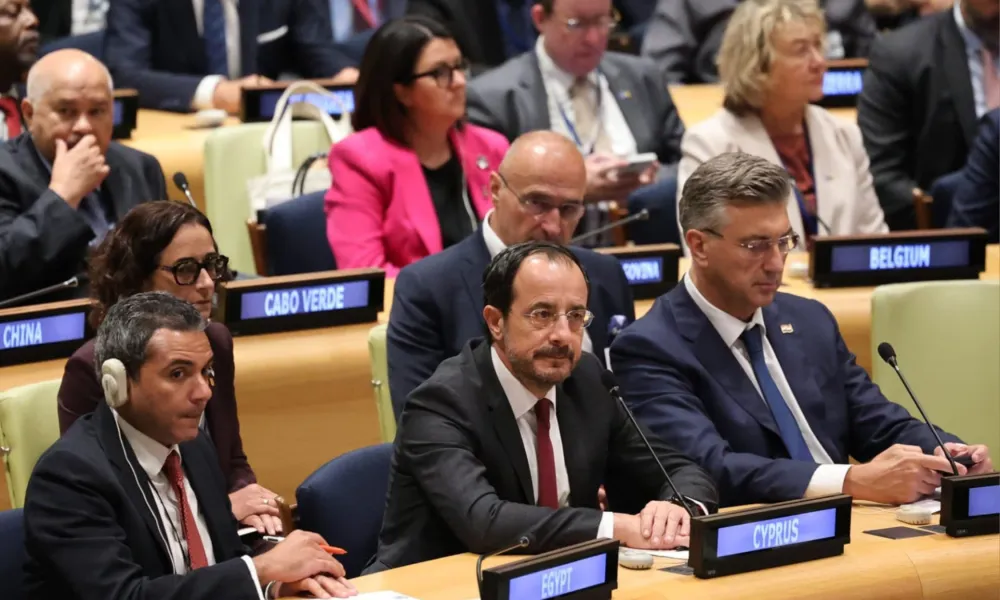

Twenty months before the next presidential election, in February 2028, the debate over an upcoming cabinet reshuffle has come to dominate Cyprus's political conversation, even as President Nikos Christodoulides still has nearly two years left in his term. Attention has shifted decisively from the business of governing to the arithmetic of electoral balances, while the public continues to wait for answers on the cost of living, low pensions, energy insecurity and the erosion of trust in institutions.
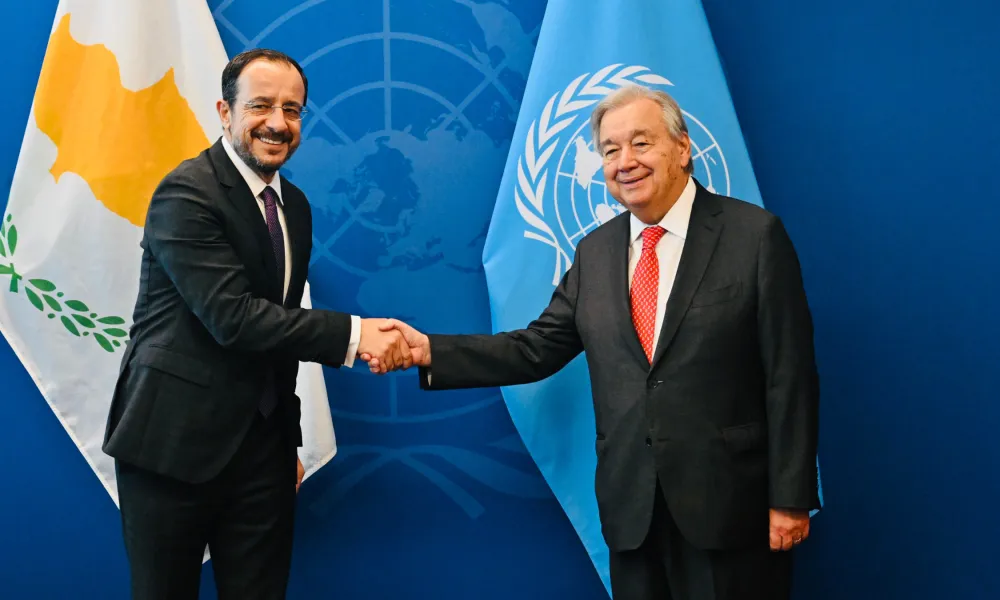
UN Secretary-General António Guterres came, listened and left. He set out his own concerns and objectives to both sides in general terms, and each side interpreted his stance, as that of a departing UN chief, as it saw fit. For a few days, the political forces in the government-controlled areas, each with their own priorities ahead of parliamentary elections, treated the Secretary-General's effort with something close to normal political behaviour, responding with either praise or rejection. Guterres nonetheless left with no clear indication of how the United Nations itself intends to carry the process forward, effectively "waiting for Godot", that is, waiting for the parties and their reactions to the terms and conditions he laid out. He will presumably wait as Samuel Beckett's characters do.
What did not leave the island's political landscape, however, is the question that continues to preoccupy both the parties and the man permanently anxious to hold on to power, Nikos Christodoulides: a long and premature election period stretching all the way to the next vote in February 2028.
Pre-election, and paradoxes
There is, in truth, little that is unusual here. In every democracy, parties prepare for the next election and governments plan their political moves accordingly. The problem begins when electoral planning becomes the central organising principle of the political system, and when governing itself is subordinated to political expediency.
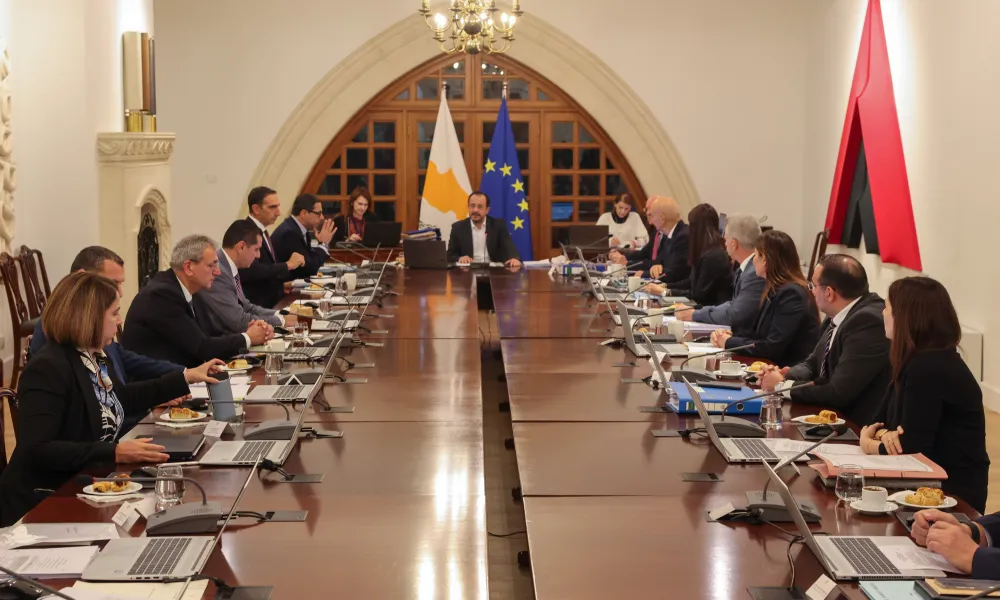
The coming reshuffle should have been an opportunity for a genuine relaunch of the government. After more than three years in office, every president has an obligation to assess his team, as Christodoulides did in the previous period as well, to correct weaknesses, to give new substance to government priorities and to strengthen the effectiveness of the state machinery. A reshuffle acquires real value when it is accompanied by a change in policy philosophy, not when it is reduced to a reshuffling of portfolios.
The picture taking shape today is different. Public debate is not focused on which policies need correcting but on the political messages the reshuffle will send. Which parties will be satisfied, which figures will be brought in, which bridges will be built towards particular political spaces, and above all, how the President's political position will be strengthened ahead of 2028.
It is entirely legitimate for a sitting president to think about re-election. What is not legitimate is for the functioning of government to be organised primarily around that goal. When decisions are taken with the next electoral contest in mind, governing risks becoming an unbroken exercise in communication, which is hardly surprising for a president who places communication strategy at the forefront of nearly every move he makes.
Taking power, and warnings
The real issue today, however, is neither the scale nor the composition of a new government line-up. In short, the issue is not the reshuffle itself but the model of governance that has taken shape over recent years.
Gradually, a strongly centralised conception of governance has become entrenched. Almost every significant government initiative, every public announcement, every critical policy decision, and much of the day-to-day running of the ministries, now passes through the Presidential Palace and its so-called government coordination team. That mechanism, we were told from the outset, was created to improve coordination. In practice, it appears to have evolved into a parallel centre of decision-making.
Politis warned from the very start about the practice of this coordinating structure, established under Deputy Minister Eirini Piki. Ministers have, on many occasions, been reduced to a managerial role, while political initiative, along with direct intervention in the running of the ministries, has become concentrated at the Presidential Palace. The image of a government functioning collectively has gradually been replaced by one of a government waiting for central coordination on almost every significant decision, coordination that is, of course, shaped chiefly by the communication needs of the presidency.
We have repeatedly noted that the ministries are home to staff of considerable experience: directors-general, senior officers, scientists and technocrats who understand, better than most, both the capabilities and the shortcomings of public administration. This is human capital built up through decades of service to the state.
But when decisions are consistently taken outside the normal administrative structure of the ministries, that expertise is not used to the extent it should be. A form of institutional atrophy gradually sets in. Departments are reduced to carrying out instructions, policy initiatives decline and the creativity of public administration recedes. The state increasingly operates through a centralised mechanism and increasingly less through its own institutions.
The reaction
This insistence on continuing the current model of executive governance was also evident in the sharp reaction of the President and his associates when parliament rejected a request to extend by six months the term of the Deputy Minister for European Affairs, Marilena Raouna. The arguments put forward over this episode revealed an unfounded claim on the President's part that any negotiation with the European Union depends on one particular person remaining in one particular post for a further six months. In essence, the Presidency behaved exactly as it has grown accustomed to behaving throughout this period, concentrating every strand of government action within the Presidential Palace.
A tool of balances
Based on the President's practice and that of his inner circle, and above all on the leaks surrounding changes to the government line-up, an attempt is being made to attach an outsized significance to the individuals set to take up ministerial portfolios.
As these lines were being written, and despite the leaks, no announcement had yet been made on the impending government changes. There are, however, indications that the coming reshuffle will serve chiefly as a tool of pre-election balancing, bringing in ministers from DIKO and possibly some from the so-called centre-right, allowing Nikos Christodoulides to preserve his communication advantage over a significant section, under the circumstances, of the Democratic Rally (DISY), in what is likely to be the last reshuffle of this Council of Ministers.