
The Cyprus Air Traffic Controllers Union (Paseek) has voiced serious concern over flight safety in Cypriot airspace, citing the almost constant presence of unauthorised Turkish air force aircraft and unmanned drones along critical air corridors. In a recent incident, controllers prevented a collision between a Turkish military aircraft and a passenger flight, identifying the dangerous situation in time to intervene.
In a series of posts on X on the evening of Wednesday 19 August, Paseek said that alongside significantly increased air traffic, controllers at the Nicosia Area Control Centre, as well as at the Larnaca and Paphos approach units, are also having to contend with the activity of Turkish military aircraft and unmanned aerial vehicles.
According to the union, these aircraft operate "almost continuously" along critical air corridors, including close to Cyprus's two international airports, further complicating the work of controllers tasked with safely managing air traffic.
Beyond increased air traffic, ATCOs in Nicosia ACC and at Larnaca and Paphos Approach do their best to ensure flight safety affected by unauthorised Turkish Air Force aircraft and UAVs, operating almost constantly along critical routes and near the two aerodromes of Cyprus. pic.twitter.com/Wqass9BObW
— ΠΑΣΕΕΚ (@CYATCU_NEWS) August 19, 2026
The incident involving TUAF770
Particular reference was made to an incident involving an aircraft carrying the code TUAF770. According to Paseek, the aircraft failed to respond to repeated calls from the Nicosia Area Control Centre and deviated from the route set out in its flight plan.
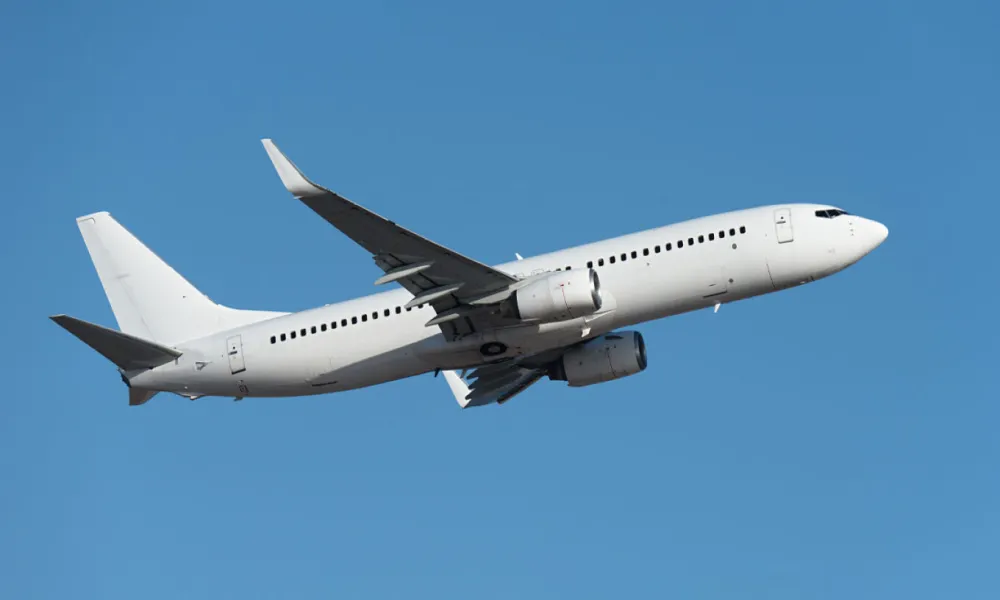
It subsequently began climbing towards flight level FL360, approximately 36,000 feet. At the same time, flight TOM56T, a Boeing 737-800, was descending towards FL350, approximately 35,000 feet.
According to Paseek, air traffic controllers recognised in time that the two aircraft's flight paths were creating a dangerous situation and ordered the Boeing to halt its descent. "The vigilance of the controllers identified the conflicting flight paths and stopped the descent of the B738 just in time," the union said, accusing Turkey of "complete disregard for passenger safety."
Paseek does not treat the incident as isolated. Instead, the union maintains that it reflects a situation that has persisted for decades. "This happens 24 hours a day, seven days a week, and has done for decades," the union said, adding that the problem is compounded by Ankara's refusal to maintain two-way communication with the Nicosia Area Control Centre.