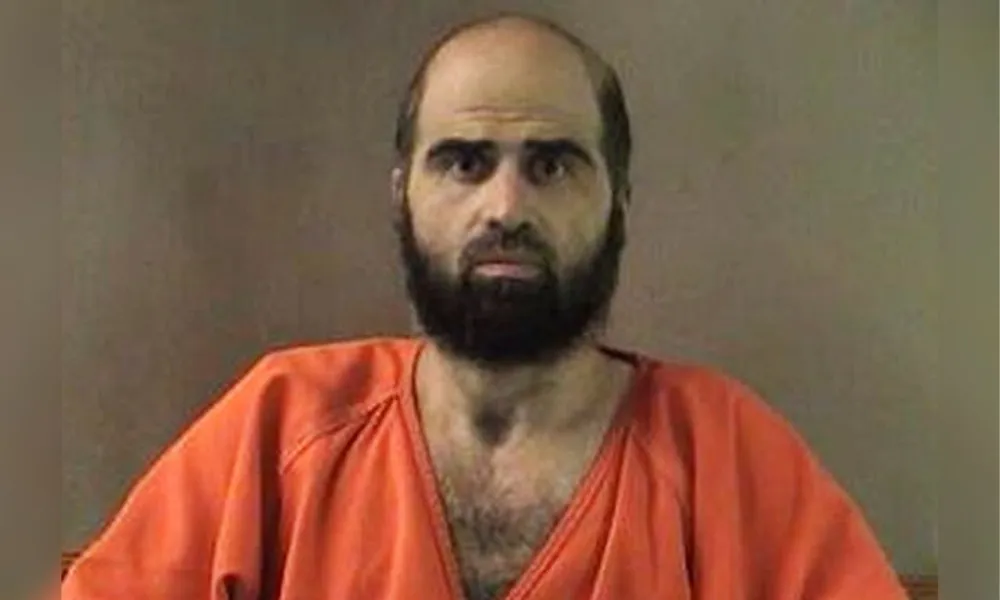

The United States military intends to broadcast online the firing squad execution of the gunman responsible for the 2009 Fort Hood shooting, a step without precedent in the country’s history. Death penalty experts say that, if it goes ahead as planned, it would be the first known live broadcast of a lawful execution anywhere. The decision has drawn condemnation from rights groups, legal experts, the United Nations and members of Congress.
Presidential approval and the execution date
Pentagon spokesperson Sean Parnell said on Monday that President Donald Trump had approved the execution of Nidal Malik Hasan. The military requires presidential approval for executions, and only the president can specify the method.
A Pentagon official said on Thursday that Hasan would be executed at the Fort Hood military base, where the shooting took place, and that the execution would be livestreamed. Acting Secretary of the Army Adam Telle set the date for 3 December at 1pm local time (18:00 GMT). Officials added that further details would follow. The White House referred questions about the livestream to the Pentagon.
Statements by the defence secretary
Defence Secretary Pete Hegseth, who had pushed for a firing squad, confirmed the livestream plans in a post on X. In an interview with Real America’s Voice News, he said: “We’ll make sure that people are able to watch it, that it’s public.”
Justice.
— Pete Hegseth (@PeteHegseth) October 5, 2026
Speaking in a podcast interview, Mr Hegseth described the broadcast as a deterrent and said the timing was symbolic: “We’re going to do it at one o’clock, which is when he did it.”
The 2009 shooting and the conviction
Hasan, then an Army major and psychiatrist, opened fire at an Army processing centre at Fort Hood, Texas, on 5 November 2009, killing 13 people and injuring 32. Hasan said the attack was an effort to stop soldiers from deploying to Afghanistan and killing fellow Muslims.
A military jury convicted him in July 2013 of 13 counts of premeditated murder and 32 counts of attempted murder, and sentenced him to death. Although he said he acted on religious grounds, he was not convicted of terrorism, because the US military justice code has no stand-alone terrorism charge.
Experts say Hasan could file a habeas petition in civilian court, which could significantly delay the execution, although it is not clear whether he will seek to appeal.
Legal questions over the broadcast
There is no established precedent for the US government livestreaming an execution to a general audience, and courts have not recognised a general constitutional right to broadcast one.
The United States ratified the International Covenant on Civil and Political Rights in 1992. The covenant prohibits cruel, inhuman or degrading punishment and limits the death penalty to the most serious crimes. Legal experts say a public execution of Hasan could breach its provision on degrading punishment.
No single federal law governs who may witness executions. However, death penalty states typically bar minors, and Army regulations prohibit anyone under 18 from witnessing an execution. Senator Jack Reed of Rhode Island said that a public execution would require a waiver approved by President Trump.
Human rights lawyer Clive Stafford Smith, who has represented death row clients in the United States, said a broadcast of this kind would violate US laws that restrict the transmission of graphic material, particularly to minors. He said several legal challenges were likely, and he argued that the broadcast could provoke further attacks rather than deter them.
Reaction from lawmakers and the UN
Lawmakers from both the Republican and Democratic parties criticised the plan. Democratic Senator Chris Murphy told CNN the plan was disgusting and compared it to executions carried out by the Islamic State group.
A spokesperson for the UN human rights office told AFP that the broadcast would be “tantamount to a public execution and would breach the absolute prohibition of torture”.
Jonathan Lurie, a historian of military justice, said there was no compelling reason to make the execution public. Fordham University law professor Deborah Denno has argued that broadcasting an execution could help the public understand what capital punishment involves.
Historical precedent
The last US military execution took place on 13 April 1961, when Army Private John Bennett was hanged. Hasan would be the first person executed by firing squad by the US military since Eddie Slovik, who was convicted of desertion during the Second World War, was shot in 1945.
The last public execution in the United States took place on 14 August 1936, when Rainey Bethea was hanged in Owensboro, Kentucky. At least five states have firing squads on the books, and in 2025 South Carolina carried out the country’s first firing squad execution in 15 years.
This is a developing story.
With information from Reuters, AP and Al Jazeera